
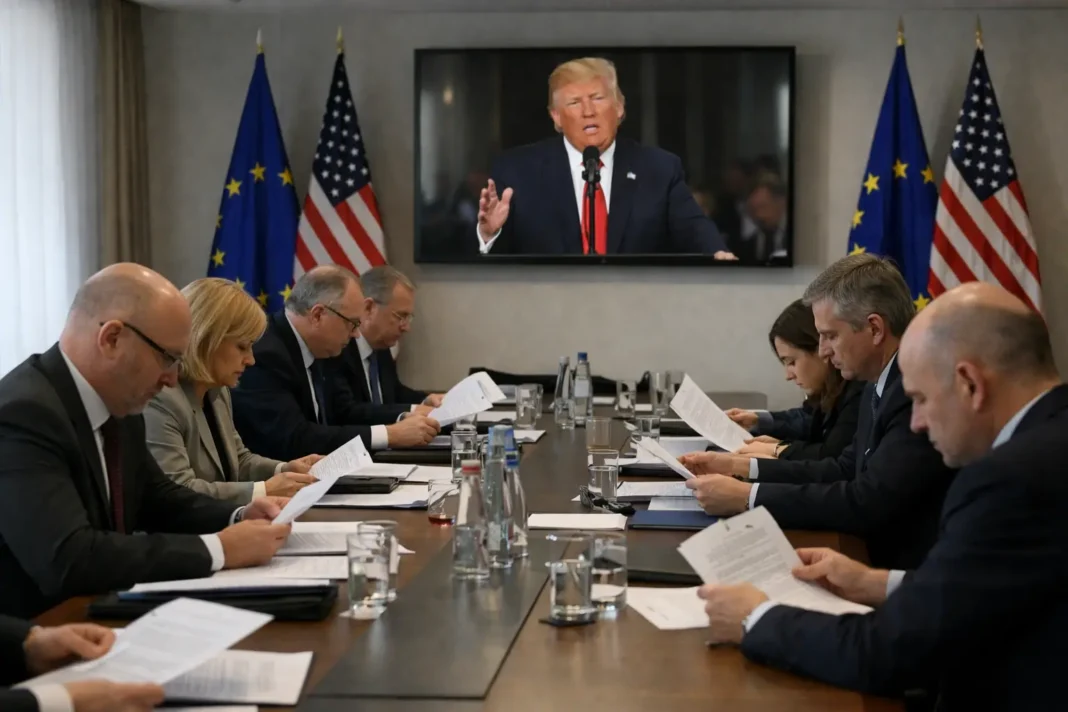

Europe’s strategic calculation has changed after the return of Donald Trump to the White House. When Joe Biden entered office in 2021, many European capitals treated his presidency as evidence that the turbulence of the previous four years could be contained within the normal cycles of American politics. His message that the United States and the transatlantic alliance were “back” reassured governments that had been unsettled by Trump’s first term. That reassurance has now been weakened by the fact that American voters have returned Trump to power only four years later.
The political rupture is not limited to a change of administration. The attempt by Trump supporters to stop the transfer of power on 6 January 2021 exposed a vulnerability at the centre of US democratic life. Biden’s victory showed that the electoral system could still function, but Trump’s political recovery demonstrated that the episode did not lead to a lasting exclusion of the forces associated with it. For allies, the issue is no longer whether the United States can elect a leader committed to traditional alliances, but whether such commitments can survive repeated electoral reversals.
That uncertainty carries direct consequences for Europe. The European Union and European members of NATO remain tied to the United States through defence planning, intelligence cooperation and economic diplomacy. Yet trust in Washington’s long-term direction is harder to rebuild than formal institutional links. A partner that can move from repudiating Trump to reinstating him in a single presidential cycle becomes less predictable, even when treaties and official channels remain in place.
The shift is especially significant for transatlantic relations, which have long rested on the assumption that electoral changes in Washington would not overturn the foundations of American foreign policy. European governments may still work with the US administration of the day, but the longer-term incentive is to reduce exposure to sudden reversals. That does not amount to a clean break with Washington; it points instead to a gradual search for greater European capacity in security, diplomacy and crisis management.
The central fact for policymakers is that democratic resilience and alliance reliability are now linked in European assessments of the United States. Even if American institutions continue to operate, confidence damaged by the events surrounding 2021 and by Trump’s return will not be restored quickly. For Europe, the lesson is pragmatic rather than ideological: cooperation with Washington remains essential, but dependence on a stable American consensus has become a risk that can no longer be ignored.





