
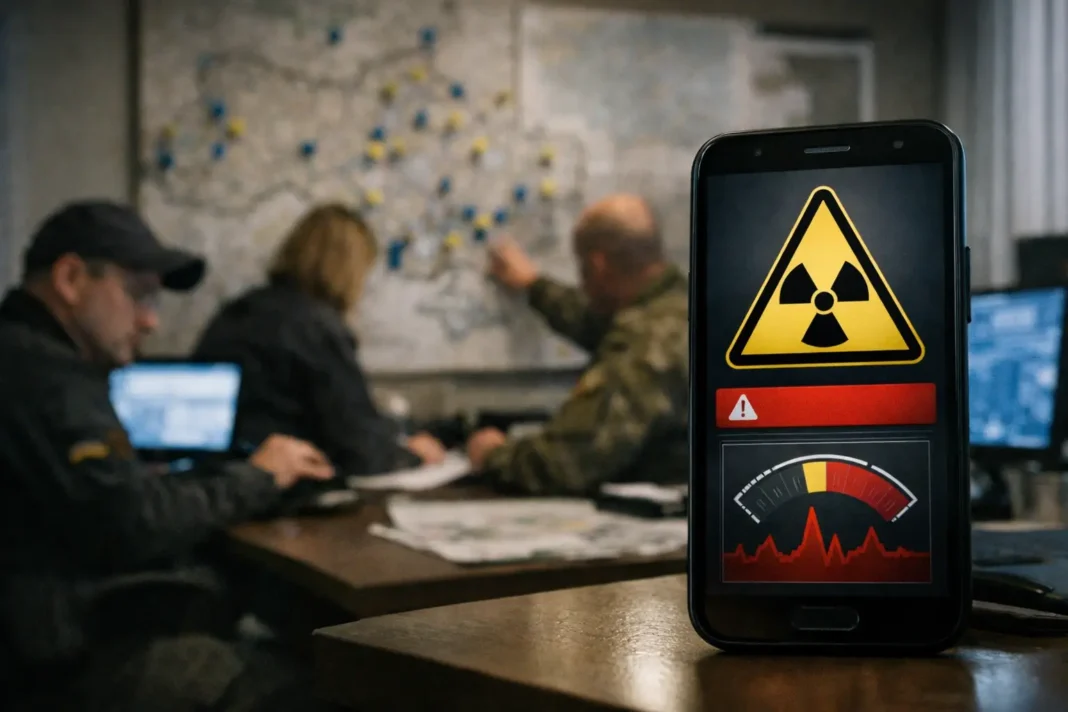

A false radiation alert sent through a Ukrainian air raid warning application has highlighted the security risks surrounding emergency communication systems used during the war. The Ukrainian Ministry of Defence and the country’s military structures rely on rapid public messaging to warn civilians of immediate threats, making the integrity of such tools central to public safety in Ukraine.
The Ukrainian Air Force said the application appeared to have been hacked after users received a warning about a radiation hazard that was not genuine. The alert was separate from the routine air raid notifications that have become part of daily life in many Ukrainian regions since Russia’s full-scale invasion. No official confirmation of a real radiation incident accompanied the message, and the Air Force identified the warning as false.
The incident underscores the importance of trust in digital emergency networks. Applications that deliver air raid alerts are designed to give people seconds or minutes to seek shelter, follow official instructions or verify danger in their area. When a false notification reaches users, the consequences are not limited to technical disruption: it can cause confusion, force authorities to issue corrections and weaken confidence in future alarms. In a conflict where missiles, drones and infrastructure attacks remain frequent, dependable warning channels are a practical component of civil defence.
Hours after the Ukrainian case became public, Russia’s emergencies ministry said its own warning application had also been hacked, with false messages distributed inside Russia. The two announcements came amid a wider environment in which state services, media platforms and public information systems are regularly exposed to cybersecurity threats. The available official statements did not establish a connection between the incidents, identify those responsible or provide technical details about how the applications were accessed.
For both countries, the episode places renewed attention on the protection of public warning infrastructure. Emergency apps are most effective when citizens believe that alerts are accurate, timely and issued by legitimate authorities. Any breach of that chain creates an immediate need for verification, clear communication and technical safeguards. With the war continuing to place civilians under recurring threat, securing digital alert systems remains a public safety issue as much as a cyber defence challenge.






