
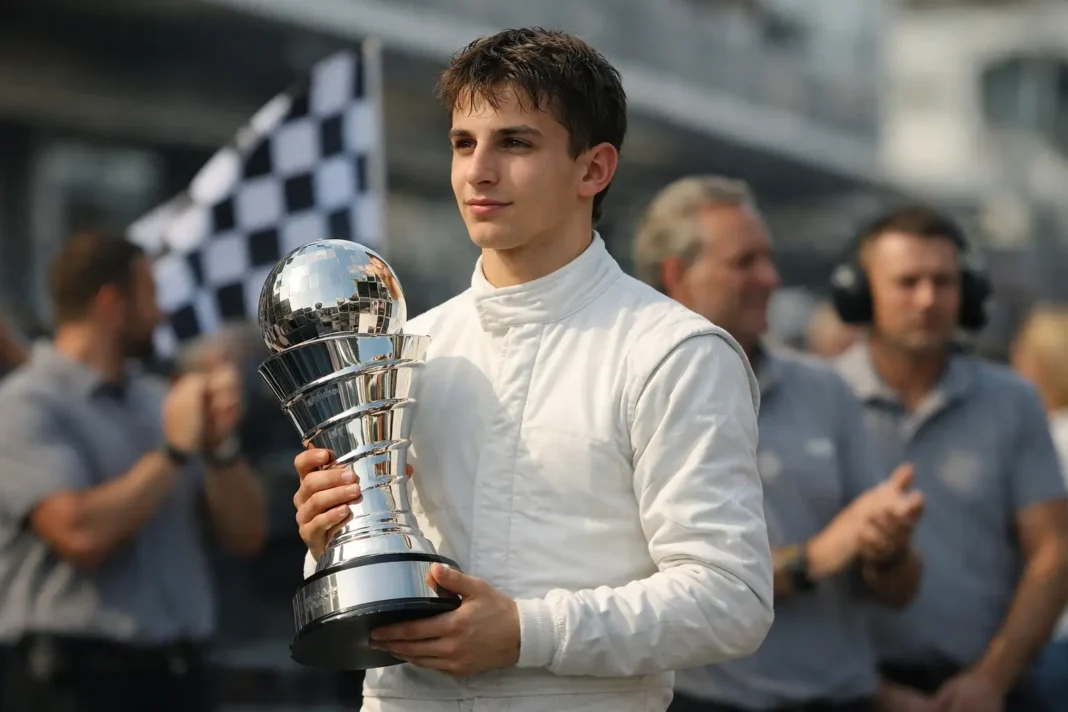

Kimi Antonelli’s rise has entered a new phase after the Italian driver secured his first world title, a milestone that has intensified expectations around one of Formula 1’s most closely followed young names. The achievement does not merely add a trophy to his record; it gives substance to a reputation that has been building across the sport, where early excellence is often weighed against the demanding standards of the top category.
Antonelli has long been viewed as a driver with the attributes required for the highest level of motorsport: speed, composure and the ability to absorb pressure while development accelerates around him. Winning a first world title changes the tone of that assessment. Potential, by itself, is common in junior racing. Converting promise into a championship is rarer, and it tends to reshape how teams, rivals and observers judge a young competitor’s readiness for the next stage.
The significance of the moment is amplified by its connection to Formula 1, where history is rarely made by talent alone. Drivers who progress successfully toward the championship must adapt to technical complexity, intense scrutiny and the constant demand for repeat performance. Antonelli’s first world crown places him more firmly within that conversation, not as a future possibility in abstract terms, but as a competitor whose results now support the attention surrounding him.
For Formula 1, Antonelli’s emergence also reflects the sport’s continuing focus on the next generation. Teams and fans increasingly track young drivers well before they reach the grand prix grid, looking for signs that can translate into elite performance. A world title is one of the clearest such signs, because it requires consistency across a campaign rather than isolated flashes of pace. In that sense, Antonelli’s achievement carries weight beyond a single celebratory moment.
What comes next will determine how far this momentum can take him, but the latest step is already important. By claiming his first world title, Kimi Antonelli has strengthened the case that he belongs among the most compelling names in the sport’s future. In a discipline that measures ambition against results, he has added the kind of evidence that makes expectation harder to ignore.






