
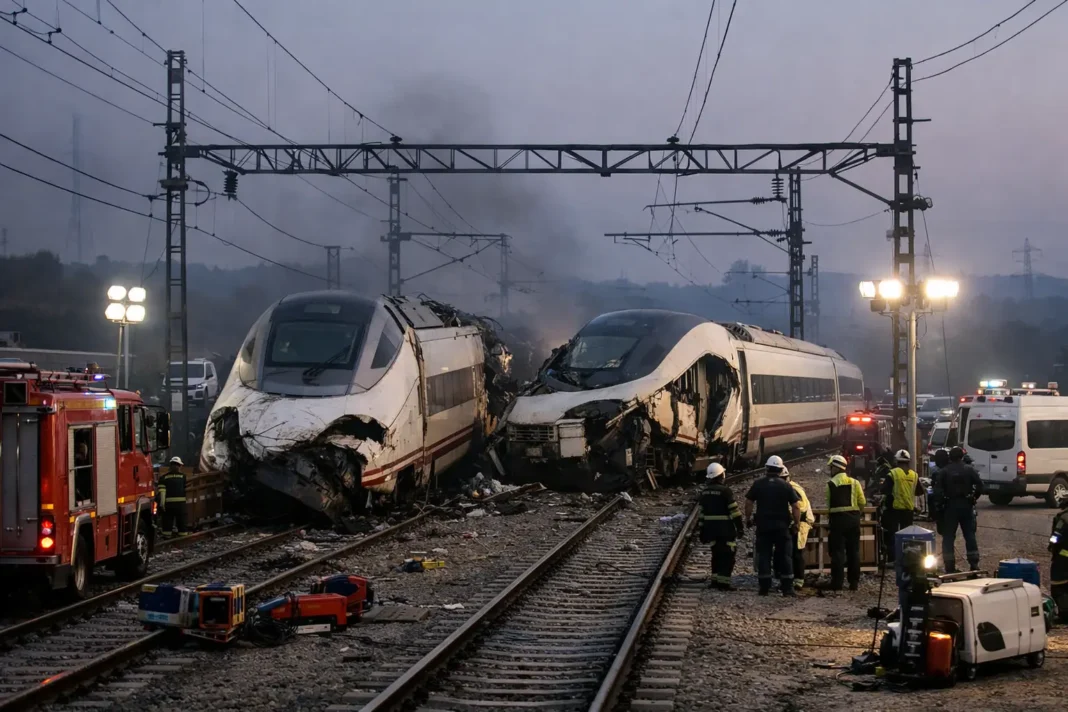

A high-speed train collision in Spain has killed at least 68 people, after a moving train struck another train that had stopped further along the same track. The transport minister described the cause as an “inexplicable” error, a formulation that immediately places attention on how two trains came to occupy the same line in such dangerous conditions.
The confirmed death toll makes the crash one of the gravest rail disasters involving a high-speed service in the country. The information available points to a collision rather than a derailment: one train was stationary ahead, while the other continued on the track until impact. That detail is central to the first questions facing investigators, because modern rail networks depend on signalling, communications and operating procedures designed to prevent precisely this type of event.
The Spanish transport ministry, part of the official government structure overseeing national transport policy, will face scrutiny over the circumstances that led to the crash. The ministry’s institutional information is available through the Ministerio de Transportes y Movilidad Sostenible. At this stage, the only public explanation attributed to the minister is the reference to an error that remains unexplained. No further verified details have been provided about the sequence of decisions, technical failures or operational factors that may have contributed.
The accident is likely to intensify public attention on rail safety, especially on high-speed routes where stopping distances, traffic control and real-time communication are vital. Collisions involving a stationary train raise questions about track occupancy systems, driver alerts and the chain of command during disruptions. Determining whether the failure was human, technical or procedural will be essential before any firm conclusions can be drawn.
For passengers and families, the immediate consequence is a disaster with a heavy human cost and many unanswered questions. For Spain’s rail authorities, the priority now is to establish a verified account of what happened and why the safeguards in place did not prevent the impact. Until investigators identify the failure behind the “inexplicable” error cited by the transport minister, the focus will remain on accountability, transparency and the measures needed to prevent another fatal collision.





