
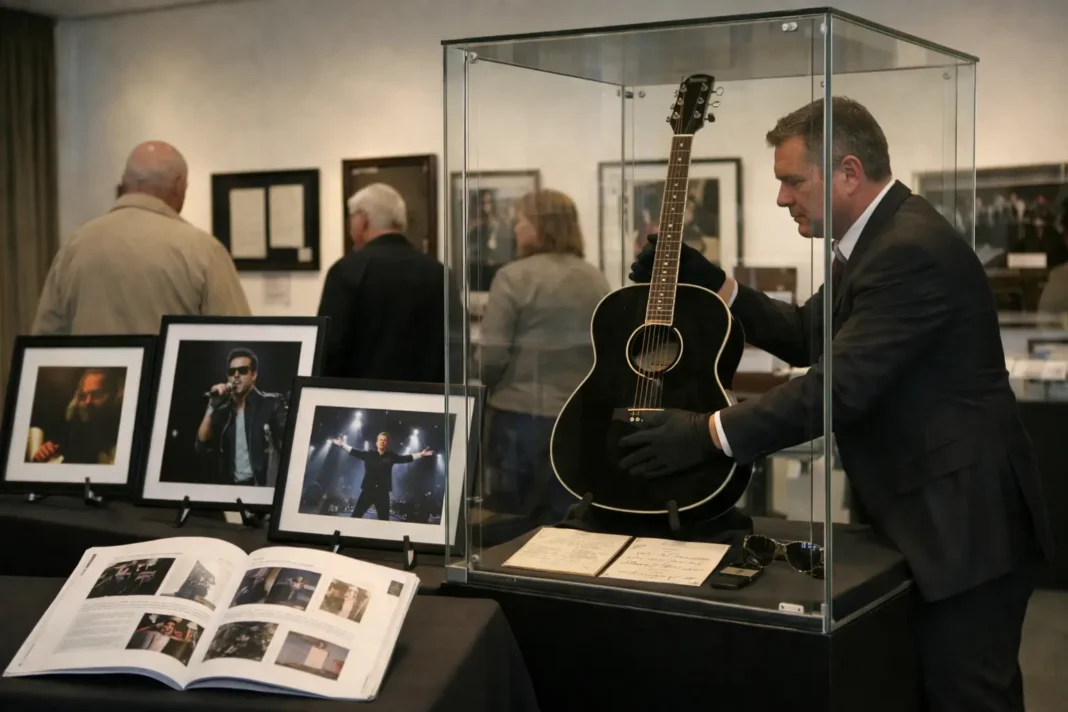

A dispute over memorabilia linked to George Michael has brought renewed attention to the sensitive market for objects connected with major artists. Items associated with the singer are up for auction, including a guitar identified with Faith, one of the defining works of his career. The sale has been challenged by the brother of Michael’s late personal assistant, who says she would not have wanted the belongings to be sold.
The objection turns the auction from a routine commercial event into a question of legacy and consent. The brother’s position focuses not on the market value of the items, but on what he says would have been his sister’s wishes. That distinction matters in cases involving music memorabilia, where objects can sit between private memory and public demand. A guitar connected to Faith carries obvious appeal for collectors because the album and its imagery remain central to Michael’s public identity.
George Michael, who died in 2016, remains one of the most recognisable British pop figures of the late twentieth century. His work as a solo artist, following his rise with Wham!, continues to attract global interest, and physical items linked to his career often hold meaning beyond their material form. For fans, such objects can represent a tangible connection to an artist whose songs shaped popular culture. For families and former close associates, the same objects may carry a more personal weight, tied to trust, friendship and private history.
The disagreement also reflects a wider tension in the celebrity collectibles market. Auctions can preserve and circulate cultural artefacts, but they can also expose unresolved questions about ownership, intention and the responsibilities of those handling personal effects after a death. In this case, the available facts point to a clear conflict: George Michael-related items are being offered for sale, and a relative of the singer’s late personal assistant says that outcome goes against what she would have wanted. The dispute underscores how the legacy of an artist is shaped not only by records and performances, but also by the fate of the objects left behind.






