
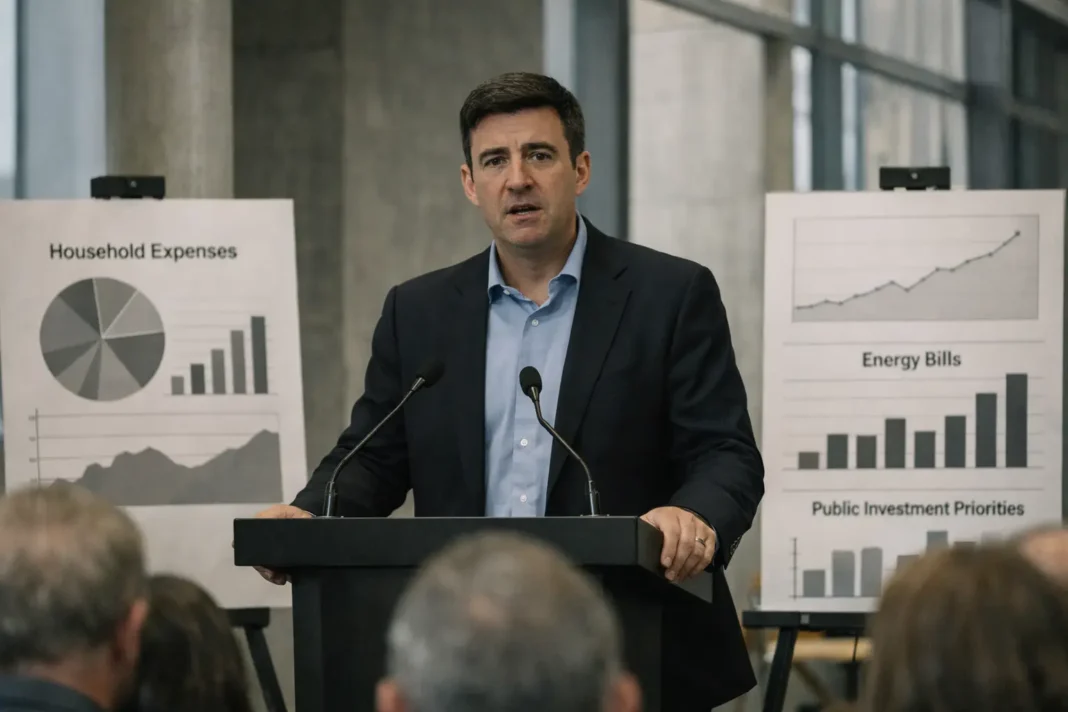

The latest budget debate has been framed less around a sweeping economic reset than around practical help for households. In a column published by The Guardian, senior economics commentator Aditya Chakrabortty argued that the political character of the package did not match the scale of change associated with Andy Burnham’s rhetoric on ending decades of neoliberal policy. Instead, the piece presented the budget as closer in spirit to the consumer-focused interventions associated with Martin Lewis.
The criticism turns on the gap between political ambition and fiscal delivery. John Healey’s red book is described against a difficult backdrop: historically high taxation, public debt of around £3tn and weak economic momentum. Those constraints are central to the current UK economy debate, where any government seeking to expand public provision must also explain how it will fund commitments, reassure markets and protect living standards.
Martin Lewis, the founder of MoneySavingExpert, occupies an unusual place in British public life. He is not a minister, party strategist or member of Westminster, yet his prominence on television, podcasts and consumer advice platforms has made him one of the country’s most recognisable voices on bills, personal finance and household support. Chakrabortty’s article uses that visibility to make a broader point: measures that help people navigate everyday costs are not the same as a structural economic programme.
The distinction matters for Labour politics. Burnham’s public profile has been built partly on calls for a more interventionist state and a decisive break with the economic settlement of the past 40 years. A budget shaped around repairs, reliefs and technical fixes may offer immediate benefits to voters under pressure, but it also risks narrowing the definition of change to affordability measures rather than reforms to investment, wages, public services or regional inequality.
The column therefore places the budget inside a wider argument about governing in a period of stagnation and fiscal pressure. Consumer-facing policies can be politically effective because they are tangible and easy to communicate. The challenge for Labour, as presented by Chakrabortty, is whether such measures can carry the weight of a promised economic transformation. The budget controversy reflects a larger tension in British politics: the demand for visible help now, and the unresolved question of what a deeper break with the existing model would actually require.







