
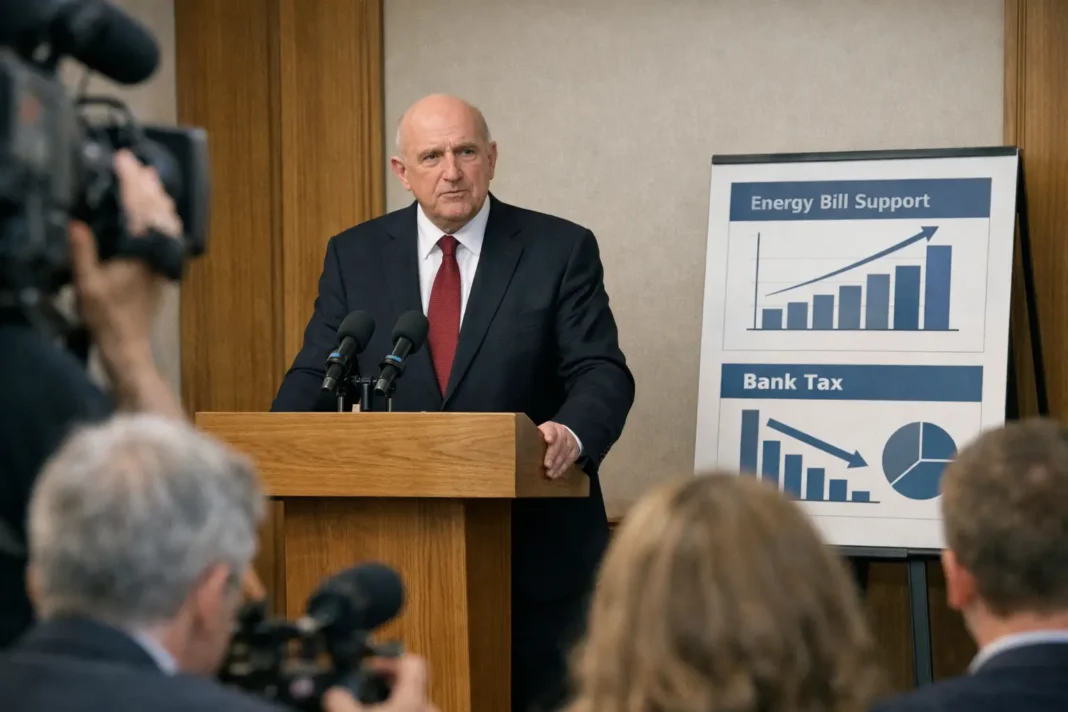

Chancellor Healey has placed household costs at the centre of his first Budget, announcing a £100 contribution towards energy bills and a new tax on banks. The package is presented as a response to persistent pressure on family finances at a time when the wider global economy remains unsettled. For Healey, the Budget marks the first major test of his fiscal priorities and of how far public finances can be used to cushion households from rising costs.
The £100 energy measure is the most direct element of the plan for consumers. Energy costs continue to shape the wider cost of living debate, affecting disposable income and increasing pressure on lower- and middle-income households. By choosing a fixed contribution, the chancellor has opted for a visible form of support rather than a broader restructuring of household bills. The measure’s political importance lies not only in its cash value, but in the signal that energy affordability remains a priority in the new fiscal programme.
The introduction of a bank tax adds a second strand to the Budget, shifting part of the funding burden towards the financial sector. No further details on the scale or structure of the tax were included in the announcement, but its inclusion gives the Budget a redistributive dimension: support for households is being paired with additional demands on banks. That choice is likely to attract close scrutiny from financial institutions, business groups and lawmakers as the proposals move from announcement to implementation.
Opposition parties have criticised the package, arguing that the chancellor has not gone far enough. Their response highlights the central question now facing the Budget: whether limited, targeted relief can meet the scale of household pressure during a period of international economic uncertainty. The criticism also reflects a broader political divide over how actively government should intervene when high prices and weak global conditions squeeze living standards.
The first Budget gives Healey a clear policy identity, anchored in consumer relief and a willingness to tax banks. Its impact will depend on how quickly the measures are delivered and how households experience energy costs in the months ahead. For now, the announcement sets the terms of the debate: immediate help for bills, a new burden on the banking sector, and a continuing argument over whether the response is sufficient.






