
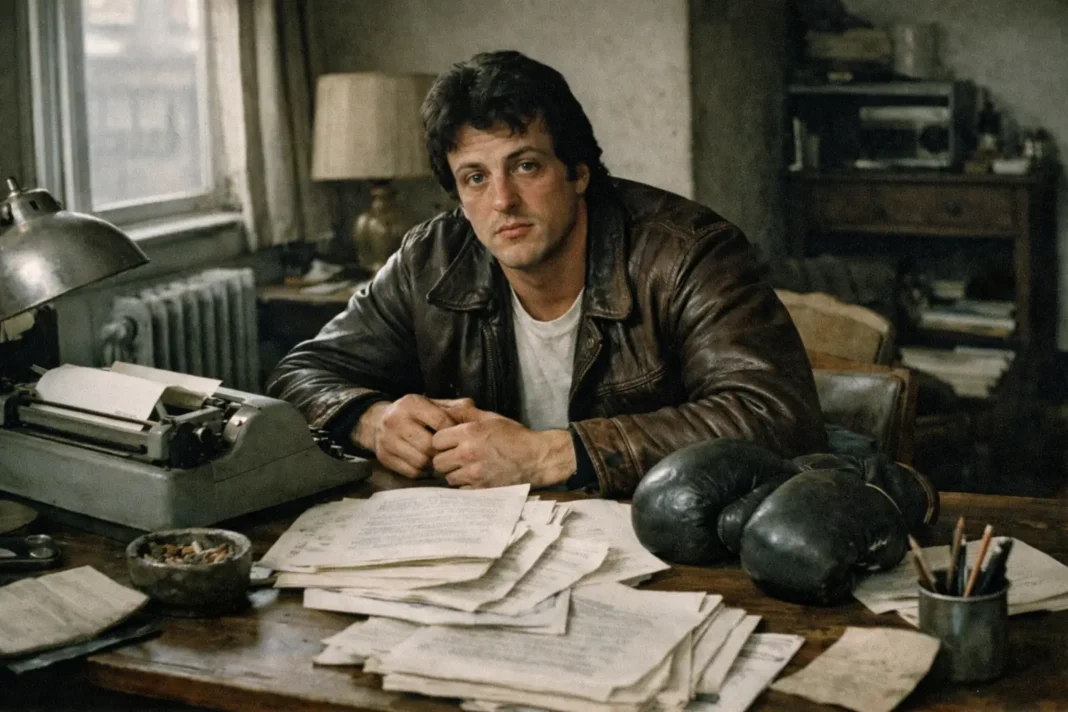

Fifty years after Rocky first turned a fictional club fighter into a cultural emblem, the story behind the film remains almost as durable as the movie itself. Released in the mid-1970s, the boxing drama followed a modest Philadelphia contender who lasts the distance against the world heavyweight champion. He does not win the bout, but the film’s emotional result was unmistakable: audiences embraced a character built on endurance, humility and the need to be seen.
The path that brought Sylvester Stallone to that role has become part of modern cinema history. Before Rocky, he was a struggling character actor, mocked for his speech and appearance, short of money and forced at one point to sell his dog. His earlier life included low-paid work, including time as a fishmonger, and a screen credit in an adult film. Against that background, he wrote a boxing screenplay and insisted on playing its central figure, persuading a studio to bet on both the script and an actor with little industry power.
That gamble changed the shape of his career and gave Hollywood one of its most frequently cited underdog narratives. Rocky went beyond the fate of its protagonist by winning best picture at the Academy Awards, a result that transformed Stallone from an outsider into a defining star of American popular cinema. The film’s plainspoken drama, grounded in training rooms, empty streets and a bruising final fight, also helped establish boxing as a powerful framework for stories about class, ambition and personal dignity.
The film’s public afterlife is visible far from the screen. Visitors still run up the 72 steps of the Philadelphia Museum of Art, recreating the training sequence that turned a city landmark into a pilgrimage site for movie fans. That ritual shows how Rocky’s appeal has endured across generations: it is not only a sports film, but a recognizable image of persistence made physical, repeatable and shared.
The anniversary has renewed attention on the making of the film and on the actor now associated with revisiting Stallone’s early struggle. Anthony Ippolito portrays Stallone in a film about the unlikely creation of Rocky, a role that requires him to engage with both the mythology and the vulnerability behind it. The continuing interest suggests that Rocky’s legacy rests not just on the punches thrown in the ring, but on the real battle to get the film made at all.






