
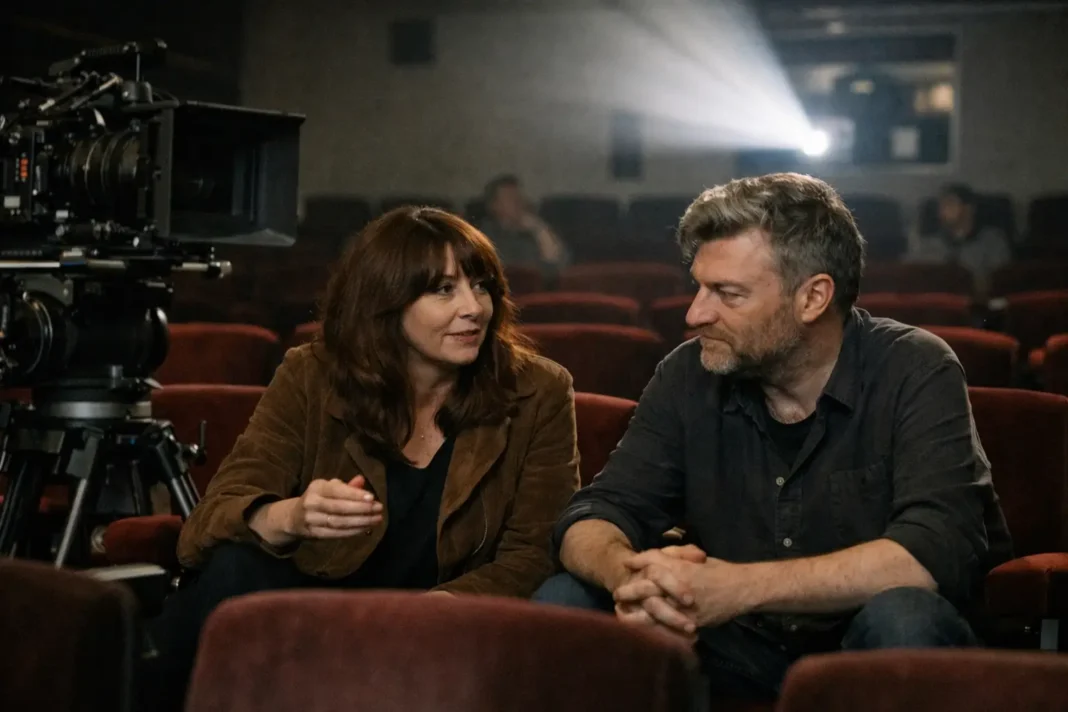

Philomena Cunk’s return brings one of television’s driest comic inventions to a subject that has long taken itself seriously: cinema. The fictional presenter, performed by Diane Morgan, is back with a new screen project built around film history, Hollywood mythology and the solemn language often used to explain moving images. After mock-documentary journeys through Britain, the wider world and questions about life itself, Cunk now approaches cinema with the same blank, literal-minded suspicion that has become her signature.
The character was created within the satirical world shaped by Charlie Brooker, whose work has often tested the boundary between popular entertainment and media criticism. In this latest outing, the joke lies not simply in misunderstanding film culture, but in exposing how much of that culture depends on grand claims, ritual phrases and inherited prestige. Cunk’s deliberately misguided questions turn familiar names and concepts into comic obstacles, whether the topic is the status of the auteur, the heroic conventions of mainstream storytelling or the reverence surrounding canonical films.
The return also places Diane Morgan at the centre of a comic format that depends on restraint rather than volume. Cunk’s humour is built on composure: the more serious the setting, the more disruptive her confusion becomes. The new series includes encounters with figures connected to film and popular culture, including Benedict Cumberbatch, whose presence underlines the programme’s continuing ability to place its fictional interviewer inside apparently authoritative contexts. That contrast remains the engine of the format: learned surroundings, absurd questions and a host who appears immune to embarrassment.
In an accompanying discussion about the project, Charlie Brooker and Diane Morgan also touched on subjects beyond the series itself, including a meeting with Jennifer Lopez, some of their least enjoyable early jobs and the rise of artificial intelligence. Brooker’s comparison of AI to mad cow disease reflects the anxious, absurdist register often associated with his work, where technological change is treated less as a novelty than as a cultural disturbance. Within that context, Cunk’s engagement with cinema also feels timely: a comic examination of an industry now negotiating celebrity, authorship, automation and its own carefully protected myths.







