
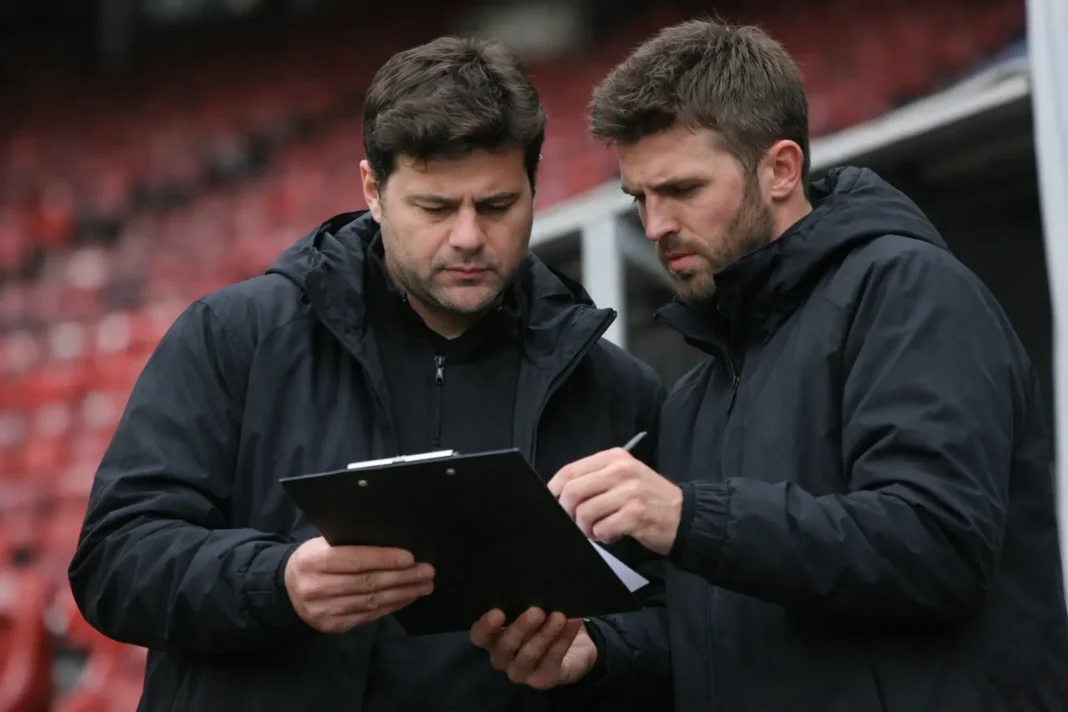

The renewed focus on Mauricio Pochettino has brought a familiar name back to the centre of Manchester United’s managerial debate. The Argentine has been associated with the club at several points over the past decade, a period in which United have repeatedly searched for a durable successor capable of combining results, identity and long-term development. His profile, shaped in England with Tottenham Hotspur and later at Paris Saint-Germain, continues to make him one of the most discussed figures whenever the Old Trafford job comes under review.
For United, the attraction is not difficult to understand. Pochettino built a reputation in the football landscape for improving younger players, imposing a clear playing structure and competing at the top end of the Premier League without always working with the division’s largest resources. At Tottenham, he led the club to the Champions League final and turned a talented squad into a consistent contender. At PSG, he operated in a very different environment, with elite individual players and the daily pressure that comes with managing a club expected to win domestic titles and challenge in Europe.
Yet the conversation around a possible United move cannot be separated from Michael Carrick. The former midfielder stepped into a demanding interim role after the departure of Ole Gunnar Solskjaer, taking responsibility at a moment of instability for a squad under heavy scrutiny. In such circumstances, a caretaker is often judged not only on results but also on composure, communication and the ability to prevent a difficult situation from deteriorating further. Carrick’s long connection with the club, first as a player and later as part of the coaching staff, gives his position additional sensitivity.
That is why the manner of any transition matters. If Manchester United decide to pursue a permanent appointment with the status and experience of Pochettino, the club will also need to handle Carrick’s contribution with clarity and respect. Interim figures are frequently treated as placeholders in elite management searches, but they can play a significant role in protecting dressing-room stability and maintaining standards between regimes. At a club where every decision is magnified, process and messaging carry sporting value as well as public significance.
The wider issue is United’s continuing effort to restore consistency at the highest level. A coach like Pochettino would arrive with a clear body of work and a strong understanding of English football, but no appointment alone answers all structural questions. Recruitment, squad balance and institutional alignment remain central to any revival. Carrick’s situation, meanwhile, is a reminder that leadership changes involve people already inside the building as much as the names being considered from outside it.






