
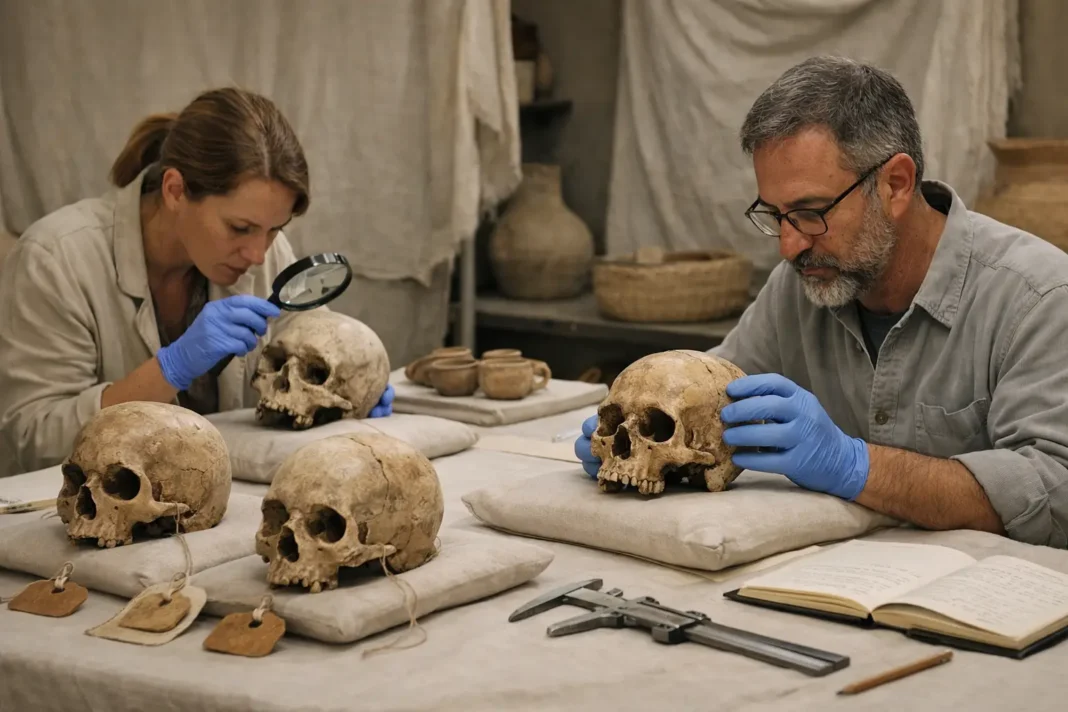

A 5,000-year-old puzzle from the earliest royal tombs of ancient Egypt has gained new significance after scientists reexamined 46 skulls and identified signs of potentially fatal head trauma in 18 of them. The findings suggest that at least 39% of the individuals studied may have died violently, a result that brings renewed attention to one of the most unsettling questions in early Egyptian history: whether people close to royal power were deliberately killed when a king died.
The skulls, linked to the burial world of Egypt’s first rulers, had already occupied an important place in debates about the origins of pharaonic authority. Their reassessment adds physical evidence to a theory first raised more than a century ago: that royal attendants may have been sacrificed to accompany deceased kings into the afterlife. In early Egyptian belief, death did not end a ruler’s status. The possibility that servants or retainers were killed as part of a burial rite points to a society in which royal authority may have extended beyond life itself.
The renewed analysis does not simply revisit an old archaeological question; it changes the weight of the evidence. Head injuries capable of causing death, found in a large share of the examined skulls, are difficult to treat as incidental. For archaeology, trauma on human remains is among the most direct forms of evidence available, though it still requires careful interpretation. The injuries indicate violent deaths, while the broader funerary context gives those deaths their historical importance.
Human sacrifice has long been discussed in relation to early royal burials, but the practice remains difficult to reconstruct because ancient rituals rarely leave clear explanatory records. Skeletal evidence can show the manner of injury, not the full ceremony or the intentions of those who carried it out. Even so, the proportion of damaged skulls strengthens the case that some deaths were not accidental or ordinary consequences of conflict. They may have formed part of a burial system designed to preserve the king’s household and power in the next world.
The findings also sharpen the contrast between the later image of Egypt’s monumental civilization and the harsher realities that may have accompanied the formation of kingship. The first royal tombs were not only places of commemoration; they were political and religious statements. If attendants were killed to serve dead rulers, those burials reveal a moment when emerging state power, belief in the afterlife and control over human life were closely bound together.





