
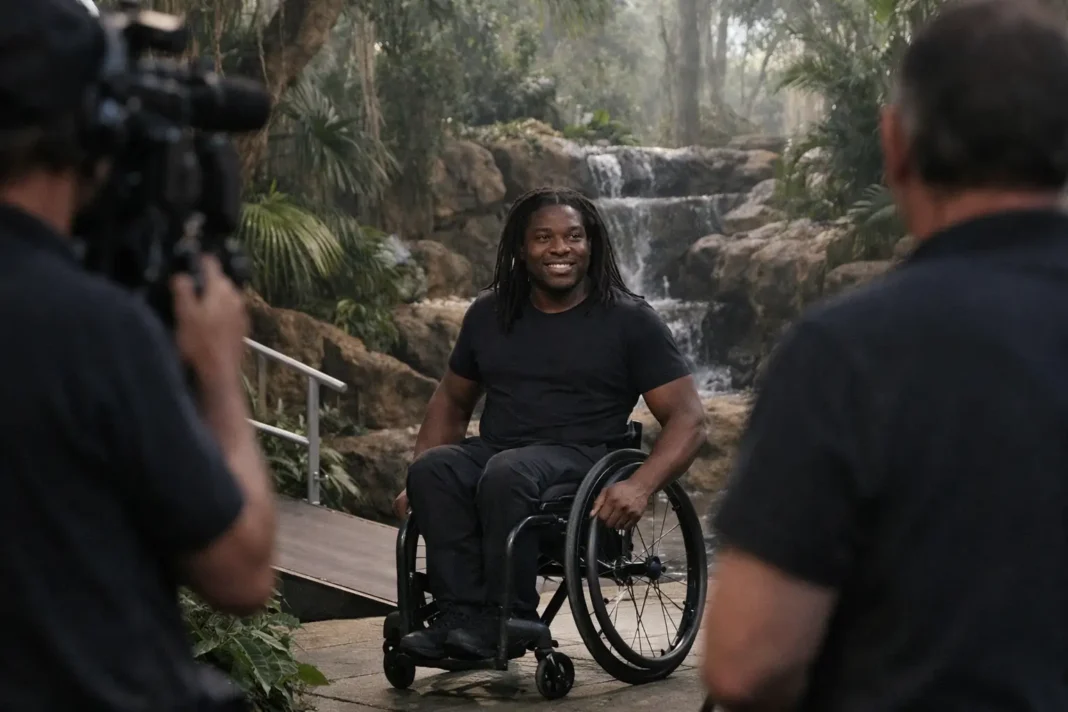

Ade Adepitan is preparing for one of British television’s most scrutinised reality-show entrances, as the Paralympic medallist and presenter becomes the first wheelchair user to take part in ITV’s I’m a Celebrity, Get Me Out of Here!. His participation in the Australia-based series has drawn attention before the programme has even begun, not only because of the physical demands associated with the format, but because of the wider conversation it has triggered around disability, access and visibility in mainstream entertainment.
The 53-year-old, widely known for his work across television and for his sporting career as a Paralympic medallist, enters a show built around discomfort, isolation and highly controlled trials. The programme’s familiar elements — confined spaces, insects, reptiles and food challenges — are part of its appeal to viewers, but his presence adds a new dimension to how the production accommodates contestants with different needs. Adaptations to the jungle environment have led to hostile responses on social media, including claims that such adjustments amount to an unfair advantage or that his casting is symbolic rather than earned.
Those reactions have placed Ade Adepitan at the centre of a recurring debate in entertainment: whether accessibility is treated as a routine production requirement or as an exception requiring public justification. In reality television, where physical endurance and audience voting often define contestants’ storylines, the inclusion of disabled participants can expose assumptions about competition, independence and fairness. The controversy around this casting shows how quickly practical accommodations can become a flashpoint, even when they are essential to allowing a contestant to take part on comparable terms.
I’m a Celebrity has long relied on the mix of celebrity vulnerability and spectacle, with presenters Ant and Dec overseeing challenges designed to test fear and resilience. Adepitan’s involvement does not remove those conditions; it raises questions about how a prime-time format can preserve its identity while ensuring access. His own public profile also makes his casting significant beyond the usual reality-show cycle. As a presenter and athlete, he has spent years in highly visible roles, and this appearance moves disability representation into one of commercial television’s most watched entertainment spaces.
The response to his casting underlines the stakes for broadcasters seeking broader representation without reducing contestants to their identities. For viewers, the series will ultimately be judged by what happens on screen: how Adepitan takes on the trials, how the production handles accessibility, and whether the discussion shifts from his wheelchair to his performance as a campmate. Before the first challenge, however, his participation has already made the new season a test case for inclusion in popular TV.







