
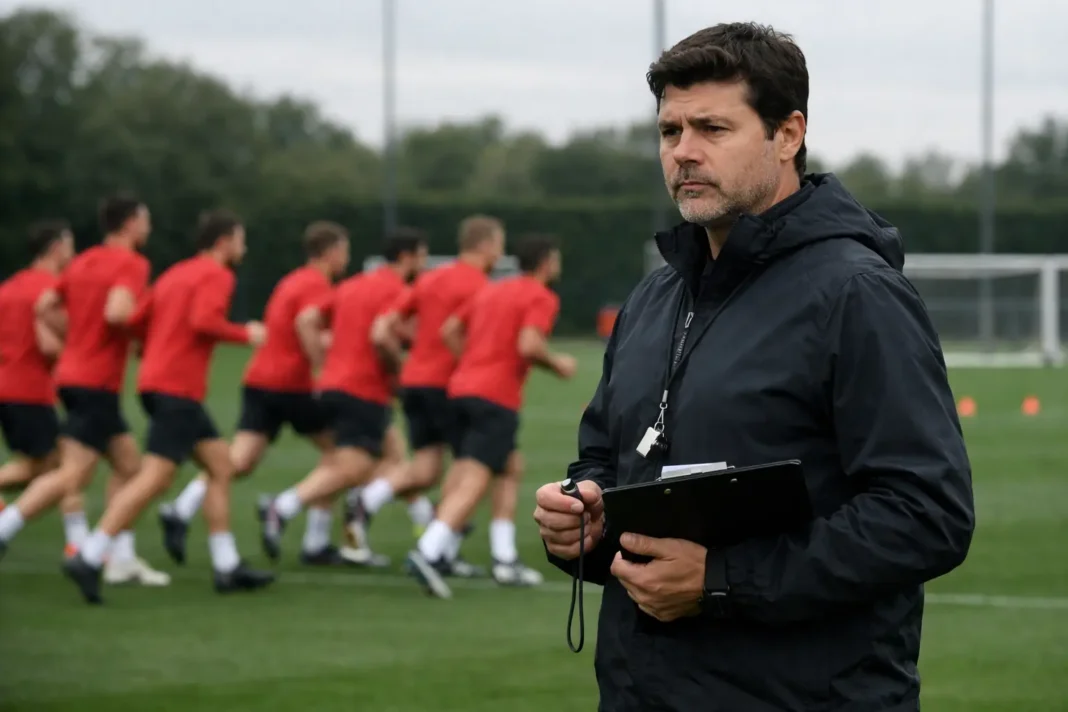

Mauricio Pochettino arrives at Manchester United with a reputation built on intensity, detail and an uncompromising view of daily standards. For supporters assessing what may come next at Old Trafford, the most revealing clues lie not in slogans but in the accounts of players who worked under him during his most influential spell in English football. One of them is Toby Alderweireld, the former Tottenham defender who played for Pochettino at Spurs and has described a coach deeply focused on physical preparation and control.
The Argentine’s Premier League identity was largely shaped at Tottenham Hotspur, where he managed between 2014 and 2019. During that period, he became associated with aggressive pressing, fast transitions and a training culture designed to push players repeatedly out of comfort zones. Alderweireld, who joined Spurs in 2015, was part of a squad that came to be viewed as one of the most athletic and cohesive teams in the division. His insight reinforces the image of a manager who places fitness near the centre of his footballing project.
That emphasis matters at Manchester United, a club where managerial changes are measured not only by results but by visible shifts in behaviour, structure and accountability. Pochettino has worked in demanding environments before, including Paris Saint-Germain and Chelsea, after earlier establishing himself at Southampton and Tottenham. Each job brought different pressures, but his core methods have generally been linked to close supervision of players, detailed training routines and an expectation that the squad adapts to the manager’s rhythm rather than the reverse.
For United’s players, that could mean a sharper focus on conditioning and tactical repetition from the earliest stages of his tenure. The description of Pochettino as a coach who wants control should not be read only as a comment on personality; in football terms, it points to a preference for rehearsed patterns, collective movement and strict standards without the ball. At Tottenham, those principles helped create a side recognised for its running power and organisation, with defenders such as Alderweireld central to that balance.
The immediate question for Premier League observers is how quickly those methods can take root at United. The club’s scale brings scrutiny that few managers can avoid, and every training-ground idea is ultimately judged through performances. What Alderweireld’s perspective offers is a concise guide to the likely tone: demanding, fitness-led and meticulous. For Manchester United fans, the early signs of the Pochettino era may be seen less in rhetoric than in intensity, discipline and the physical edge of the team on the pitch.






