
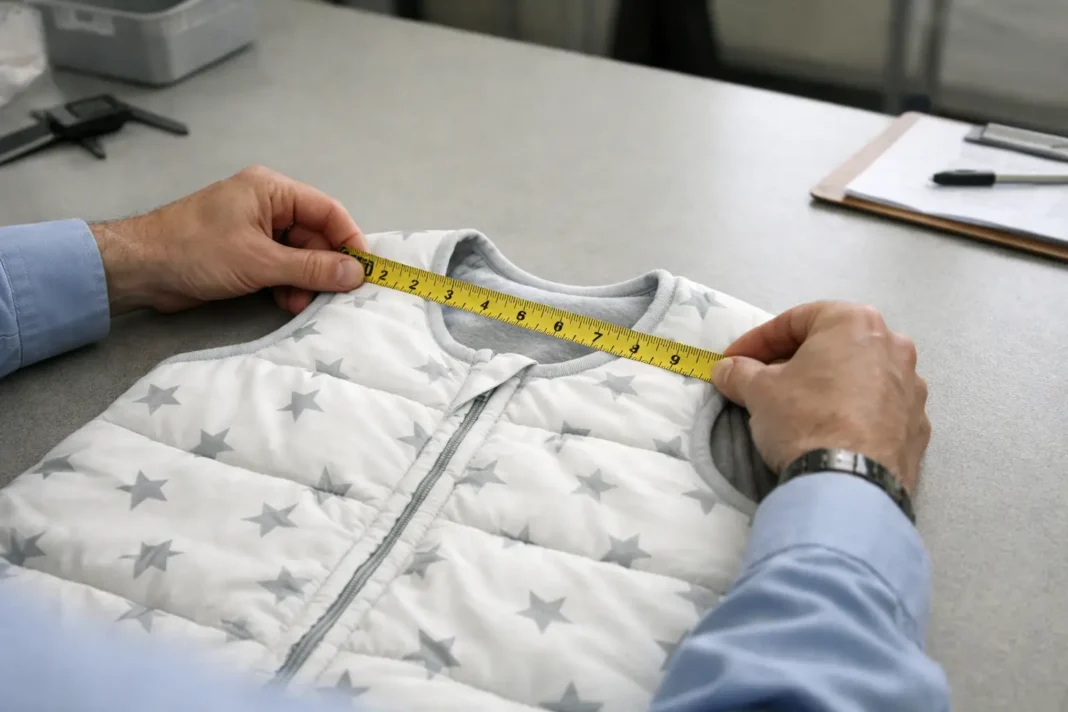

A mother’s warning has prompted Next to stop selling a baby sleeping bag after concerns were raised about the size of its neck opening. The issue was identified by Emma, a new mother, who found that her baby daughter could move down inside the garment because the opening around the neck appeared too large. In that position, the fabric could cover the infant’s face, creating a potential hazard during sleep.
The retailer’s decision to halt sales places the case within a wider debate about consumer safety in products designed for babies, where small variations in fit can have serious consequences. Baby sleeping bags are commonly used as an alternative to loose bedding, but their safety depends on correct sizing and secure design. A neck opening that is too wide can allow a child to slip down into the bag, undermining the purpose of the product and increasing the risk of the material obstructing breathing.
Safe sleep guidance emphasises that infants should be placed on their backs, on a firm and clear sleep surface, without loose items around the face. The NHS advises parents to keep babies’ heads uncovered while they sleep and to use bedding or sleep products appropriate for the child’s size and age. In practical terms, that makes the fit of wearable sleep items a key part of parenting safety decisions, particularly for newborns and younger babies who cannot easily free themselves if fabric shifts over their face.
The action taken by Next shows how individual reports from parents can lead to changes in the availability of children’s products. While no additional details have been provided about the product line, the concern raised by Emma centres on a clear and specific risk: a baby being able to wriggle down inside the sleeping bag due to an oversized neck hole. For families, the case underlines the importance of checking that sleepwear fits closely around the shoulders and neck without being restrictive, and of stopping use if a product does not remain safely positioned.






