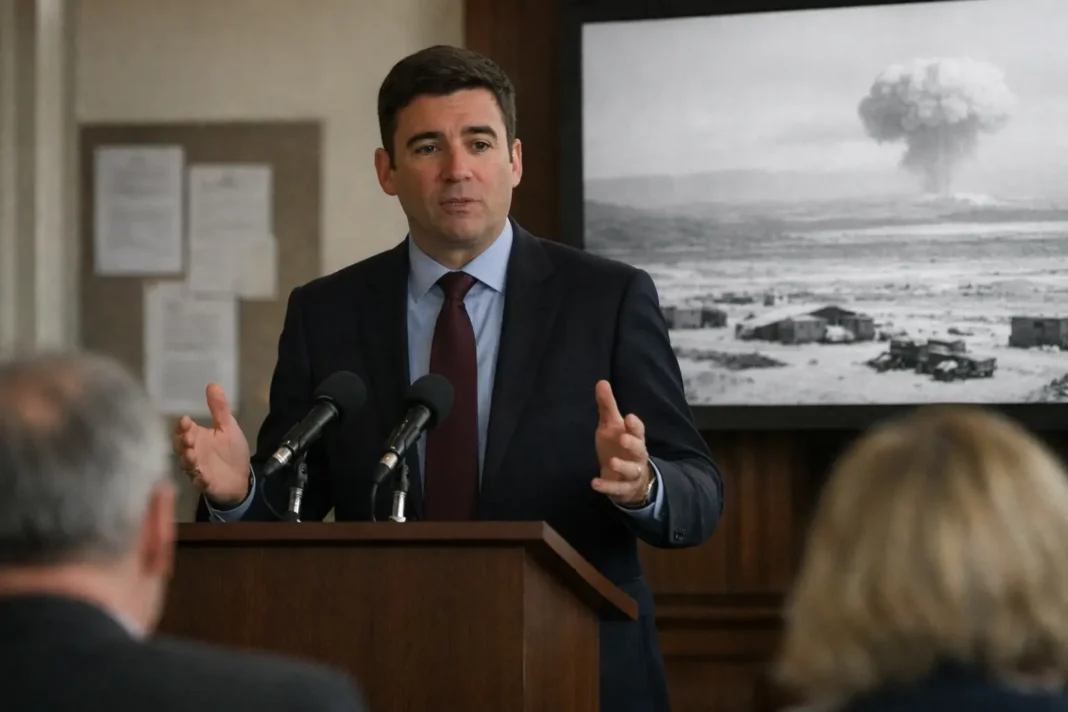

Britain’s nuclear test veterans will be offered a new route to official scrutiny after Andy Burnham confirmed the creation of an independent panel to examine the health legacy of the country’s Cold War-era atomic programme. The decision places long-standing concerns about exposure, medical records and official transparency at the centre of a formal process designed to establish a clearer public account.
The panel has been described as similar in approach to the Hillsborough Independent Panel, a model associated with the gathering, analysis and publication of official material rather than a conventional adversarial inquiry. That comparison is significant for campaigners because it points to a process focused on disclosure and historical reconstruction, with the potential to bring together documents held across different parts of the state. The work will address the unresolved health questions linked to Britain’s nuclear tests during the Cold War.
For former service personnel, the issue has never been limited to recognition. Veterans who took part in or were stationed near atomic testing programmes have sought clarity over what was known by authorities, what records were kept, and how any potential risks were assessed. The announcement does not in itself determine medical causation or liability, but it creates a mechanism through which the veterans’ experience can be reviewed against the documentary record. That distinction will matter as the panel’s credibility will depend on access to relevant files and the independence of those appointed to lead the work.
The involvement of the UK government gives the process political weight, while also raising expectations that departments and public bodies will cooperate with requests for evidence. A credible review could influence how the state handles other historic cases where national security, military service and public health overlap. It may also help define whether previous official responses were adequate, particularly where veterans argue that their health concerns were not properly heard.
Andy Burnham’s confirmation marks a shift from acknowledgement to structured examination. The central test for the new panel will be whether it can deliver an authoritative account without narrowing the scope of legitimate questions. For the veterans, the promise of the “full truth” will be measured not by the announcement itself, but by the documents released, the evidence considered and the transparency of the final findings.