HomeIsraelNetanyahu says ‘tragic mishap’ fueled Gaza hospital strikes that killed 20, including...

Netanyahu says ‘tragic mishap’ fueled Gaza hospital strikes that killed 20, including 5 journalists


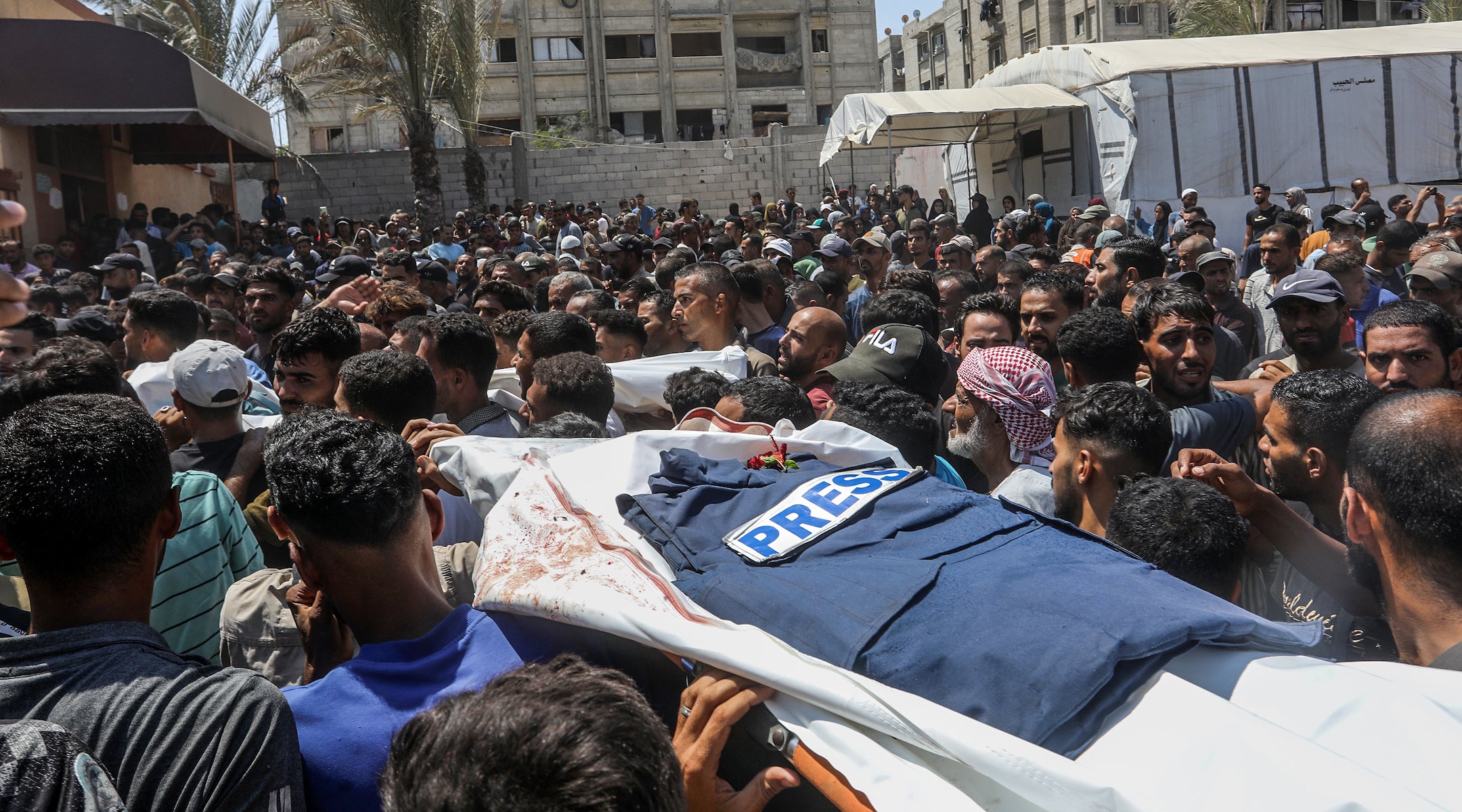
Israeli Prime Minister Benjamin Netanyahu described two strikes on a hospital in the Gaza Strip Monday that killed about 20, including 5 journalists, as a “tragic mishap.”

The first strike Monday hit the upper floor of the Nasser Hospital in Khan Younis, killing at least two people, according to the Gaza Health Ministry. The second strike came as ambulance crews and journalists arrived at the scene — in what is known as a “double tap” strike.

Five journalists affiliated with Reuters, The Associated Press, Middle East Eye and Al Jazeera were killed, according to the outlets.

The Associated Press said it was “shocked and saddened” to learn of the killing of Mariam Dagga, 33, who had worked as a visual-media freelance journalist for the agency. Reuters said it was “devastated” by the killing of contract cameraman Hussam al-Masri.

“Israel deeply regrets the tragic mishap that occurred today at the Nasser Hospital in Gaza,” Netanyahu’s office said in a statement. “Israel values the work of journalists, medical staff, and all civilians. The military authorities are conducting a thorough investigation.”

IDF spokesperson Effie Defrin confirmed in a post on X that an inquiry into the strikes had been launched, adding that the IDF “does not intentionally target civilians” and accusing Hamas of operating from the Nasser Hospital.

The strikes follow the killing of five Al Jazeera journalists in a strike on a tent near Al-Shifa hospital in Gaza City earlier this month, including a well known correspondent whom Israel had accused of being a Hamas fighter. According to the Committee to Protect Journalists, 197 journalists have been killed during Israel’s ongoing offensive in Gaza, making it the deadliest conflict for journalists ever recorded by the group.

The killings Monday, which also left dozens wounded, drew staunch condemnation from global leaders.

French President Emmanuel Macron called the strikes “intolerable” in a post on X, calling on Israel to “respect international law.”

“Horrified by Israel’s attack on Nasser hospital. Civilians, healthcare workers and journalists must be protected. We need an immediate ceasefire,” wrote U.K. Foreign Secretary David Lammy in a post on X.

U.N. Secretary General António Guterres also strongly condemned the killings in a statement from a spokesperson and called for a “prompt, and impartial investigation.”

President Donald Trump appeared initially unaware of the strikes when asked by a reporter about them in the Oval Office Monday, replying, “When did this happen?”

When pressed for a response, the president said, “I’m not happy about it. I don’t want to see it. At the same time, we have to end that whole nightmare. I’m the one that got the hostages out.”


Source link

Advertisementspot_imgspot_img

Hot this week

Complaint against Mohammed VI before the ICC: What is known, what remains to be proven

A legal initiative targeting King Mohammed VI and Moroccan...

Heat Politics: Reform’s Message Forces a Choice Between Immediate Comfort and Long-Term Costs

Reform UK's deputy leader urged acceptance of recent heat, prompting debate on policy priorities amid wildfires, crop damage and emergency strain.

Surgeon: Fewer Eye Injury Patients After Solar Eclipse Than in 1999

An eye surgeon says fewer people sought treatment for eclipse-related eye damage than after the UK's 1999 total solar eclipse.

Birmingham and Cardiff Step Up Midfield Interest as Clubs Reassess Ahead of New Campaign

Birmingham and Cardiff are targeting midfield reinforcements as both clubs prepare for the season and weigh sporting and financial priorities.

IBM unveils modular ultracold systems to scale fault‑tolerant quantum computing

IBM unveils modular ultracold cryogenic modules and superconducting links to connect quantum chips, aiming for fault‑tolerant machines by 2029.

IBM unveils modular ultracold systems to scale fault‑tolerant quantum computing

IBM unveils modular ultracold cryogenic modules and superconducting links to connect quantum chips, aiming for fault‑tolerant machines by 2029.

A 17-year-old carer on missed milestones and hidden labour of youth care

A teenager's account highlights how unpaid caregiving in youth affects schooling, social life and future prospects.

Trump Warns of Severe Economic Penalties for Countries Aiding Iran

Donald Trump warned of 'tremendous economic consequences' for any country aiding Iran after a 60-day ceasefire expired, escalating diplomatic stakes.

Israel launches criminal probe after soldiers fired on car that carried child

Israeli military confirms soldiers fired at a vehicle carrying five-year-old Hind Rajab; a criminal investigation has been opened after her death with six relatives.

Heat Politics: Reform’s Message Forces a Choice Between Immediate Comfort and Long-Term Costs

Reform UK's deputy leader urged acceptance of recent heat, prompting debate on policy priorities amid wildfires, crop damage and emergency strain.

Root’s comeback as captain sparks clinical England bowling at Headingley

Joe Root's second stint as Test captain begins as England dismiss Pakistan for 171, led by five-wicket hauls from Robinson and Tongue.

Edinburgh Fringe Embraces Explicit Comedy as Performers Push Boundaries

At the Edinburgh Fringe a wave of explicit comedy—from Julian Clary to street typists—questions conventions and draws engaged, often startled audiences.

How Honeybees Balance Their Larvae’s Diet: A Hidden Nutritional Strategy

Research shows honeybees detect nutrient imbalances in pollen and process it into well-balanced provisions for their larvae.
Advertisementspot_img

Related Articles


