
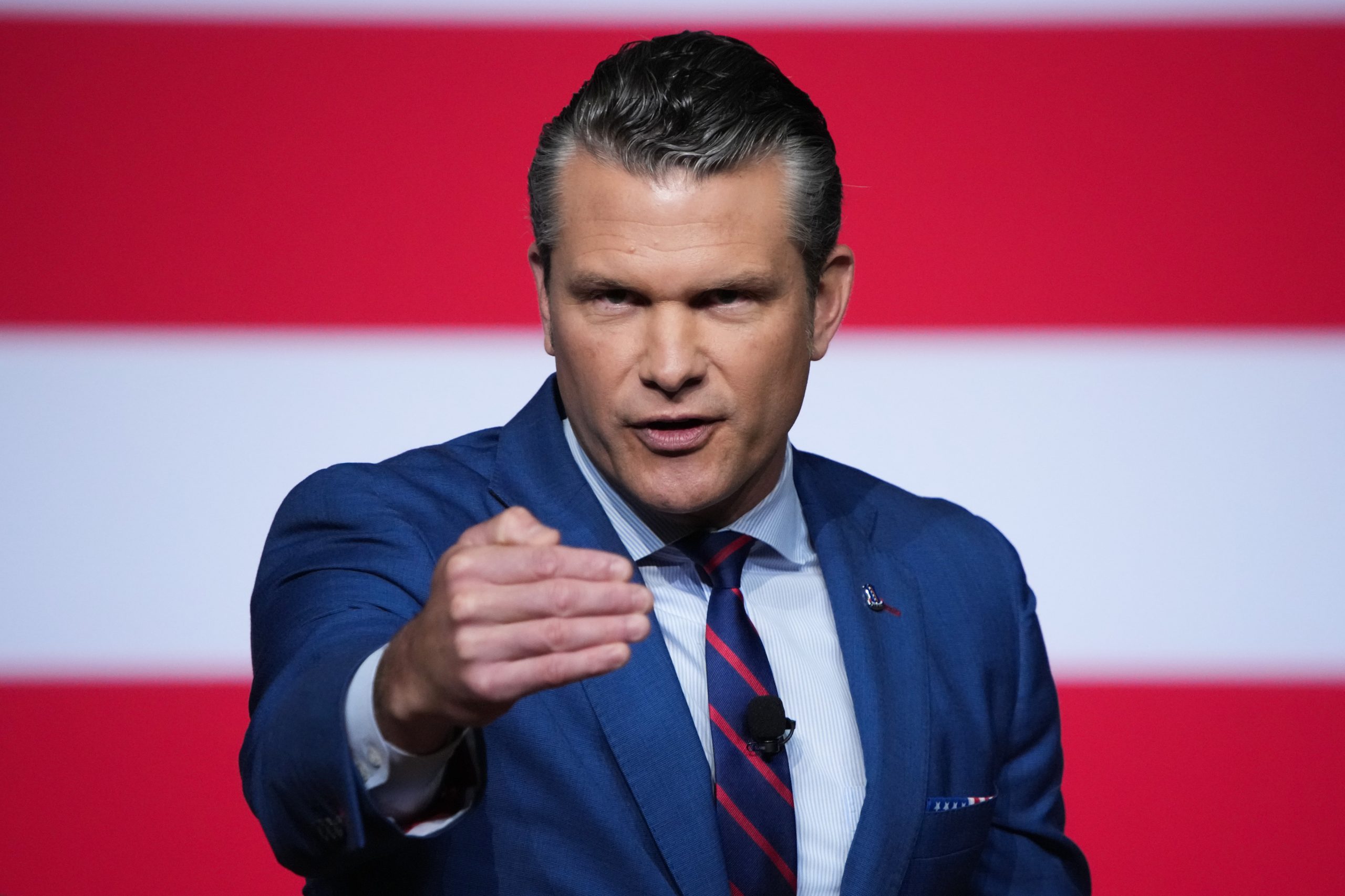

Last month, Defense Secretary Pete Hegseth announced that he was cancelling the Pentagon’s review of the Medals of Honor given to cavalry soldiers who participated in the 1890 Wounded Knee massacre, where over 300 Lakota men, women, and children were gunned down. The slaughter came shortly after the assassination of Sitting Bull, the Lakota leader, in 1889 outside his cabin at Standing Rock, the Sioux reservation in what was then the Dakota territory.
The killing occurred for various reasons. In 1876, the Lakota, Cheyenne, and other allied tribes won a great victory at the Battle of the Little Bighorn, where Civil War hero Lt. Colonel. George Armstrong Custer was felled in what became famous as “Custer’s Last Stand,” an incident which has spawned countless books and theories, all still hotly debated in social media forums. Although Sitting Bull did not kill Custer, he was blamed for it, and newspapers nationwide demanded his capture. He had become Public Enemy Number One.
He fled with his people to Canada, where he stayed for six years before returning in 1882. At that time, buffalo populations “across the Medicine Line,” as Native Americans called it, had diminished, and the U.S. government was pressuring Canada to deport Sitting Bull. As Native Americans lost their land and way of life, a phenomenon called “ghost dancing” emerged. It was promoted by a Paiute prophet (or a con man, depending on your view) named Wovoka, who spoke of restoring the old ways before white settlers arrived and bringing back the buffalo if people implored the Creator in ceremonies. Ghost Dances spread across reservations on the Great Plains, and the army saw them as a threat. The dancing was especially intense at Standing Rock, where Sitting Bull lived. Once again, he was blamed for the situation, with officials now viewing the dancing as a way to get rid of Sitting Bull—and exact revenge for the Lakota victory at the Little Bighorn, which was a huge embarrassment for the cavalry, particularly since it occurred just before the July 4 celebrations.
The Medal of Honor review began during Joe Biden’s administration at the behest of Defense Secretary Lloyd Austin. In July, 2024, Austin “directed the Defense Department to review the Medals of Honor awarded to approximately 20 soldiers for their actions during the December 1890 engagement at Wounded Knee Creek, South Dakota, to ensure no awardees were recognized for conduct inconsistent with the nation’s highest military honor,” according to the Department of Defense. Native Americans—and many white allies—have sought the rescission for years. In response, in 1990, Congress passed a resolution expressing “deep regret”—not an apology—for the incident, which even General Nelson Miles, prominent Civil War hero and leading figure of the Indian wars, called “an abomination” at the time of the massacre. In 2016, a further reconciliation with Native Americans was made when President Barack Obama signed the National Bison Legacy Act, making the buffalo the national mammal, finally, after it had been wiped out by hunters in the 19th century and served as the symbol of the Department of the Interior for years. The Medals of Honor review was underway at the time of the 2024 election, but no decision had been reached, and Austin left office in January 2025 following Biden’s loss.
Although the panel never made a recommendation, had Biden been re-elected and the medals rescinded, it would have been another landmark in federal policy towards Native Americans, along with the ground-breaking report on Native American boarding schools presented by Biden’s Interior Secretary Deb Haaland.
The famed American soldier, hunter, and showman William Fredrick Cody, better known as Buffalo Bill, was one of the first and most illustrious figures who tried to make amends for the massacre. He did so by producing a film about it in 1913, a signature re-enactment, using Lakota actors whose relatives had been slain there. Bill, one of the most celebrated men in the world, was known for his touring spectacle, “The Wild West Show,” which featured cowboys and Indians re-creating frontier battles and displaying equestrian feats to the delight of packed arenas across America and abroad. The show included Sitting Bull for four months in 1885. I wrote about the unexpected showbiz alliance of these two towering figures in my book Blood Brothers: The Story of the Strange Friendship Between Sitting Bull and Buffalo Bill.
I consulted Chief Arvol Looking-Horse, Lakota elder and 19th Generation Keeper of the Sacred White Buffalo Calf Pipe and Bundle, to write this book. I wanted to know about the legendary “dancing horse” that was outside Sitting Bull’s cabin at the time of his assassination, said to have danced as the shots were fired, trained to do so at the sound of gunfire in the Wild West Show. The image led me to write this book; I could not stop thinking about it since I read it while working on a previous book called Mustang: The Saga of the Wild Horse in the American West. What I learned from Chief Looking-Horse opened up a portal into a story whose parameters were already deep and wide. He told me it was the horse taking the bullets for Sitting Bull—not literally, but in spirit.
This was the horse that Buffalo Bill had given to Sitting Bull upon the chief’s departure from the Wild West Show. He had joined the cavalcade to see what changes were occurring across the land and to serve as an ambassador for Lakota culture, the highest-paid member of Cody’s cast. After four months, he decided that he had accomplished his mission. He had encountered many fans and foes during his tour and witnessed the technological advances underway in American cities. But he was disturbed by many things, including the fact that young wastrels were wandering the streets in many of these locations, and he couldn’t understand how such a wealthy country permitted this to happen. Often, he gave his salary to these destitute kids. Although Cody hoped to remain with the show, he longed to return home to Standing Rock, having witnessed the end of his way of life and seen enough of what had disrupted it. After his death, the dancing horse landed in another Wild West spectacle in Germany; when Buffalo Bill found out, he purchased it outright, and the last anyone knows, as I write in my book, “the horse made another appearance, in 1893, during the Columbian Exposition in Chicago. He was draped with an American flag and ridden in a parade by Buffalo Bill or someone else, the record is unclear, a silent tribute to his friend.”




