
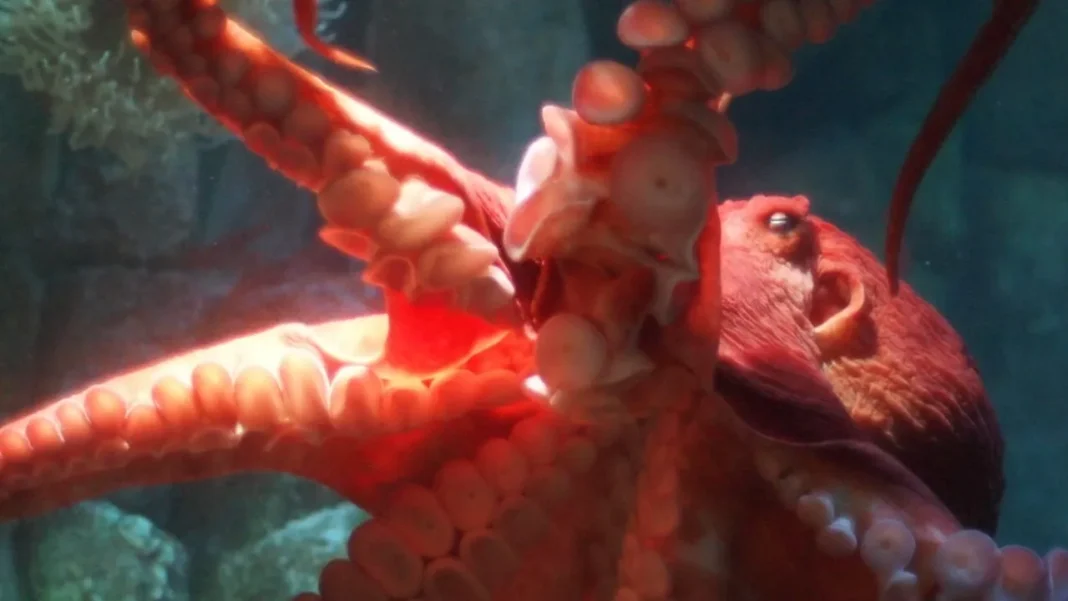

Giant octopuses that may have stretched up to 19 meters (62 feet) long appear to have been among the top predators in Cretaceous seas about 100 million years ago. The emerging picture places colossal cephalopods in direct competition with the era’s biggest hunters and suggests they were powerful enough to prey on animals once thought to have dominated them, based on research newly described in a paper published in Science. The findings overturn long-held assumptions that vertebrates like sharks and marine reptiles sat uncontested at the apex of the food chain, according to a BBC report.
The case rests on unusually well-preserved fossil jaws—beak-like mouthparts that are the only rigid element of an octopus—whose wear patterns indicate sustained crushing of hard materials such as shells and even bone. Researchers re-examined 15 large fossil beaks previously known and identified distinct signs of abrasion from heavy predation; they also located 12 more jaws from the Late Cretaceous and grouped them into two main species, Nanaimoteuthis jeletzkyi and N. haggarti.
Using relationships between beak dimensions and body size seen in living cephalopods, the team estimated that N. haggarti—and possibly both species—could attain extraordinary lengths of about 19 meters, a scale that would rank them among the largest invertebrates known to science and comparable in size to the marine reptiles of their time.
The anatomical toolkit implied by these fossils—strong arms for seizing prey and beak-like jaws suited for munching the shells and bones of other animals—supports the idea that some early octopuses were formidable predators rather than mere supporting players in the ancient food chain.
For decades, the prevailing narrative cast big sharks and reptilian leviathans as the inevitable rulers of the seas, while invertebrates like octopuses and squid were relegated to secondary roles. The new findings suggest a more complex balance of power in which outsized, soft-bodied hunters could match or even overmatch vertebrate rivals.
“These giant octopuses likely occupied the same ecological tier and may have competed with marine reptiles and sharks within the same ecosystem,” said paleontologist Kazutaka Iba. “Their existence changes how we view ancient oceans. Instead of ecosystems dominated solely by vertebrate predators, we now see that giant invertebrates such as octopuses also occupied the very top of the food web.”
Source:
www.jpost.com




