
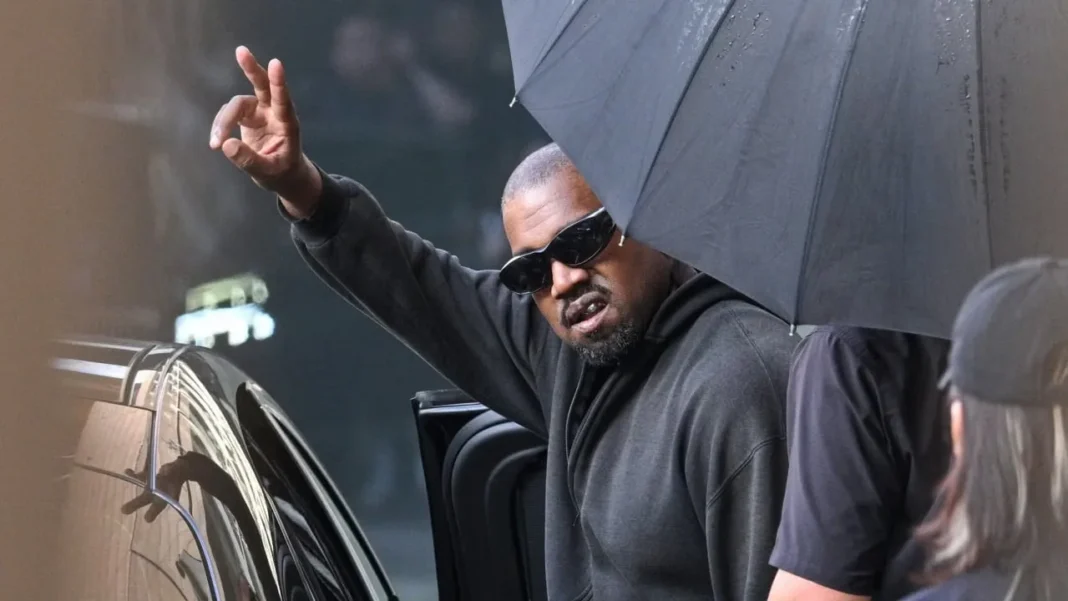

“Every human being has something of value that they brought to the table, especially Hitler,” said Ye, the rapper formerly known as Kanye West, in late 2022.
With the release of his new album, Bully, and an ambitious comeback underway, West is attempting to move past years of openly embracing antisemitism in its ugliest form. While some of his appearances have been canceled amid public backlash, the troubling question remains: why is a Hitler-glorifying artist given a platform in the first place?
Artists today are expected to conform to widely accepted norms, and when they don’t, the consequences are often swift and harsh. It has become nearly impossible to separate art from the artist, as every appearance, statement, and online interaction is viewed under scrutiny. However, when it comes to antisemitism, the standards seem to be different.
Kanye West: A dominant hip-hop voice mired in antisemitism
Kanye West is one of the most dominant voices in 21st-century hip-hop. He is also a highly controversial figure whose antisemitic turn went far beyond crossing any lines. Over an extended period, West released a song titled “Heil Hitler,” sold T-shirts with swastikas, and stated that he was going “death con 3 on Jewish people.” Altogether, his actions were not isolated incidents but a relentless behavioral pattern that openly targeted Jews.
Earlier this year, the rapper published a full-page ad in the Wall Street Journal where he apologized for his “poor judgment and reckless behavior” and denied being an antisemite. The timing – right before the release of Bully – invites skepticism about whether this was a genuine apology or a calculated PR move.
Following the album’s release, much of the public response suggested a return to business as usual. West recently performed two sold-out concerts in Los Angeles, with Lauryn Hill joining him onstage. He was also announced as the headliner for London’s Wireless Festival, which sparked outrage among Jewish communities in the United Kingdom.
After backlash from Jewish organizations and the UK Prime Minister Keir Starmer, the government banned the rapper from entering the country, and the festival was canceled altogether. In the days that followed, additional governments and organizers across Europe reversed their decisions and canceled West’s concerts in their countries.
While cancellations and bans have taken place, they have largely followed sustained public pressure rather than preceded it. More concerningly, I couldn’t help but question how West continues to be granted such massive platforms in the first place, especially less than a year after releasing a song glorifying Adolf Hitler. Public figures have seen careers collapse over far less serious incidents, yet a relentless pattern of antisemitic behavior has not produced the same lasting consequences.
Part of the issue lies in how antisemitism is viewed today. Unlike other forms of hate, it is often treated as rooted in the past and therefore easier to ignore. It manifests across the political spectrum: from Holocaust deniers on the Right who spread divisive rhetoric, to spaces on the progressive Left where the line between criticism of Israel and hostility toward Jews becomes blurred.
The result is a broader environment in which antisemitism is not met with the same urgency as other forms of hate.
Yet despite the lack of urgency, antisemitism is on the rise. In the United States, 70% of religion-based hate crimes target Jews, and overall, 91% of American Jews say they feel less safe. In the UK, 2025 saw the second-highest level of antisemitic incidents on record, with levels remaining roughly double those seen before October 2023.
In that context, using a platform with millions of followers, as West did, to spread hate and violence against Jews is not just distasteful; it contributes to an already worsening reality.
This really is not about how popular Kanye West’s new album will be or whether his music will continue to prosper. In a culture that prides itself on standing up against hate, antisemitism does not carry the same gravity.
While public outrage – often led by those directly affected – can drive real change, it is not sufficient. Granting a self-declared antisemite who has engaged in deeply harmful rhetoric prominent platforms sends a troubling message to Jews around the world, one that allows such bullying to persist.
The writer is a content writer based in Tel Aviv and a fellow in the Argov Honors Program for Diplomacy and Leadership at Reichman University.
Source:
www.jpost.com




