


The Food and Drug Administration approved the drug that may change everything we know and think about weight loss medications.
Dr. Osnat Raziel, a senior expert in surgery and director of the multidisciplinary center for the treatment of obesity at Assia Medical, Assuta Ramat Hahayal, explains: “In recent years, we have become accustomed to thinking about obesity treatment through needles. Ozempic, Wegovy and Mounjaro changed the medical world and led to significant weight loss and improvement in metabolic morbidity. But now, with the FDA’s approval of Orforglipron (Poundio), a new player enters the market that challenges the most basic assumption: Maybe injections are not necessary”.
According to her, this is the first pill from the GLP-1 family that is not peptide-based but a small molecule, which allows simple intake, without restrictions of fasting, water or timing. This is a paradigm shift that may affect not only efficacy, but mainly adherence to treatment, and the number of patients who will choose to start it.
Dr. Raziel said that the main uniqueness of Orforglipron is not only in the mechanism of action, but in the format. While drugs like Semaglutide require precise conditions for absorption, Orforglipron can be taken freely at any time, with or without food.
The clinical significance is profound. If in the past patients were required to adapt their lives to the medication, now the medication adapts itself to the lifestyle. “For many patients, especially those who fear injections or have difficulty with persistence, this is a change that may be decisive”, she added.
Today, about 80% of obesity treatments are based on injections, but forecasts suggest that pills may capture about 20% of the market by the end of the decade.
The key data come from Phase 3 studies, led by the ATTAIN-1 study, published in NEJM. In this study, which lasted 72 weeks, an average reduction of about 12.4% of body weight was observed at the high dose (36 mg), which is about 27.3 pounds on average.
Beyond the average, it is important to look at the distribution of response: About 59.6% of patients lost at least 10% of their weight and about 39.6% lost more than 15%.
These data place the drug in the category of clinically significant weight loss, although slightly below the results of stronger injections such as Tirzepatide.
In another study, which included a diabetic population (ACHIEVE-3), a clear advantage was also demonstrated in the metabolic aspect: A reduction of 2.2% in HbA1c alongside a weight loss of about 9.2%, compared to only 5.3% with oral Semaglutide.
One of the most important aspects of drugs from the GLP-1 family is the effect beyond weight itself. Here too, Orforglipron presents interesting data.
In studies, the following were observed:• A reduction in triglycerides and non-HDL cholesterol• A reduction in systolic blood pressure• A significant reduction in inflammation markers, including hsCRP by about 47.7%
The meaning is that the drug acts not only on appetite, but on a set of mechanisms associated with metabolic syndrome. This is part of the broader conceptual change: Obesity is not only excess weight, but a systemic disease.
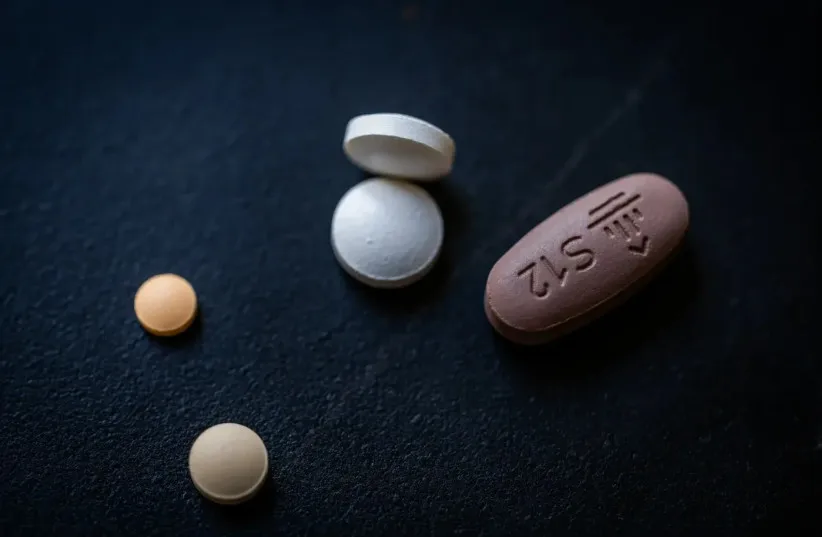
Is it a replacement for injections or an addition?
The data show that the weight loss with Orforglipron, around 12%–15%, is slightly lower than that observed with treatments such as Mounjaro or Wegovy at high doses, which can reach 15%–20% and even more.
But this gap is not necessarily a disadvantage. On the contrary. It defines the place of the drug: First-line treatment for patients at the beginning of the journey, a solution for patients who are not interested in injections and an option for maintaining weight loss after more intensive treatment.
The main side effects of the drug are gastrointestinal: Nausea, vomiting and diarrhea.
About 10% of patients discontinued treatment in the studies, a rate similar to other drugs in the group.
As with other GLP-1 drugs, there is a warning regarding a potential risk of thyroid tumors, and therefore careful medical adjustment is required.
The drug was approved in the United States in April 2026 and will be launched immediately, with a starting price of about 149 dollars per month, which may increase with higher doses and will likely arrive in Israel next year.
The economic significance is no less important than the clinical one. A pill that is simple to manufacture and transport may reduce costs and expand access, especially in countries where injection-based treatment is more logistically complex.
Expectations in the market are high. Forecasts speak of billions of dollars in sales in the coming years and a change in the structure of the obesity drug market.

Orforglipron is not just another drug. It represents a deep shift in the perception of obesity treatment
The transition from injections to pills recalls previous revolutions in medicine, in which convenience and accessibility were no less important than efficacy. It is possible that in the future we will see combined models, in which patients will start with oral treatment and move to more advanced treatments as needed.
The most important message is that obesity treatment continues to develop at a rapid pace, with increasingly diverse tools. It is not a single solution that suits everyone, but a broad therapeutic arsenal that allows true personalization.
Orforglipron opens a new era in which obesity treatment can be simpler, more accessible and perhaps also more acceptable to patients.
It does not replace the most powerful drugs, but it may reach a much wider audience. And in chronic diseases like obesity, sometimes it is precisely accessibility that makes the biggest difference.
Source:
www.jpost.com




