

The war with Iran is coming to an end, and the sense of disappointment in Jerusalem could hardly be greater.
The Iranian regime has for now survived. Its missile production infrastructure remains largely intact, and whatever agreement ultimately emerges from the current negotiations will almost certainly leave Tehran with the ability – whether in 15 or 20 years – to resume uranium enrichment on an industrial scale.
Yes, Iran was weakened. Its nuclear program has been set back, and its military capabilities suffered significant damage. But while the threat has been degraded, it has not been eliminated.
This does not mean that the war was a mistake. Israel had an opportunity to deepen its military partnership with the United States and strike at a regime that has spent nearly five decades funding terrorism, destabilizing the region, and openly working towards Israel’s destruction.
The campaign may not have achieved its most important objective – toppling the ayatollahs – but it demonstrated an unprecedented level of operational cooperation between Israel and the United States and inflicted meaningful damage on Iran’s military and nuclear infrastructure.
Yet – and this is the source of the disappointment – when Israel embarked on this war at the end of February, it did so with a vision of fundamentally changing the reality posed by Iran. The agreement now taking shape does not deliver that outcome. Part of this has led to reactions by prominent Israelis that can only be described as ridiculously immature.
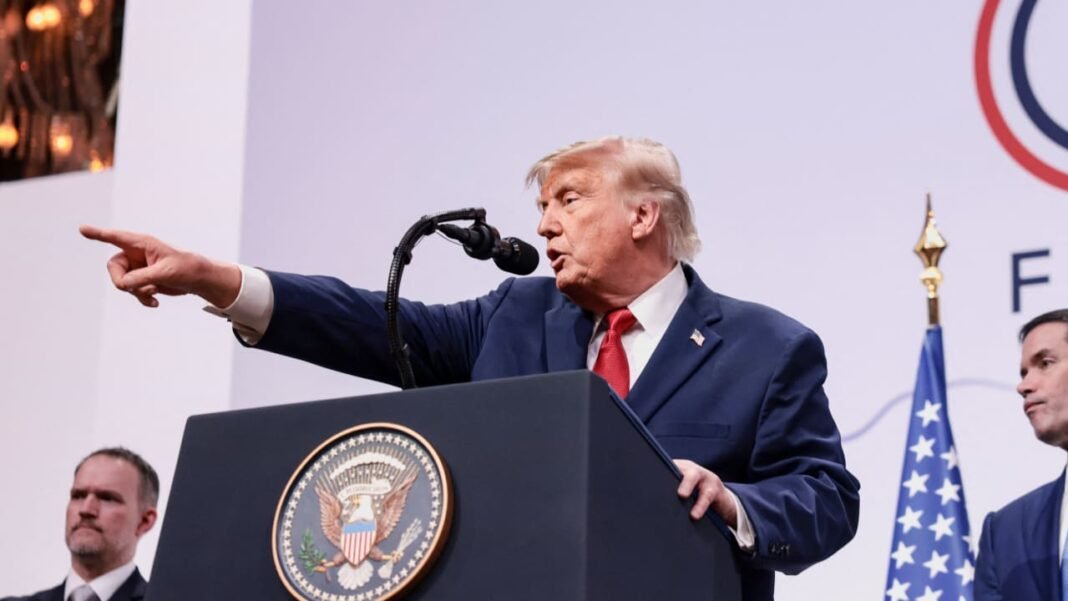
Some are portraying President Donald Trump as a traitor, a flip-flopper, and a man who abandoned Israel. One news magazine put a headline on its front page with the title: “No longer a friend.” Journalists aligned with the Right who proudly posted photos of themselves interviewing Trump in the past are now putting Xs over those pictures.Unfortunately, these people misunderstood how relations work with the United States.
Trump went to war expecting a certain outcome, and when that outcome did not materialize, he made a decision to cut his losses and do what he believes serves America’s interests: to end the war now, under terms that many of us wish were stronger and more favorable. We can disagree with the deal and think it’s deeply flawed – I definitely do – but Trump’s decision was never about Israel’s interests alone. It was about America’s interests.
What these Israelis are also failing to recognize is that now is not the time to grieve and just think about what we failed to achieve, but rather to use this moment to try and benefit from the strategic opportunities that emerge from this new reality. One way to do that is to stop focusing on the US-Iran MoU and to instead get working on a new US-Israel MoU.
To some extent, this is a similar situation to what happened after US president Barack Obama concluded his landmark nuclear agreement with Iran in 2015.
Netanyahu takes advantage of Obama’s nuclear deal with Iran
Prime Minister Benjamin Netanyahu waged an unprecedented campaign against the deal, culminating in his controversial speech before Congress. He invested enormous political capital in trying to stop it, and even though he failed, once the agreement was signed, he quickly pivoted.
Rather than stay stuck on the failure to stop the deal, Netanyahu understood that he had an opportunity to bolster Israel’s military capabilities and the alliance with the United States.
The result was the largest MoU in the history of the US-Israel relationship – a $38 billion military assistance package spread out over 10 years.
Netanyahu was able to tell Israelis that although he had failed to stop the nuclear deal, he had secured the largest military aid package in the country’s history. Obama was able to reassure Americans that despite disagreements with Israel over Iran, the United States remained fully committed to Israel’s security.
Both sides benefited, and the episode demonstrated that even when Washington and Jerusalem disagree on Iran, they can still find ways to strengthen the broader strategic relationship.
Today, as another Iran agreement takes shape – one that Israelis are deeply concerned about – there is an opportunity to replicate that model.
Technically, the Obama-era MoU expires next year, and if a new package is to be negotiated, discussions need to already be underway.
Nevertheless, simply negotiating a larger version of the existing arrangement – under which Washington provides funding that Israel uses to purchase American weapons – would be a missed opportunity.
The last two-and-a-half years have transformed the region and exposed new strategic realities, allowing for a more ambitious vision.
One possibility, for example, would be to explore the possibility of the Americans opening a base in Israel either instead of, or in addition to, the major military installations the US already has throughout the Middle East.
Israel has a good case to make. It is a stable democracy, shares similar values as the US, is a proven military power, and, as the recent war has shown, is America’s most capable partner. It is true that an American base would raise questions about Israeli operational freedom, but this might be outweighed by the level of deterrence a US presence in Israel would provide.
An adversary would know that an attack on Israel would be risking a direct confrontation with the United States. This is something no aid package, no matter how generous, would be able to provide.
If permanent basing proves unrealistic, there are other options such as America deploying F-22 Raptor fighter jets or the strategic B-2 bombers in Israel, or even a framework that would allow Israel access to such platforms under certain circumstances.
These are just some ideas being thrown around within the defense establishment. Whatever the government decides to ask for, it will do so with the recognition that the war with Iran, the regional upheaval that has followed October 7, and the prospect of a new nuclear agreement have together created a rare strategic moment.
Israel may not get everything it wanted from the war, and it may not get everything it wants from the negotiations that will now begin. But just as Netanyahu turned the disappointment of 2015 into a major strategic achievement, Israel has an opportunity to do so again.
The writer is a co-founder of the MEAD Forum, a senior fellow at the Jewish People Policy Institute, and former editor-in-chief of The Jerusalem Post. His latest book (with Amir Bohbot), While Israel Slept, is a bestseller in the United States.
Source:
www.jpost.com




