
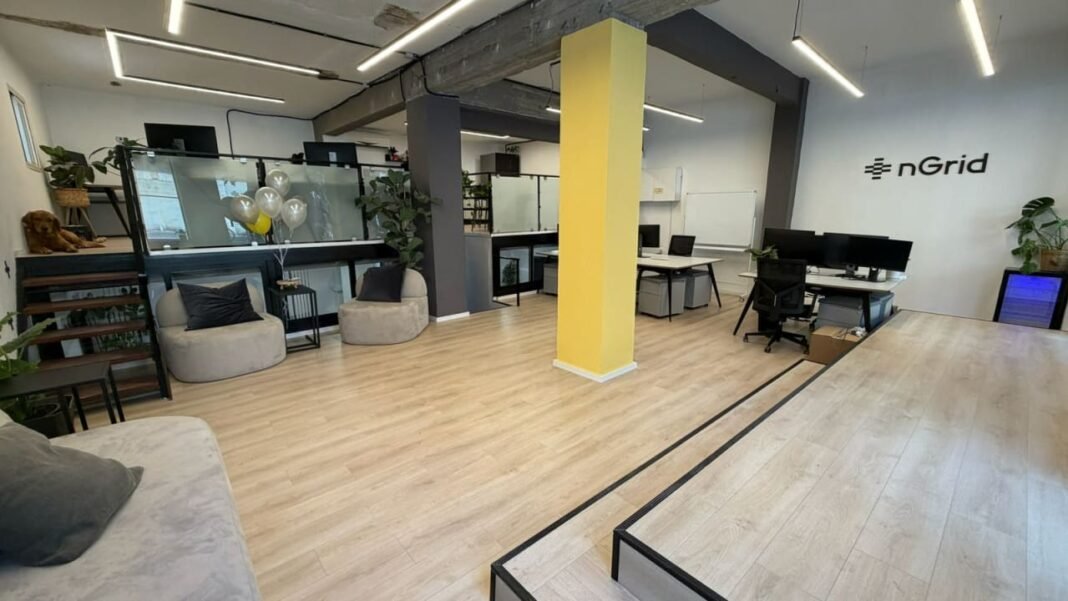

The looming energy crisis that is expected to affect Israel and the world in the coming years, with the development of artificial intelligence data centers putting pressure on the grid, might have a solution thanks to nGrid, an Israeli energy management company that spoke to The Jerusalem Post last week.
According to Omer Kriger, the CEO and Co-founder of nGrid, the recent push for renewable energy over fossil fuels and the increase in electricity demand in the country require a virtual response that gives consumers greater flexibility in their energy consumption.
“Renewables, like solar or wind power, are not like fossil fuels. They are constantly changing, offering varying levels of power depending on external factors such as weather or time of day. So we aim to give our clients a tool that allows them to have flexible consumption, saves them money, and has them using the most out of these energy sources,” he explained.
Kriger explained that the company offers AI software that manages electricity consumption and battery usage, with its current applications primarily at industrial and commercial sites.
The system works by using batteries and local energy sources, like solar panels or wind turbines, and managing the amount of energy they use, when they are consuming, and when they are charging the batteries.

Kriger explained that electricity prices fluctuate by the hour and with current consumption, with the software working in real time to determine when it’s best to charge a battery and when companies should use their stored energy rather than grid electricity.
“The value actually stems from the gaps between supply and demand. Gaps between supply and demand are ridiculously volatile in a way, with prices of electricity going from several hundred dollars per megawatt hour all the way to negative numbers,” he said.
“So, sometimes companies are willing to pay you to increase your consumption because, for example, there’s not enough demand during a windy season or when there is a lot of sun now, and it always needs to be balanced. So on the same day, that kind of fluctuation is happening.”
Not making batteries, but software to improve batteries
Kriger also explained that even if the company doesn’t produce the batteries used in their systems, it can adapt them to several different models currently available in the market with no real disadvantages.
“The only thing that we need is an asset that can turn the electricity consumption into something more flexible,” he said. “I need to have something that I can manage and control, and our clients get a return for that.”
He also said that the installation requires minimal hardware, with the software serving as a layer of optimization within existing facilities, without the need to modernize the site.
Local and remote layers working together
The company’s software works, according to nGrid, with a double system that its present both locally and remotely, allowing it to manage electricity intake both in specific facilities and the flow of electricity amid a network of sites.
“The system has two layers: the local one that has some control locally, but also a cloud one. And communication between them is key for the system to make the best decisions in things like battery charging and usage,” he pointed out.
He also said that even if the system was not designed to be activated during a blackout, it could be adapted for those emergencies if there were a need for a specific client with that as a main concern.
“For example, our system could perfectly work with just a battery and a solar panel, if the consumption is leveled enough,” he added.
Israel’s electric future needs to be flexible
Kriger also said that these systems that manage electricity and create “virtual power plants” will be key to Israel’s future electricity consumption, which seems to be facing a crisis due to increased nationwide demand.
“There is increasing demand for flexibility, and volatility is expected to increase as renewable energy becomes a significant power source. And Israel being a ‘power island’ that can’t rely on its neighbors for electricity makes these systems a key asset,” he said.
He also added that in terms of regulations, the government’s push to electrify most public transport and make electric chargers available nationwide is a key step in making Israel’s energy sector more flexible.
“The government now faces two challenges: Increasing energy supply nationwide and managing the volatility. And nGrid is already working on solving the second problem,” he concluded.
Source:
www.jpost.com






