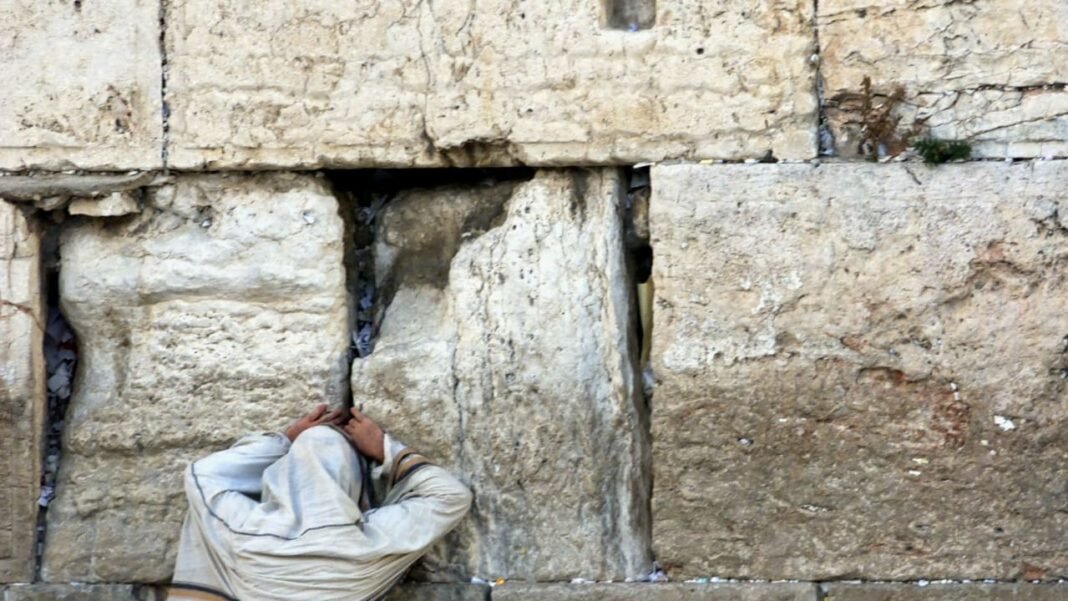

Every year, Tisha B’Av asks the Jewish people to undertake a difficult act of memory. We mourn the destruction of both Temples in Jerusalem and the calamities that followed. The day reminds us that Jewish history has known exile and return, despair and renewal.
This year, its lessons feel especially urgent.
The Jewish people face a period of profound tumult. Elections loom in both Israel and the United States. Debates over security, democracy, the balance of power between Israel’s institutions, religious pluralism, and the future of the Jewish state have grown increasingly bitter. Disagreements that once remained vigorous have, in too many cases, become personal.
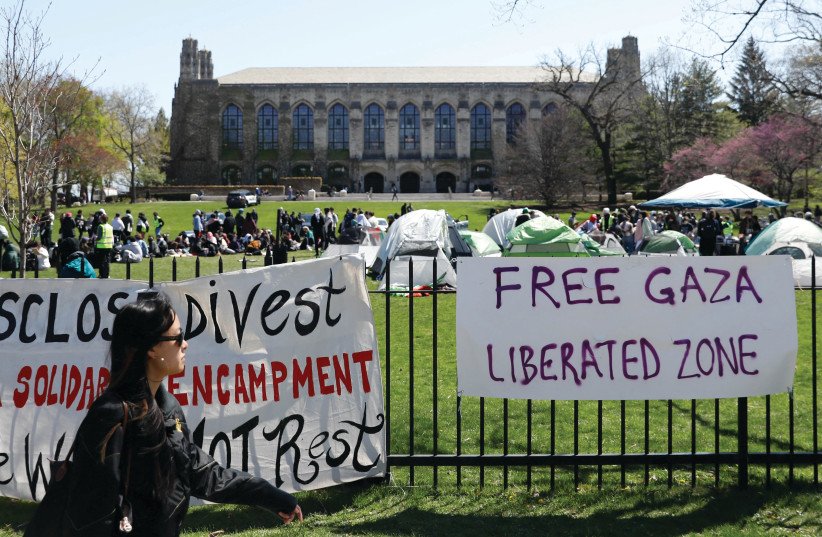
At the same time, antisemitism remains alarmingly high. Jewish students face harassment on university campuses. Jewish institutions confront continuing security threats. Violent rhetoric has become increasingly common. At a moment when outside pressures demand unity and resilience, we too often direct our frustrations at one another.
Last month, I visited the Maimonides Synagogue in Cairo, the historic synagogue associated with the Rambam, one of Judaism’s greatest sages.
Standing there, not far from the pyramids, I thought about the endurance of Jewish civilization. We did not survive because history treated us kindly. We survived because Jews remained committed to Judaism and to one another.
Maimonides lived through exile, upheaval, and fierce intellectual disagreement. Yet he devoted his life to preserving a common Jewish inheritance. In The Guide for the Perplexed, he wrestled with the relationship between philosophy and faith. In the Mishneh Torah, he organized Jewish law so that it could remain accessible wherever history carried the Jewish people.
His work reflected a belief that disagreement need not divide a people, provided the argument remains grounded in responsibility for their shared future.
That lesson belongs at the heart of Tisha B’Av.
Our tradition teaches that the Second Temple fell because of sinat chinam, baseless hatred among Jews. Historians rightly point to the political, military, and economic forces that led to Jerusalem’s destruction. Our sages chose to emphasize the moral failure within the Jewish community.
Their warning has lost none of its force. Division does not merely make a people angrier; it makes them weaker.
Jewish tradition has never demanded uniformity. The Talmud records disagreement on nearly every page. Jews have argued over law, theology, philosophy, and politics for thousands of years. Those arguments helped sustain Judaism across continents and centuries.
The danger begins when disagreement hardens into contempt and political opponents begin treating one another as enemies.
There is a difference between arguing over the future of the Jewish people and arguing that someone has no place in it.
We should not abandon our convictions or pretend that the questions facing Israel and the American Jewish community lack consequence. They deserve serious debate and passionate advocacy. But those with whom we disagree remain part of the same people.
How to preserve the Jewish people
History shows what happens when factionalism overwhelms shared purpose. Internal discord has weakened the Jewish people before, often at moments when threats from beyond demanded cohesion. We should not assume that our generation is immune from the same mistake.
That danger is particularly clear today. Those who attack Jews do not distinguish between Orthodox and Reform, Progressive and Conservative, American and Israeli. They do not ask how we voted, what we believe about the Israeli government, or which synagogue we attend.
To them, we are Jews.
Our enemies understand that we are one people. We should not need their hatred to remind us.
That recognition should not erase our differences. It should place them in perspective.
Tisha B’Av is not merely a day to mourn what was destroyed. It is a day to consider what we are responsible for preserving. The Temple fell nearly 2,000 years ago. The Jewish people endured. Through exile, persecution, and dispersion, Jews carried forward a civilization grounded in covenant, learning, and responsibility for one another.
The question on Tisha B’Av is not only what destroyed Jerusalem. It is what we are doing to preserve the Jewish people now.
As another season of difficult political choices approaches, we should remember that strong disagreements need not become permanent divisions. We can defend our principles without denying one another’s place within the Jewish people.
The Romans destroyed the Temple. We bear responsibility for ensuring that our own divisions do not weaken what generations of Jews struggled to preserve.
The writer is CEO of the Conference of Presidents of Major American Jewish Organizations. His opinions are his own and do not necessarily reflect those of the 50 members of the Conference.
Source:
www.jpost.com