
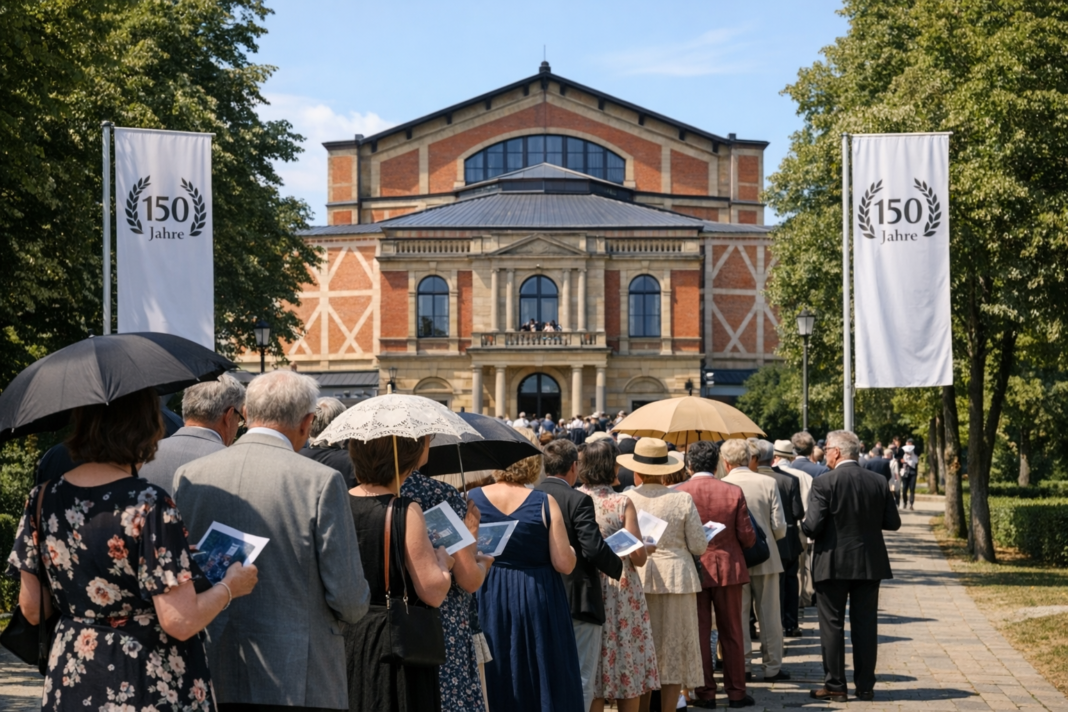

Bayreuth’s 23‑Hour Wagner marathon this summer became a test of stamina as audiences attended an extended sequence of performances to mark the 150th anniversary of the festival. The edition, dedicated exclusively to the works of Richard Wagner, combined the full Ring cycle with additional operatic programmes across consecutive days, producing cumulative attendance periods that reached roughly 23 hours for some patrons during the festival run.
The festival, founded in 1876 with the first performances of the Ring cycle, has attracted a long list of notable cultural figures across its history, including composers such as Liszt and Bruckner and writers from Virginia Woolf to Thomas Mann. The event’s history also includes controversial associations: visitors have ranged from choreographer Sergei Diaghilev and activist Emma Goldman to figures like Diana Mosley and Adolf Hitler. The 150th anniversary drew particular attention and intensified interest from international audiences.
Organisers reported that tickets for this anniversary edition sold out within 90 minutes of release. The Festspielhaus’s traditional architecture contributed to conditions reported during the festival: seating is unpadded, there is no air‑conditioning, and the shortest scheduled work runs approximately two and a half hours without an intermission. A visiting critic documented experiencing prolonged periods seated on firm benches during a regional heatwave, noting that programmed running times and environmental conditions combined to create extended uninterrupted attendance segments for some festivalgoers.
Despite operational constraints and the site’s contested history, the festival remains a focal point for those seeking live performances of Wagner’s repertoire. Event organisers emphasised the festival’s artistic remit and historic staging practices, while cultural institutions and commentators continued to discuss both the musical legacy and the broader historical context associated with the Bayreuth festival. The anniversary season underlined persistent international demand for Wagner at Bayreuth and highlighted logistical considerations for attendees confronting both long programme durations and venue conditions.







