
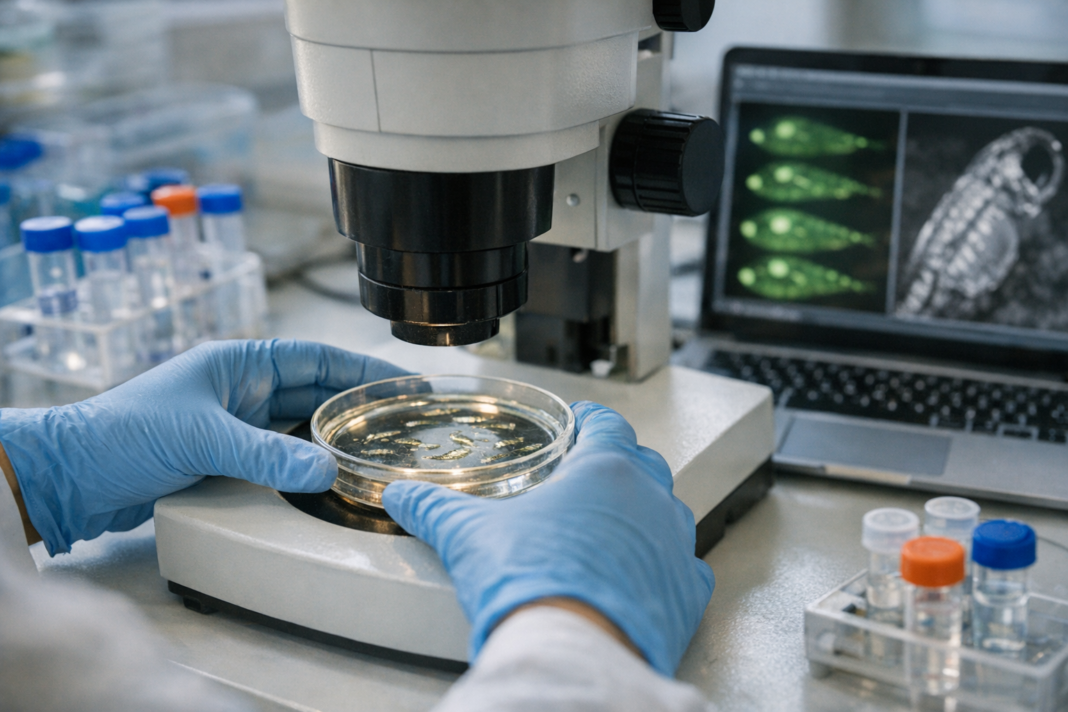

Genetic changes may set off a cascade that hardens and degrades the spine’s natural shock absorbers, according to a new laboratory study. The authors report that zebrafish carrying a faulty collagen-related gene developed mineral buildup and progressive spinal fusion resembling aspects of human intervertebral disc disease. The study further shows that treatment with an osteoporosis drug already in clinical use, together with interventions aimed at fat metabolism, substantially reduced the pathological changes in the animal model.
The research team used the zebrafish model to track how genetic alteration affected extracellular matrix composition and mineral deposition within the developing spine. Detailed tissue analysis revealed abnormal calcification of structures that normally act as shock absorbers between vertebrae, followed by fusion of adjacent vertebral elements. The pattern of degeneration in the fish is reported to mirror key structural features observed in human degenerative disc conditions.
Intervention experiments showed that pharmacological modulation with an approved osteoporosis compound diminished the extent of mineralisation and limited vertebral fusion in affected fish. In parallel experiments, manipulating lipid-handling pathways reduced indicators of cellular stress associated with the aberrant matrix changes. The authors describe these results as evidence that both mineral-regulating and metabolic pathways contribute to the progression of disc pathology in this genetic context.
The study’s findings point to multiple translational possibilities, chiefly repurposing existing therapeutics and exploring metabolic targets as complements to structural interventions. The investigators emphasize that the outcomes derive from an aquatic vertebrate model and that verification in mammalian systems will be necessary before clinical application. Controlled preclinical studies and careful safety assessment will be required to determine whether similar benefits occur in humans.
Overall, the work clarifies a mechanistic link between a collagen-related genetic defect, altered metabolism and pathological spinal mineralisation, and identifies candidate intervention strategies that merit further study. The authors conclude that targeting both mineral deposition and metabolic processes could expand approaches for preventing or slowing degenerative disc disease and its contribution to chronic back pain.






