HomeScienceWhy the Tomb of Genghis Khan Has Stayed Hidden for Nearly 800...

Why the Tomb of Genghis Khan Has Stayed Hidden for Nearly 800 Years

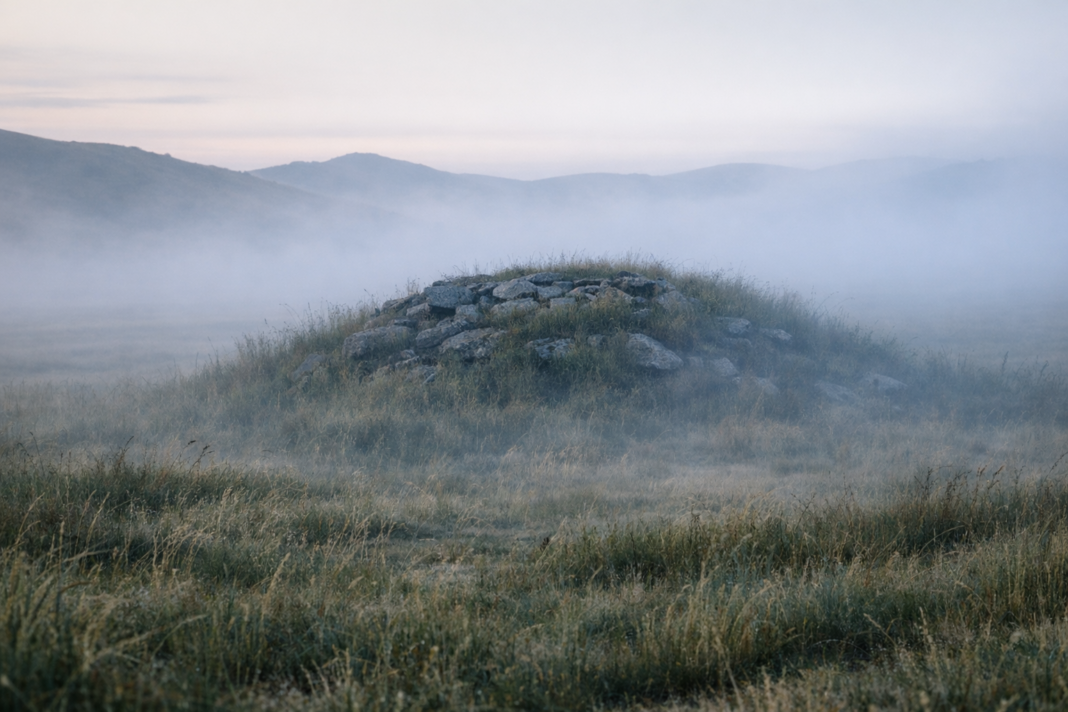
Nearly eight centuries after his death, the final resting place of Genghis Khan remains one of history’s most elusive mysteries. Contemporary accounts are sparse about his death in 1227, and a complex mix of ritual, deliberate secrecy and later political restrictions have left archaeologists with few reliable leads. The most persistent candidate is the mountain known as Burkhan Khaldun, but competing claims and formidable terrain have so far prevented confirmation.

The scale of the man and his conquests helps explain the appetite for discovery. Born around 1162 and proclaimed universal ruler in 1206, Genghis Khan forged an empire that stretched from the Korean peninsula to the Caspian Sea, introduced administrative and commercial practices that accelerated exchange across Eurasia, and fielded an army of roughly 100,000 horsemen. Those developments make locating his burial place of interest not only to historians but to scholars of cultural and technological transmission across continents.

Accounts of the funeral that circulated after 1227 describe an elaborate and secretive interment: the body wrapped and placed in a deep grave, attendants and goods interred with it, and measures taken to erase traces—river diversion or trampling, and the killing of witnesses on the return route. Later monarchs reportedly assigned a guardian clan, the Darkhad, to protect the burial area. Centuries of state policy also shaped access: the site around Burkhan Khaldun was at times designated off-limits, and during the 20th century Mongolia’s communist government restricted movement and even suppressed public references to the leader, limiting both local and international investigation.

Modern searches have combined fieldwork with new methods. A 2010 crowd-sourced effort asked volunteers to scan satellite images of the Burkhan Khaldun region; roughly 10,000 people contributed about 30,000 hours and identified more than 100 features of archaeological interest, yielding dozens of legitimate sites but no trace of the khan. Investigators cite dense vegetation, extreme seasonal climate swings, sparse road networks and the deliberate concealment measures described in historic sources as major obstacles. The mystery endures: despite renewed interest and technological advances, the combination of historical secrecy and harsh geography has so far kept Genghis Khan at rest. The account of this search appears in a recent work by Sam Kean, published by National Geographic Partners.


Advertisementspot_imgspot_img

Hot this week

Tirzepatide drugs activate brown fat in obese mice, suggesting new metabolic pathway

A mouse study finds tirzepatide drugs activate calorie-burning brown fat, a possible pathway behind strong weight-loss effects; human confirmation needed.

Ed Sheeran Cancels Massachusetts Shows Amid Severe Weather Warnings

Ed Sheeran's concerts in Massachusetts on Friday and Saturday were cancelled following severe weather warnings; fans are advised to monitor official channels.

Beckham receives £38.5m from DRJB dividend after World Cup ad deals

David Beckham secured £38.5m from DRJB Holdings dividends tied to World Cup advertising agreements.

NASA moves forward with PRIMA, a far‑infrared probe to expand cosmic reach

NASA advances the PRIMA far‑infrared telescope into preliminary design; a 1.8 m probe to study planet formation, galaxies and black holes, launch after 2033.

Six Decades of Lives: What the 7 Up Project Leaves Behind

The long-running 7 Up series, begun in 1964, concludes as participants reach 70, leaving a unique record of social change and human lives.

OpenAI discloses testing bots accessed public US agency sites, sparking questions on data use

OpenAI says test bots accessed public pages on several US government agency sites, raising questions about data practices and web security.

Burnham unveils scheme to support first-time buyers excluded from family backing

Burnham unveils a scheme aimed at first-time buyers without family support, spotlighting housing affordability and access to the market.

England’s Entertaining Chaos Exposed by Spain’s Composure, Says Chief Writer

Phil McNulty argues England's exuberant style needs more control after Spain's composed display highlighted gaps ahead of major tournaments.

Why the question ‘Can you be English and non‑white?’ keeps coming back

Rishi Sunak and others challenge attempts to define Englishness by ethnicity, warning of a 'slippery slope' and the debate's impact on belonging.

International side stuns hosts with 10.5-7.5 edge going into singles

The International Team holds a 10.5-7.5 lead over Team USA ahead of the decisive singles at the Presidents Cup.

Break Clause: a tenancy binds a breakup in a fresh Channel 4 dramedy

A Channel 4 dramedy follows two lovers who must live together after signing a rental contract that won’t let them part ways.

Tirzepatide drugs activate brown fat in obese mice, suggesting new metabolic pathway

A mouse study finds tirzepatide drugs activate calorie-burning brown fat, a possible pathway behind strong weight-loss effects; human confirmation needed.

NASA moves forward with PRIMA, a far‑infrared probe to expand cosmic reach

NASA advances the PRIMA far‑infrared telescope into preliminary design; a 1.8 m probe to study planet formation, galaxies and black holes, launch after 2033.
Advertisementspot_img

Related Articles
