
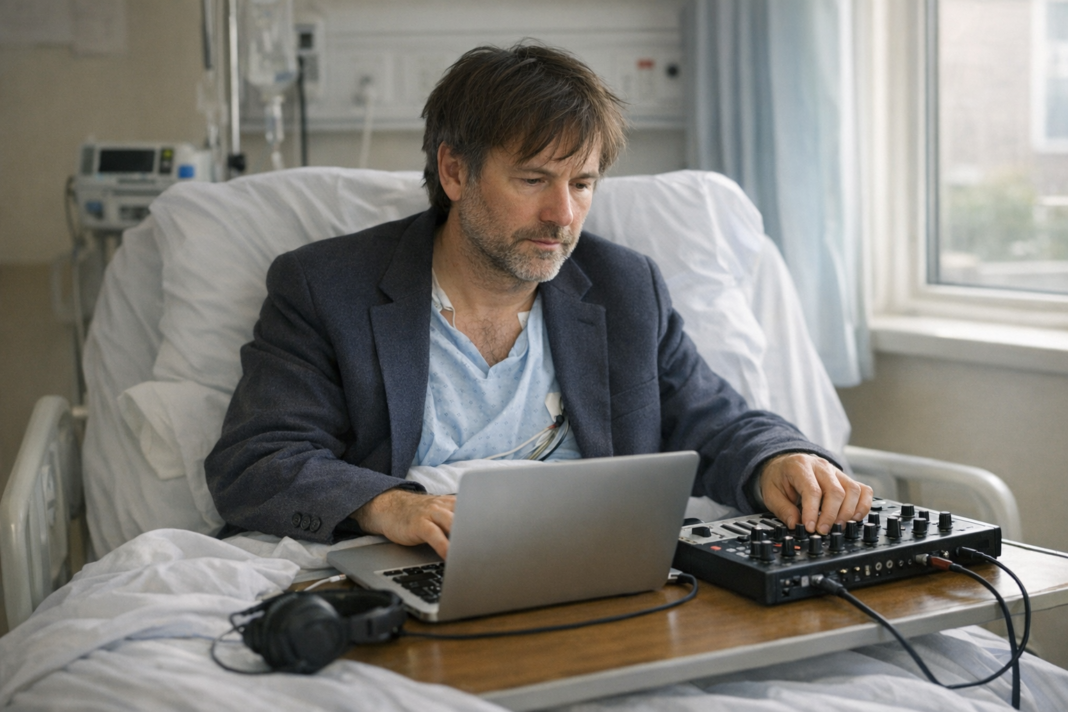

At the height of his reputation, James Ford was counted among Britain’s most sought-after record producers, collaborating with acts ranging from Arctic Monkeys to Pulp and the Pet Shop Boys. That momentum was interrupted by a diagnosis of leukaemia, a turning point that led him to record significant music from a hospital bed while undergoing treatment. The episode has prompted renewed attention to his catalogue and to the practical realities of making records under severe personal strain.
Before his illness, Ford’s production work spanned breakthrough projects and left an imprint on the British indie and pop scenes. He played a formative role in the sound of early Klaxons material, including their 2007 debut, and has been sought after for his ability to translate a band’s energy into distinctive studio recordings. Anecdotes from those sessions underline both the chaotic creative environments in which Ford has worked and the collaborative trust artists placed in him.
The diagnosis forced a reassessment of priorities. Ford has spoken about the fragility of life and the altered perspective that followed. Rather than stepping away from music, he continued to work while receiving care, assembling tracks and overseeing production tasks from a hospital setting. That process required adapting usual studio routines to constrained circumstances and relying on close collaborators to realise ideas while he balanced treatment and creative decisions.
Ford’s experience highlights how personal health can intersect with professional life in the music industry and illustrates resilience in practice: continuing creative output despite serious illness. His hospital-recorded project stands as a testament to the adaptive methods producers and musicians may adopt when conventional studios or schedules are unavailable. The resulting work has added a new chapter to Ford’s career and underscored the practical and emotional challenges faced by those who sustain artistic careers amid personal crisis.





