
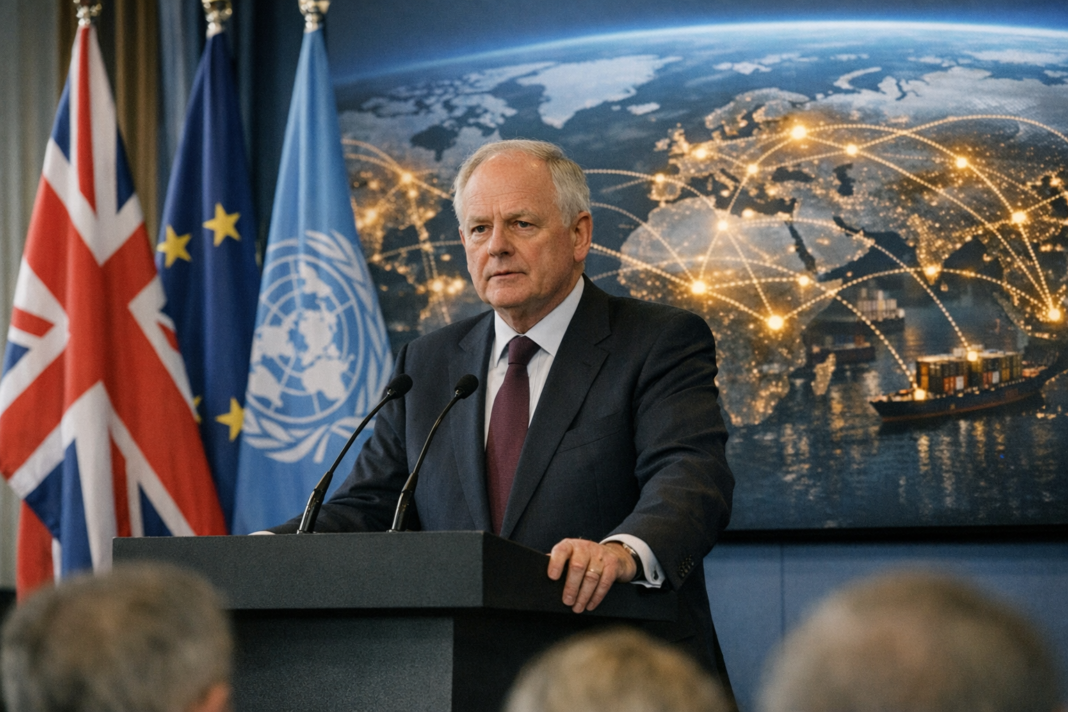

Britain’s role today in the international economy carries both opportunity and responsibility. As the United Kingdom navigates post‑Brexit trade realignments and ongoing global challenges, it can influence outcomes by reinforcing multilateral institutions. Engagement with bodies such as IMF and World Bank remains central: financial stability, development lending and crisis response depend on sustained cooperation and predictable commitments from major economies.
Practical levers are available across policy areas. Trade policy should prioritise rules that protect labour and environmental standards while expanding market access; this can be pursued through modern agreements and targeted tariff measures (trade). Taxation of multinational companies, support for capacity building in tax administration and backing for global frameworks can reduce profit shifting and improve revenue for low‑income countries (taxation). At the same time, climate finance and investment in resilient infrastructure can be scaled up to ease the transition for vulnerable economies (climate finance).
Debt sustainability is another crucial area where UK policy can make a difference. Coordinating debt relief and restructuring with other creditors, and aligning official finance with private sector actions, helps prevent crises from cascading. The UK can also deepen cooperation within coalitions such as the G7 and G20, using those forums to encourage transparent lending standards and to mobilise pooled resources for emergencies. Strengthening partnerships with regional development banks and supporting sovereign capacity building will enhance resilience across the global economy.
A coherent UK strategy that links trade, aid, regulation and finance could yield tangible benefits: more stable markets, improved development outcomes and reduced systemic risks. Delivering on such an agenda requires consistent policy signals, credible finance commitments and close engagement with low‑ and middle‑income countries. By aligning domestic interests with multilateral action, Britain can contribute to a fairer global economic architecture without creating dependency on unilateral measures or ad hoc interventions.







