
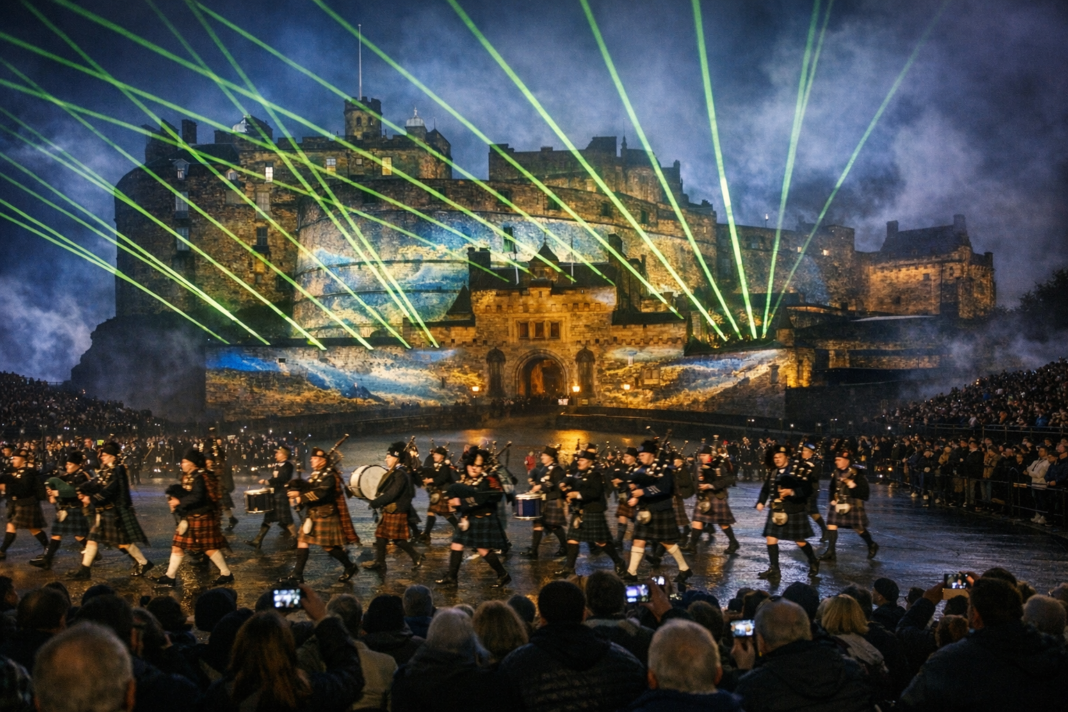

Dusk at Edinburgh Castle set the scene for a version of the annual pageant that combines traditional military performance with contemporary theatrical techniques. The programme featured projection mapping, laser work and choreographed ensembles alongside established elements such as pipe bands and massed drummers. Attendance figures remain substantial: last year the event drew some 230,000 spectators and generated approximately £1.5m for charity.
The evening’s opening included a spoken-word sequence delivered by Richard Rankin, accompanied by a beam of light slicing across the ramparts and a concentrated visual sequence within the gatehouse. Ensembles of percussionists and pipers entered the esplanade in formations underscored by a rendition of The Skye Boat Song, while alternating musical choices ranged from classical opera extracts to contemporary film themes.
Organisers describe the programme as a blend of historic military display and staged spectacle. The production made use of fireworks, large-scale projections on the castle façade and audience-engaging elements such as flags swept across viewing areas. Creative teams introduced dance sequences and period-contrasting moments — including stylised tap-dancing sections — that sit alongside the Tattoo’s customary precision drills.
Royal Edinburgh Military Tattoo continues to operate as an annual fixture within Edinburgh’s summer season, distinct from the wider festival but complementary in its draw. The event’s operational remit includes both public performance and a fundraising component; ticket sales and associated activities contribute to its stated charitable distributions. Production credits for the current iteration list collaborative teams combining military bands, theatrical designers and technical specialists.
The Tattoo’s programming choices for this season illustrate an ongoing effort to present military music and ceremony in formats that incorporate contemporary staging practices while retaining core ceremonial elements. Observers note the sustained public interest reflected in ticket uptake and the continued positioning of the event as a large-scale outdoor spectacle on the castle esplanade.





