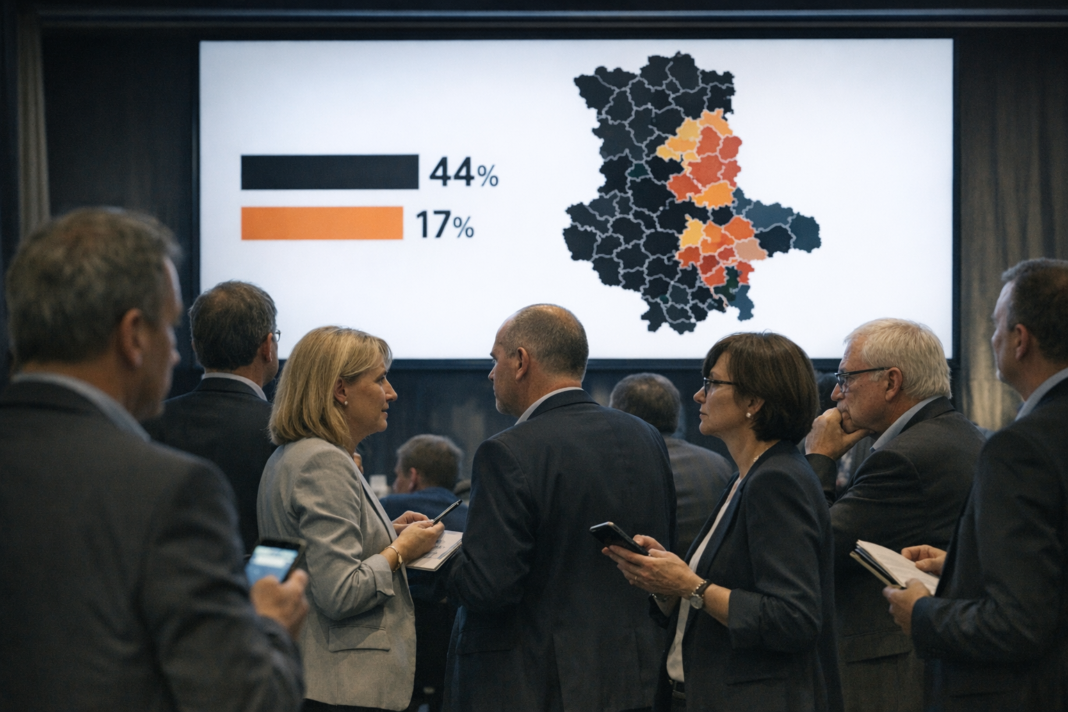

Far-right AfD surged in preliminary projections for Saxony-Anhalt, capturing about 44% of the vote in a result the party described as “historic”. The showing puts the AfD well ahead of the conservative camp, with the mainstream CDU estimated at 17%. The outcome, in the eastern region of Germany, marks a significant shift in state-level support and alters the arithmetic of local politics.
The projected share, while dominant, leaves the AfD short of an absolute majority, meaning it would need cooperation from other formations to govern. Election authorities are expected to complete and certify the full count in the days ahead. Observers view the result as an important indicator of voter sentiment in eastern states, where the far right has made notable gains compared with earlier electoral cycles.
For the conservative CDU and other centrist parties, the margin presents an immediate strategic challenge: reconnecting with voters and reassessing regional campaign approaches. Although state outcomes do not automatically translate into national power, a commanding performance in a regional contest can alter public debate, affect party positioning and influence preparations for forthcoming elections.
Final seat allocations and official tallies will determine practical consequences, including which coalition arrangements are possible. The projection highlights changing voting patterns in parts of eastern Germany and will prompt parties to review policy priorities and electoral tactics once the complete results are published.