
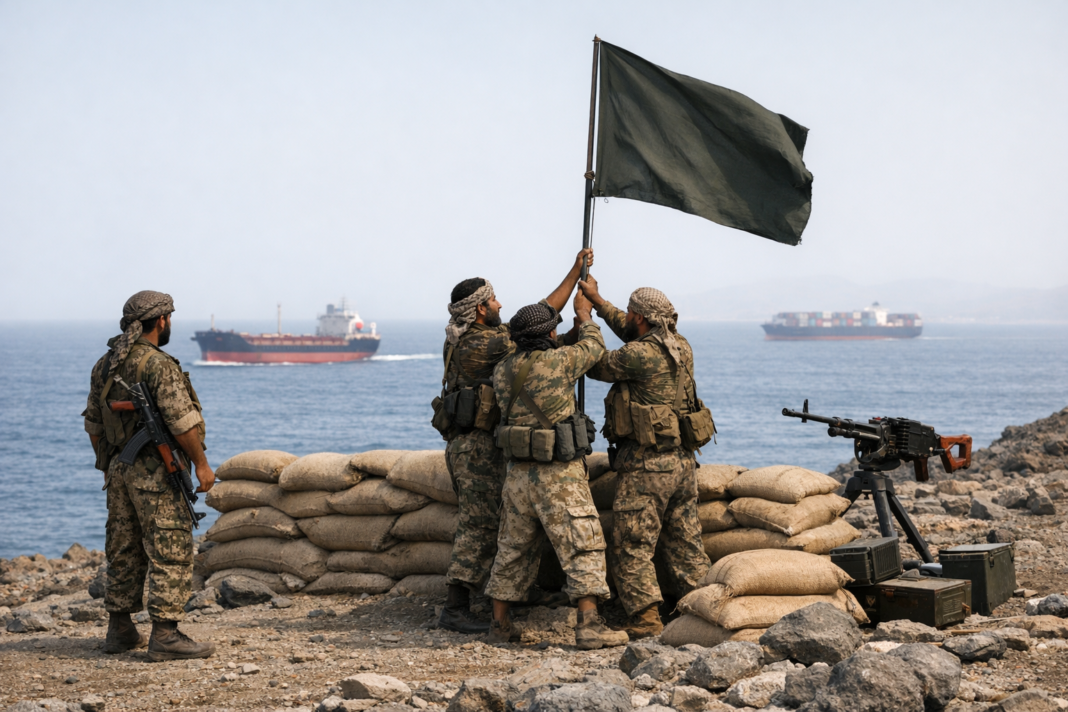

Houthis claim major gains after announcing they have taken control of Perim, a strategic island that sits astride the main maritime corridor through the Red Sea. The group said the move strengthens its position in Yemen and enhances its ability to influence traffic entering and leaving the wider Red Sea basin.
The capture of Perim — located by the entrance to the Bab al-Mandeb strait, a key chokepoint linking the Red Sea to the Gulf of Aden — has drawn attention because of the corridor’s importance for international shipping. Vessels transiting the area carry a substantial share of global trade, including energy shipments and container traffic between Europe and Asia, making any change in control of nearby territory a matter of international concern.
Commercial carriers, maritime insurers and regional navies are closely monitoring the situation, according to public statements and industry bulletins. Market participants typically reassess routing and risk premiums when access to a major sea lane is perceived to be under threat, and port authorities and shipping firms often update guidance for operators transiting the corridor.
The announcement comes from the Houthi movement, which has in the past presented itself as aligned with Iran. Independent verification of control on the ground and of the practical effects on shipping has not yet been confirmed by neutral observers. International maritime agencies and several governments are expected to issue statements and situational updates as they assess navigational safety and commercial implications.
Analysts say developments around Perim will be watched for signs of escalation or of any efforts to formalize control over maritime approaches. Shipping companies, insurers and policy-makers will focus on whether the situation prompts sustained route diversions, convoying measures, or increased naval presence in the area, all of which could reshape short-term patterns of maritime traffic through the Red Sea corridor.






