
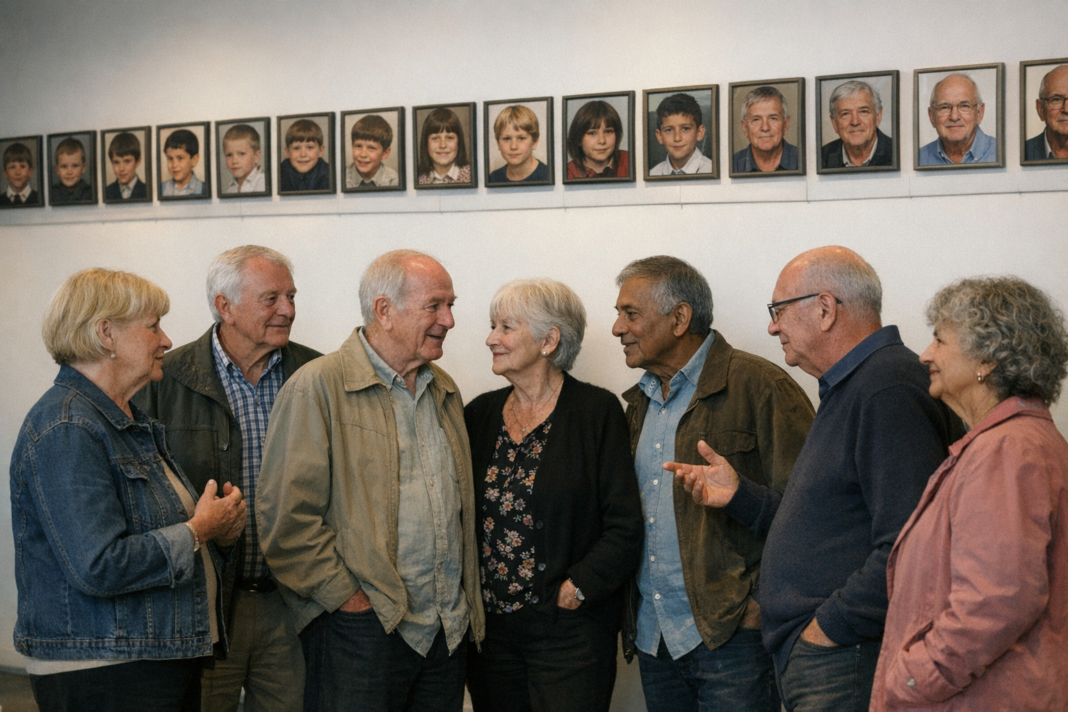

The 7 Up documentary project, first filmed in 1964, has reached what the producers call its final chapter as the original participants turn 70. Begun as a single, 40-minute experiment to examine social class, the work grew into a longitudinal study that revisited the same group every seven years. Over six decades the series has been associated with Granada Television and broadcast to national audiences, offering a continuous photographic record of a small cohort as they moved through childhood, adolescence and adulthood.
The sustained format—interviewing the same people at regular intervals—creates a rare body of footage. It registers not only changes in employment, education and family formation, but also slower shifts in social attitudes across generations. Where statistical surveys map broad trends, this project supplies granular, human-scale testimony: the choices, disappointments and continuities that punctuate ordinary lives and reflect wider historical currents.
Originally framed to probe whether class background determined destiny, the project’s accumulated material resists simple conclusions. Episodes repeatedly show both the weight of structural factors and the unpredictability of individual trajectories. The series documents persistent inequalities in opportunity alongside instances of mobility, and it captures how public and private expectations about work, gender and responsibility have evolved from the 1960s to the present.
The enterprise’s closure has practical and ethical implications. As an archive, the footage represents a resource for historians, social scientists and filmmakers interested in longitudinal methods and cultural change. It also raises questions about consent, representation and the responsibilities of documentarians toward the people whose lives they chronicle. For audiences and researchers alike, the project’s end underscores the distinctive contribution that patient, long-form documentary work can make to collective memory and to the study of how societies and lives transform over time.





