
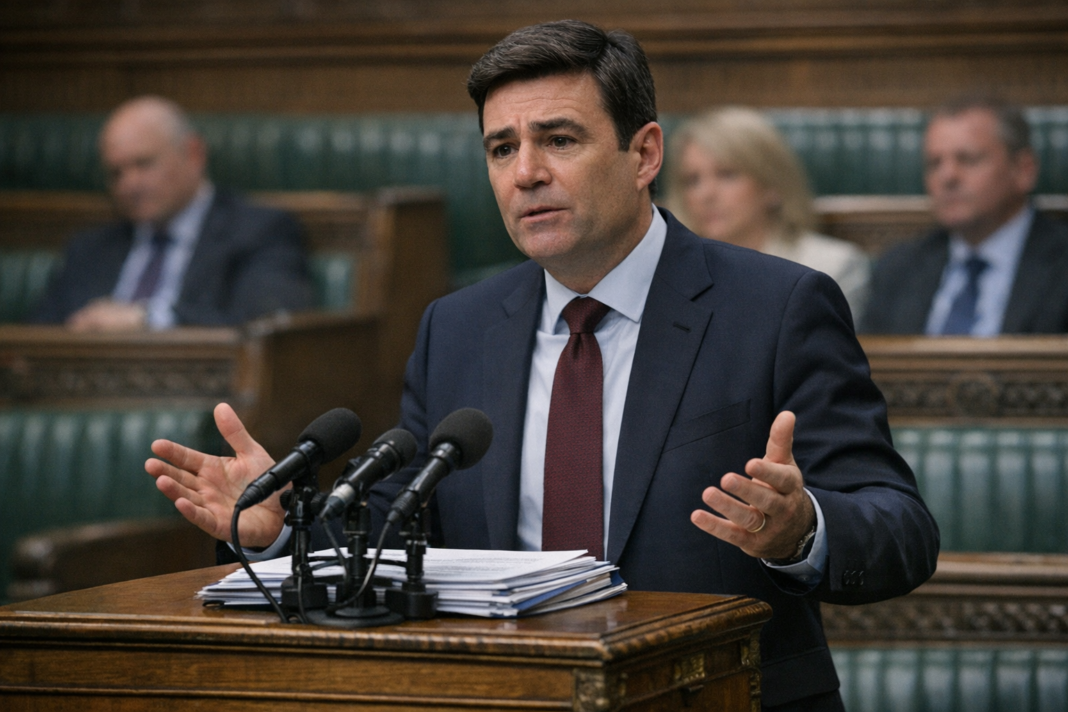

Andy Burnham says his administration has adopted targeted measures designed to challenge specific policies of the Israeli government while making clear they are not directed at the Israeli people. In a public statement the prime minister linked those steps to the broader aim of sustaining a viable two-state solution in the Middle East, arguing that diplomatic commitments must be accompanied by action if international hopes for a negotiated settlement are to endure. He also stressed the humanitarian dimension, citing the suffering endured by Palestinians as a central concern.
Burnham placed the policy move in a wider context of the United Kingdom’s role on the world stage, warning that national credibility depends on translating values into tangible steps. Referencing the post-Brexit period as a point of reference, he said his government sees a responsibility to take decisions that reflect those values. The government linked its measures to the goal of renewing momentum for negotiations between Israel and Palestine rather than as a punitive gesture toward civilian populations.
The prime minister presented the sanctions as calibrated instruments aimed at specific actors and policies rather than broad-based economic restrictions. In doing so, he framed the approach as an attempt to bridge the gap between diplomatic rhetoric and policy impact: if a two-state outcome is to remain plausible, he argued, external pressures must be used to incentivise changes in conduct that affect civilians. The policy also signals a shift in how the United Kingdom intends to deploy its diplomatic and economic tools in support of long-standing peace objectives.
Looking ahead, the government faces the task of balancing measures targeting officials or entities with parallel efforts to sustain humanitarian aid and diplomatic engagement. Preserving a credible pathway to a negotiated settlement in the Middle East will require continued coordination with international partners and attention to on-the-ground needs, along with clear communication about the aims and limits of any sanctions. For now, the British leadership frames its intervention as an effort to keep alive the prospect of a negotiated two-state future.





