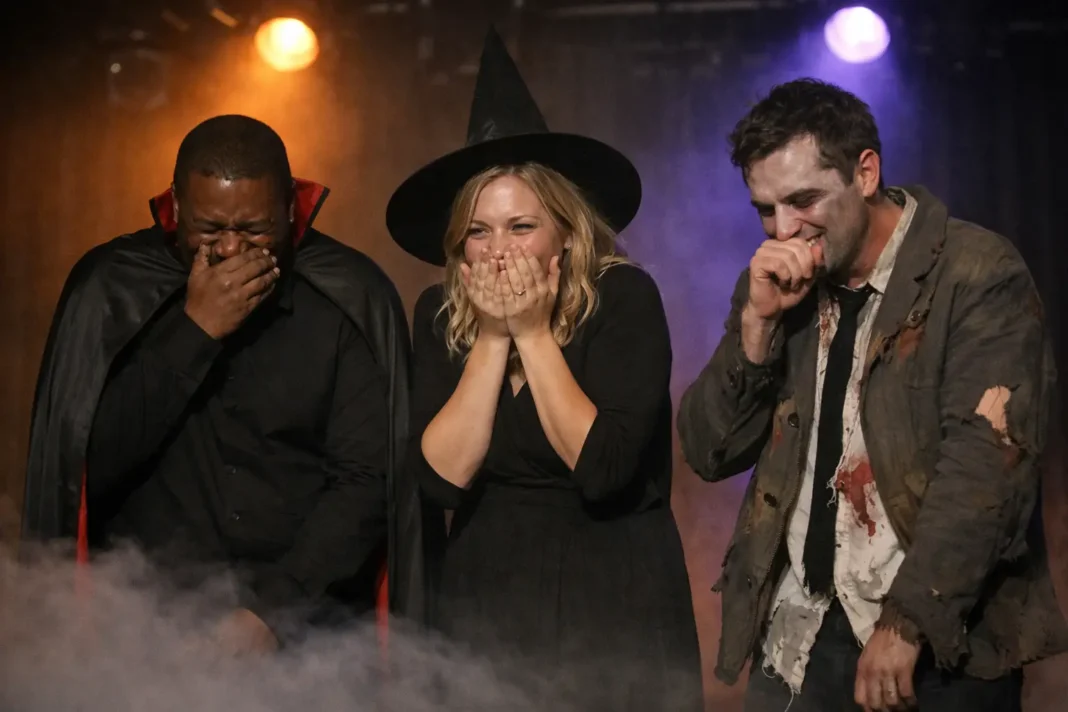

Comedians confronted silence in a new Halloween edition of Last One Laughing, where contestants were banned not only from laughing but also from screaming. The special, filmed at Elstree Studios, extended the usual endurance format by adding fear as a weapon: participants had to avoid both reacting and provoking reactions for an extended session. The production assembled a mix of stand-up performers known for distinct tones and registers to test how the genre adapts when shock and surprise are intentionally introduced into a comedy competition.
The line-up included Phil Wang, Lou Sanders, Tom Allen, Daisy May Cooper and Reece Shearsmith, among others. Several contestants described unexpected challenges: some discovered they reacted to scares with involuntary shouts, while others found the pressure of suppressing laughter made their material harder to deliver. Participants reported emerging from the set fatigued and disoriented, evidence that the format demands not only comic craft but sustained emotional control over long stretches.
Jimmy Carr, the programme’s host, framed the experiment as an exploration of the intersection between comedy and horror, noting that both rely on elements of surprise. Producers retained the core rules of the show—performers lose when they laugh or successfully provoke a laugh—but added layers that encouraged physical scares and atmospherics to unsettle competitors. The result was a hybrid that required strategic adjustments: timing, tone and the decision to provoke with eerie material became as important as traditional joke-writing.
The Halloween special reframes familiar dynamics for the series by using fear to test resilience and technique. For viewers, the alteration offers a different kind of tension: it trades constant mirth for intermittent shocks and the slow collapse of composure. For the performers, it highlighted limits in how comedy is produced and resisted under controlled conditions. The edition keeps the format recognisable while stretching its boundaries, and it underscores how a modest rule change can reshape both performance strategy and audience experience.