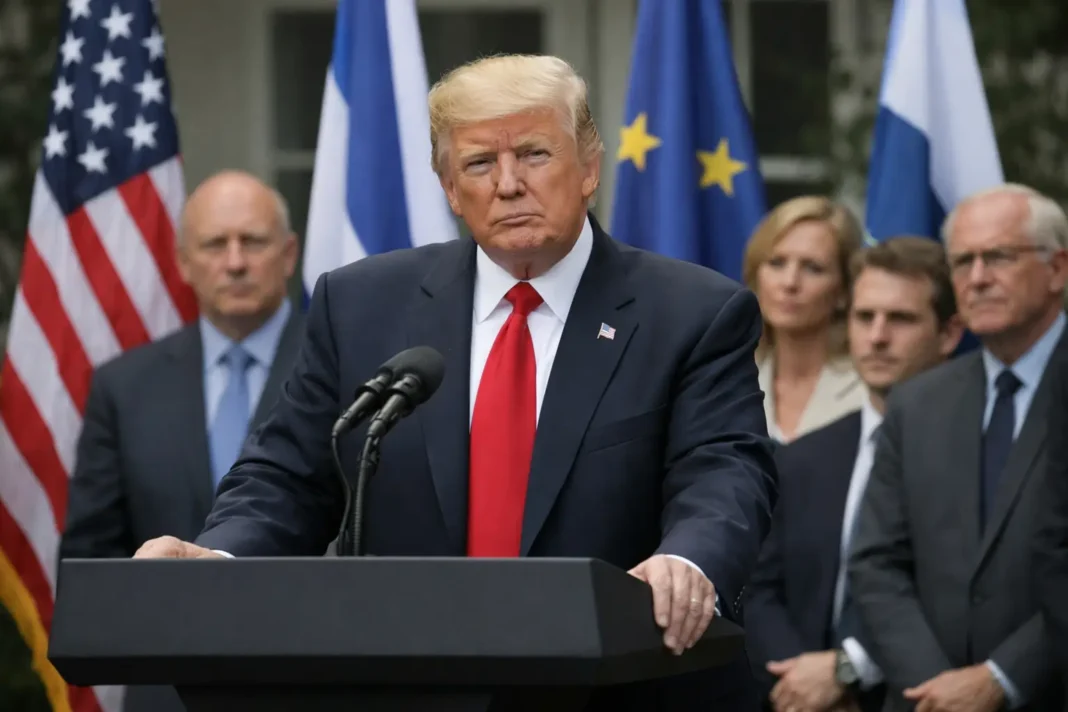

Donald Trump’s posture toward the conflict in Ukraine is forcing allies to reassess longstanding assumptions about Western unity. Public remarks and high-profile encounters have underscored a divergence between the United States’ traditional leadership role and a pattern of statements that critics say could be read as accommodating to Russia. The dynamic has immediate implications for military assistance, diplomatic bargaining and the cohesion of transatlantic security arrangements.
In February 2025, a widely reported Oval Office meeting between Volodymyr Zelenskyy and Donald Trump crystallised concerns among European capitals. During that encounter Mr Trump told Mr Zelenskyy “you don’t have the cards,” and an accompanying request from Senator JD Vance called for expressions of gratitude. That episode — cited in multiple public accounts — has been interpreted across Europe as a visible sign of shifting US priorities and has sharpened debate about the durability of American commitments to Kyiv.
NATO allies and EU governments now confront practical questions about deterrence and burden-sharing. If US policy signals a retreat from consistent backing for Kyiv, partner states may face pressure to expand defence spending, reconfigure supply lines and prioritise contingency planning. The interplay between diplomatic messaging from Washington and operational decisions in capitals across Europe will shape whether support for Ukraine remains steady or becomes more fragmented over time.
Vladimir Putin and the Kremlin are watching these shifts closely. Changes in Western rhetoric and decision-making carry consequences for the battlefield calculus in Ukraine and for broader regional stability. For policymakers, the immediate task is to translate public posture into clear, predictable policies that allies can rely on; the longer-term challenge is to preserve collective deterrence without creating openings that could be exploited to the detriment of European security.