
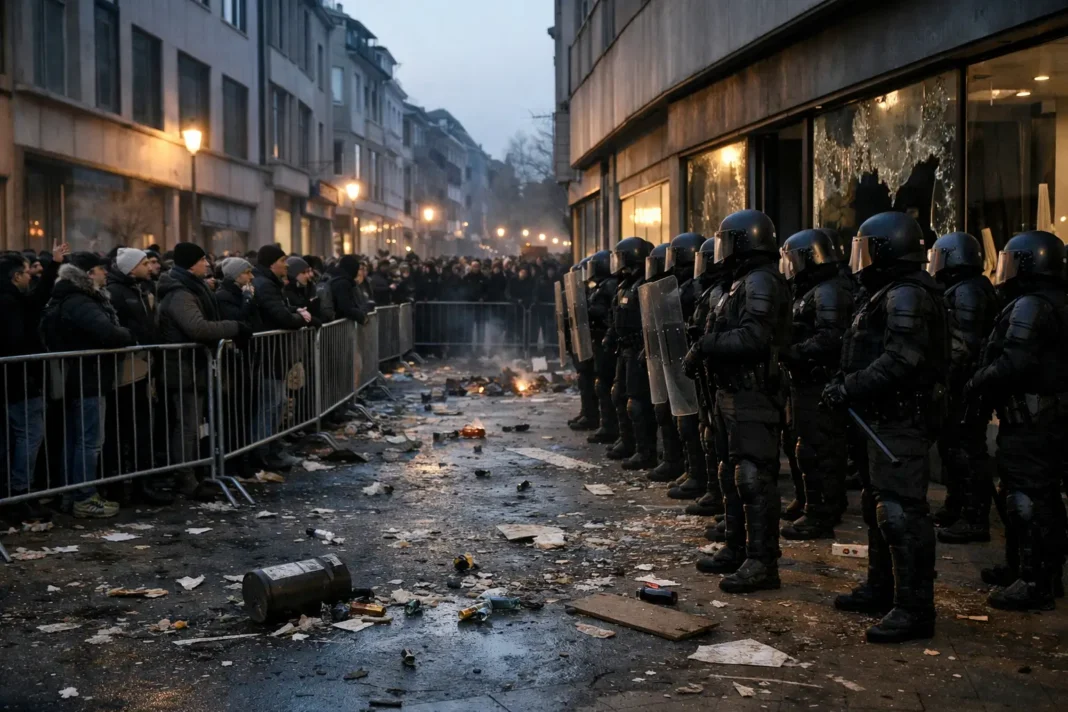

Germany’s cost-of-living demonstrations turned violent as shops were looted and disorder was reported across several major cities. In Frankfurt, Frankfurt police described the scenes in the city centre as “violent riots”. Unrest was also reported in Berlin, Hamburg and Cologne, putting the focus on public order during protests linked to the rising cost of living.
The incidents underline how demonstrations over economic pressure can become a security challenge when protests move beyond lawful assembly. Looting in commercial areas adds a direct impact on local businesses, especially in city centres where retail activity depends on public access and safety. The available information identifies Frankfurt as the location where police publicly characterised the unrest as violent, while the other named cities also experienced disorder connected to the same wave of protests.
The cost of living has become a central concern in Germany, as in other European countries, with households facing pressure from everyday expenses. Demonstrations on this issue carry political significance because they connect personal financial strain with broader questions about public policy, social stability and trust in institutions. The violence shifts part of the immediate attention from the economic grievances behind the gatherings to the conduct of those involved in the unrest.
For authorities, the events create a dual responsibility: safeguarding the right to protest while preventing damage, looting and threats to public safety. Police responses in dense urban areas are particularly sensitive because they must protect demonstrators, residents, shop workers and passers-by at the same time. The involvement of multiple cities gives the unrest a national dimension, even though the confirmed details remain limited to the reported disorder and the police description of events in Frankfurt.
The protests place Germany’s cost-of-living debate alongside renewed scrutiny of urban security and crowd control. With shops targeted and several major cities affected, the immediate consequences extend beyond the demonstrations themselves. The confirmed facts point to a serious escalation in public unrest linked to economic discontent, while the longer-term political response will depend on how authorities and institutions address both public order and the pressures driving people into the streets.






