
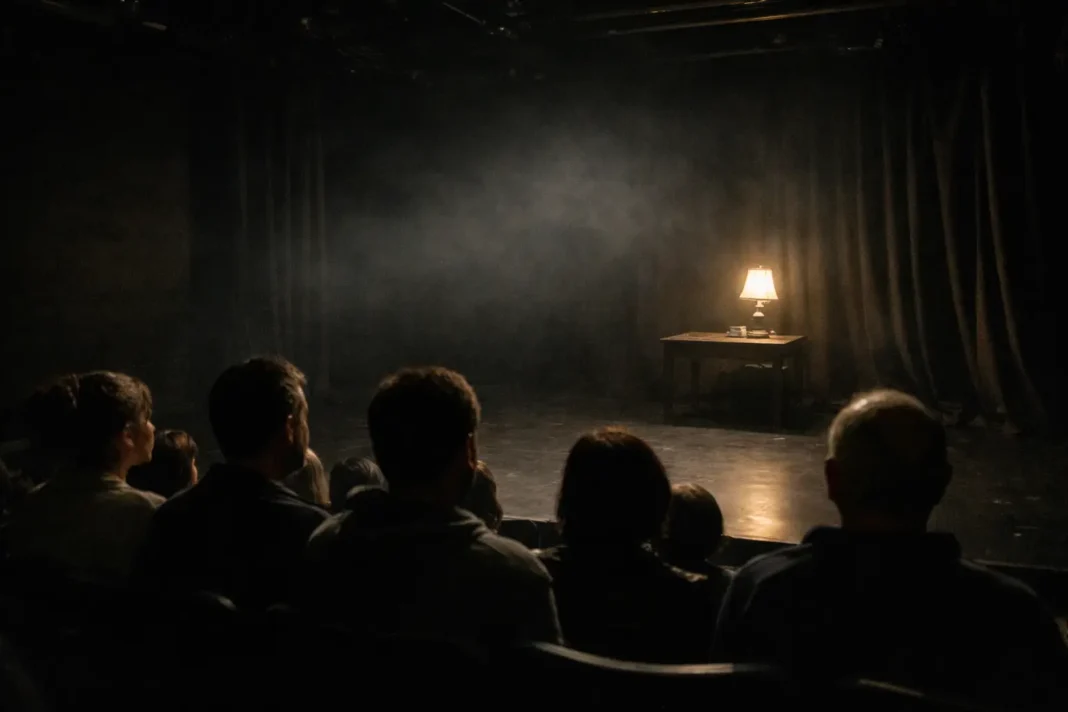

Fear in the theatre is having a notably visible season, even when its most effective weapon is what remains unseen. Productions such as Blackout, the stage version of Paranormal Activity and the enduringly popular 2:22: A Ghost Story have placed horror firmly inside the live performance calendar. Their appeal rests on a paradox that cinema cannot reproduce in the same way: the audience knows it is sharing a room with the threat, the trick and the victims, yet cannot always locate where the danger will appear.
For writer and director Sam Beech, that principle has roots in a real late-night experience. While locking up a wedding venue at around 1am, his car sensor began reacting as though something was moving around the vehicle. Each time he checked, nothing was there. The incident lasted long enough for the absence itself to become unsettling, and Beech has described how the experience changed his relationship with driving in darkness. It later fed into Blackout, a production touring the United Kingdom until 27 February, where silence, shadow and uncertainty are central to the design of fear.
The memory also resonated because Beech had seen Andy Nyman’s Ghost Stories several times, and the echo between stage fiction and a lonely car park gave the event a theatrical afterlife. That connection illustrates why theatre horror often depends less on spectacle than on suggestion. A door, a corridor, an empty space or an interrupted sound can become more disturbing than a visible monster, because the audience completes the image for itself. The genre’s craft lies in managing attention: delaying revelation, controlling darkness and making spectators aware of their own anticipation.
Chris Fisher, the illusions designer behind Paranormal Activity, has framed the technique through the familiar “Jaws effect”: fear intensifies when the audience senses the presence of a threat before seeing it. The production is running at London’s Ambassador’s Theatre until 27 February and is also touring the UK. In a live setting, such effects require precise coordination between lighting, sound, set movement and performance. A badly timed reveal can release tension too early; a well-judged pause can make a room of spectators hold its breath.
The current appetite for stage horror shows how live performance can compete with screen-based fear by using its own limits as strengths. The impossibility of cutting away, the visibility of the stage and the shared reactions of strangers all become part of the experience. These productions do not need to show everything to make audiences afraid. They rely on the oldest theatrical contract: the crowd agrees to believe, and the stage decides how long to keep the darkness alive.






