


At a time when many international dance companies have canceled planned visits to Israel, the arrival of New York’s Peridance Contemporary Dance Company carries particular significance. The ensemble will tour from June 29 to July 5 with performances in Haifa, Herzliya, and Jerusalem, becoming one of the first international contemporary companies to return to Israeli stages since the outbreak of the war.
Alongside a varied repertory and 14 virtuosic dancers, the visit offers Israeli audiences a rare window into the artistic world of choreographer and Peridance founder Igal Perry.
Speaking over the phone from New York as the company prepared for the tour, Perry acknowledged that bringing the ensemble to Israel at this moment was not an obvious decision – but, in his view, an essential one.
“The dancers understand the situation, and they still want to come,” he said. “There is no other way for them to truly grasp where I come from unless they experience it here.”
Many of the dancers trained at the Peridance Center in New York or studied under Perry at institutions such as The Juilliard School. For them, the tour is not only a professional engagement but also an encounter with the cultural and biographical roots of their artistic director.
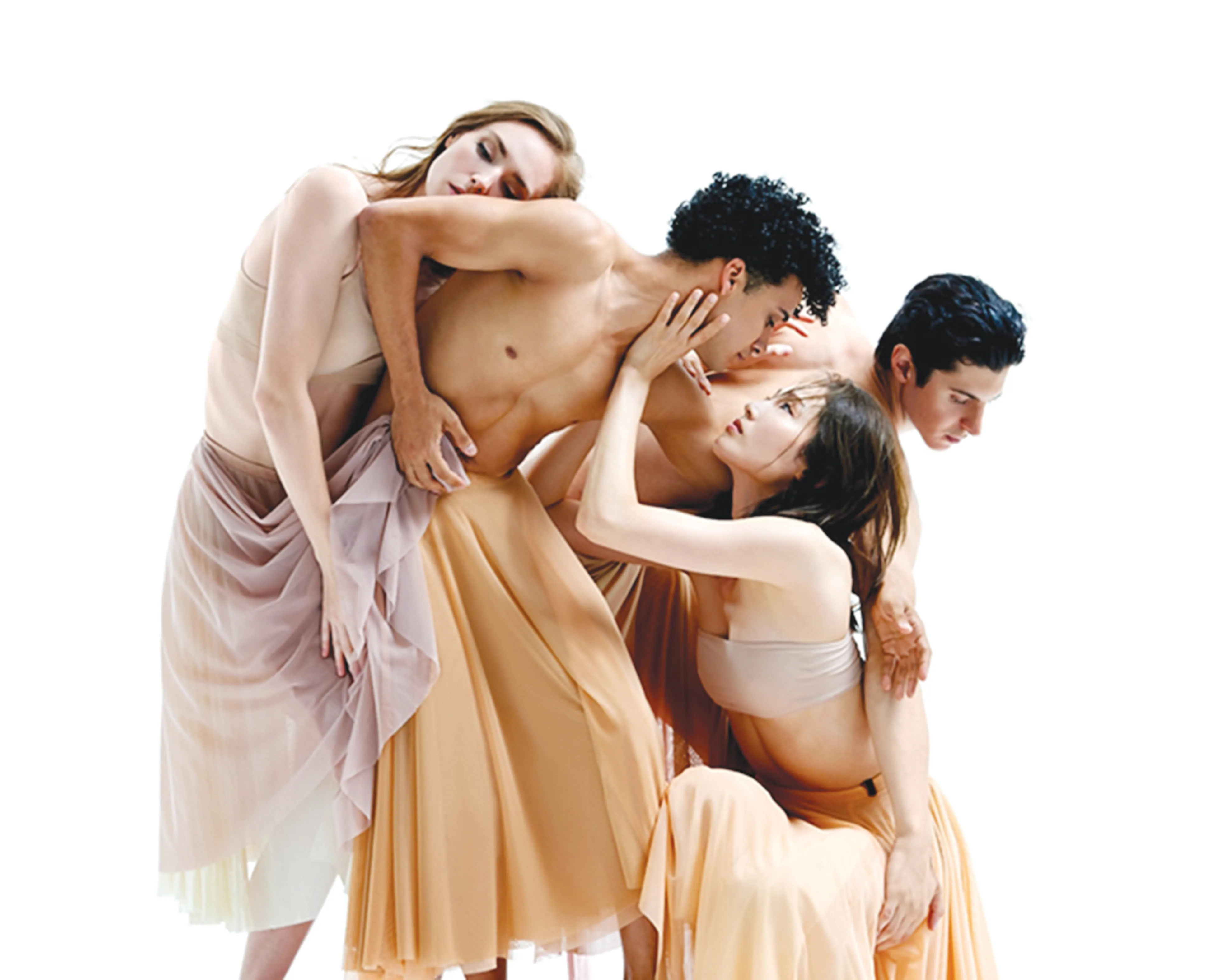
Peridance Contemporary Dance Company has been a steady presence in the New York dance scene for four decades. Founded in 1984, it made its debut the following year, and has never stopped – appearing at major venues, including The Joyce Theater, Lincoln Center for the Performing Arts, and the John F. Kennedy Center for the Performing Arts, touring extensively across the United States, Europe, and Asia.
Its work has drawn consistent critical attention. The New York Times praised its choreography for “extraordinary originality leading to emotional heights,” while The Village Voice described its programs as a striking blend of lightness and drama.
While his name is now firmly rooted in the New York contemporary dance scene, Perry’s journey actually began in Tiberias. As a young boy, he first encountered dance through a youth folk-dance troupe, led by a dancer from the Karmon Dance Company, which was widely credited with propelling Israeli folk dance onto international stages throughout the 1960s and 1970s.
A gifted student, Perry finished high school unusually early, at age 16. He wanted to become a doctor, and was accepted to study medicine at the Hebrew University, but was told he was too young. Finding himself without a plan, and driven by his deep love for dance, he decided to audition for the Karmon company. He was accepted, intending to dance purely for the time being.
Instead, he toured internationally with Karmon, including performances in the United States and South Africa, which opened an early window into the possibilities of a life defined by movement.
“I stayed in the world of dance, and I don’t regret it,” he said, smiling.
Later, after dancing with Bat-Dor Dance Company and other Israeli ensembles, Perry moved to New York. In 1983, he founded the Peridance Center in Manhattan, which grew into one of the city’s largest and most international dance academies. A year later, he established the company itself – a repertory ensemble built on an evolving body of work.
A platform for multiple artistic languages
UNLIKE COMPANIES anchored in a single choreographic voice, Peridance operates as a platform for multiple artistic languages. “I strive to weave a tapestry of works that starkly contrast with one another,” Perry explained.
This approach demanded versatility. Dancers must shift physical languages, energy systems, and emotional states from one work to the next, often within a single evening. The Israel program reflects this principle through five distinct works.
The evening opens with Just Above the Surface by Chinese-American choreographer Yin Yue, known for her FoCo movement language, which blends Chinese classical vocabulary with contemporary physical dynamics.
“Her method is fascinating,” Perry said. “The style is highly active and dominant. She uses the body in ways you don’t often see elsewhere.” The piece moves between ensemble sections, duets, and solos, establishing immediate kinetic intensity.
The program shifts sharply with a duet for two men by American choreographer Mike Tyus. Built on proximity, tension, and acrobatic physicality, it explores intimacy through a highly embodied language.
“Mike Tyus is a young Black choreographer whose work is deeply human and expressive,” Perry said. The contrast is deliberate. “I throw the audience into a completely different world with every dance,” he added with a smile.
Clarity, precision, and technical transparency
A more classical register follows in Meadows/Quatuor Plus by Katarina Skarpetowska, a former student of Perry’s at Juilliard. Set to Bach, the work emphasizes clarity, precision, and technical transparency.
“It allows the dancers to dive into their technique and shine,” he said. “It is very clean – both in style and in its stage language.”
The momentum shifts again with Marco Goecke’s interpretation of Stravinsky’s The Firebird, defined by fragmented, rapid gestures closely tied to the musical structure.
The emotional center of the evening arrives with Perry’s own work, Hora Mine. Drawing on his childhood in Tiberias and with Karmon, and decades of experience in New York, the piece transforms memory into choreography rather than reconstructing it.
Set to a string quartet, Hora Mine takes the familiar structure of the Israeli hora and breaks it apart almost immediately. The circle appears briefly, and then dissolves into shifting constellations of bodies – duets, trios, and solitary figures moving through shared space. “The hora is more than a simple three-step dance,” Perry said. “It is like saying hello.”
He uses fragments of the folk form only in flashes. “We don’t dance in a circle for ten minutes. We dance in a circle for ten seconds.”
What remains is recognition – an ephemeral collective memory embedded in the body. The dancers briefly assemble into group form before breaking apart again, echoing the instability of memory itself. Though performed by an international cast, Perry sees the work as universally resonant.
“It is about the human experience of sharing something we all recognize at the same moment,” he said. “That we have some kind of shared power here.” In this reading, the hora becomes less a folk form than a gesture of belonging that survives even as it dissolves. ■
Peridance Contemporary Dance Company performs June 29-July 5 at the Haifa Auditorium, the Herzliya Performing Arts Center, and the Jerusalem Theatre.
Source:
www.jpost.com



