
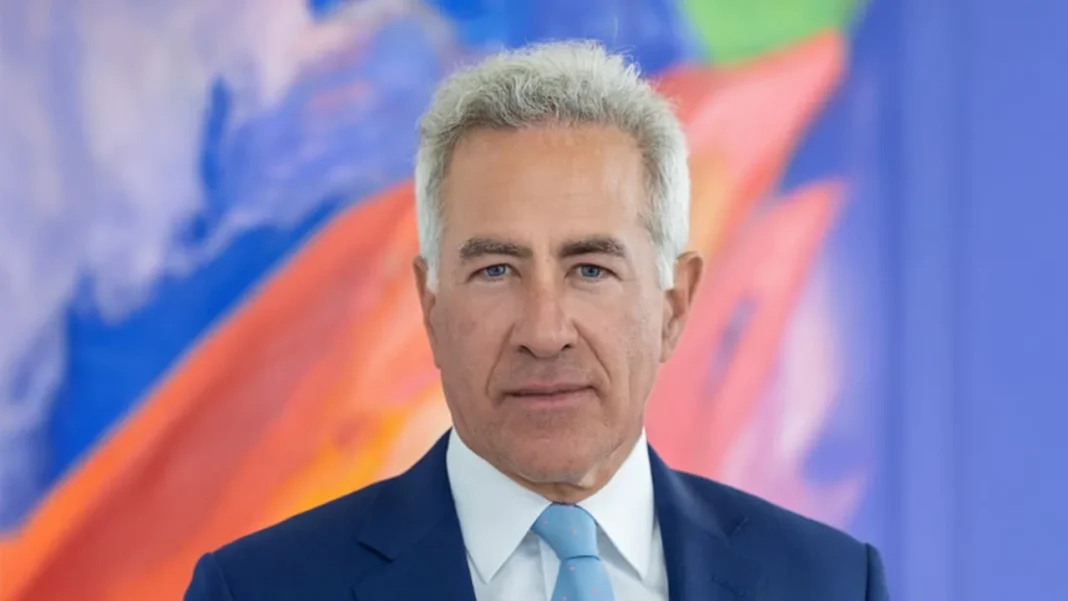

The Israel Academy of Sciences and Humanities has awarded fourteen prestigious Adams Fellowships to outstanding doctoral students in science and engineering, recognizing what academy leaders described as the next generation of Israeli scientific talent at a time of mounting challenges facing the country’s research community. The fellowships, presented during the annual Adams Seminar at the Israel Academy on Tuesday, provide funding for seven doctoral students for the 2025-2026 academic year and seven more for the 2026-2027 academic year.
Endowed by the Canada-based Adams Family Foundation and administered by the academy, the program supports doctoral research in the natural sciences, life sciences, engineering, mathematics, data science and computer science. Each fellow receives an annual stipend of NIS 100,000 for up to four consecutive years, an annual travel grant of up to $3,000, and a tuition exemption coordinated with Israel’s research institutions. The ceremony was attended by philanthropist Sylvan Adams, who now lives in Israel, and serves as President of the World Jewish Congress Israel Region and is a signatory to the Giving Pledge, and Israel Academy President Prof. David Harel.
Addressing the gathering, Harel linked the importance of supporting Israeli researchers to the increasingly difficult international environment facing the country’s academic institutions. “These days, we continue to observe acts of academic boycotts directed toward Israeli scientists and research institutions. There are also alarming signs of more severe steps that might be taken by the European Union, which will affect Israel’s economy as well as its science and technology. In these uncertain times, it is more important than ever to reaffirm our commitment to the universal values of science: openness, freedom of thought, solid and broad education, and the pursuit of knowledge for the betterment of humanity. The newly awarded Adams Fellows represent the pinnacle of academic excellence, embodying the future of Israeli science. We are deeply grateful to the Adams Family for its unwavering support through the Adams Fellowships Program, which continues to empower the next generation of Israeli scholars. These young scientists contribute to advancements in fields that are critical not only for Israel but also for the global community.”
The Adams Fellowships Program was established in 2005 by the late Marcel Adams, a Holocaust survivor, businessman and committed Zionist. Born in Romania in 1920, Adams escaped a Nazi labor camp during World War II before immigrating to Israel, where he fought in the War of Independence. He later settled in Canada, founding Iberville Developments, a real estate company that grew to manage more than 100 commercial and residential properties. Adams created the fellowship program as a way of giving back to the State of Israel, which had provided him refuge after the Holocaust. He died in 2020 at the age of 100.
Speaking on behalf of the Adams Family Foundation, Sylvan Adams said investing in young researchers was critical to maintaining Israel’s position as a global innovation leader. “Israel’s greatest natural resource is its people. By supporting our most promising young researchers, we are investing in Israel’s future scientific leadership and helping ensure that the Startup Nation continues to lead through innovation and discovery. I congratulate this year’s Adams Fellows, who represent the very best of Israeli scientific talent and whose work will help shape our future and contribute to solving some of the world’s most important challenges,” he said. Adams also reflected on the legacy of his late father. “The Adams Fellowships are my late father’s enduring legacy to the State of Israel. After surviving the Holocaust and helping build Israel as a young man, he never forgot the opportunity this country gave him. He believed deeply in education and in the power of exceptional young people to make a difference. I am proud to continue the fellowship program he established and to support the next generation of Israeli scientists and innovators.”
The fourteen fellowship recipients represent universities across Israel and conduct research spanning a broad range of disciplines, from medicine and biology to machine learning, physics and environmental science. Among this year’s recipients are researchers developing sustainable zinc-bromine batteries for energy storage, applying machine learning to predict protein interactions, investigating cancer-related mutations in adult stem cells, studying neuroendocrine cell development, and designing next-generation antibacterial therapies to address antibiotic resistance.
Other awardees are exploring photonic time crystals with potential applications in quantum computing; the relationship between quantum entanglement and topology; the internal structure of giant planets using machine learning and spacecraft data; and mathematical and computational research with applications in cryptography and theoretical computer science. The fellows also include researchers studying nocturnal bird migration using deep learning and bioacoustic monitoring, advanced electrochemical materials, geometric models describing material deformation, and statistical approaches that improve understanding of molecular processes.
The recipients for the 2025-2026 academic year are Elad Ballas of Bar-Ilan University, Nadir Boni of Tel Aviv University, Amit Elad of the Hebrew University of Jerusalem, Aya Marck of the University of Haifa, Ohad Segal of the Technion – Israel Institute of Technology, Yarden Sheffer of the Weizmann Institute of Science, and Maayan Ziv of the Weizmann Institute of Science. The 2026-2027 fellowship recipients are Jonathan Jung of the Hebrew University of Jerusalem, Yael Cohen of the Hebrew University of Jerusalem, Avichai Marmor of Bar-Ilan University, Aviezer Silverman of the Hebrew University of Jerusalem, Yeela Persky Vile of Ben-Gurion University of the Negev, Tommer David Keidar of Tel Aviv University, and Maya Schlesinger of Tel Aviv University.
This year’s Adams Seminar also featured the presentation of the Ruth Arnon Fellowship for the 2025-2026 and 2026-2027 academic years. The fellowship was awarded to Dr. Einat Seidel Posner, a physician-scientist at the Hebrew University of Jerusalem, and Dr. Dana Binyamin, a microbiologist at the Azrieli Faculty of Medicine at Bar-Ilan University. Established by former Israel Academy president Prof. Ruth Arnon, the fellowship supports alumnae of the Adams Fellowships Program pursuing postdoctoral research abroad. Each recipient receives a $20,000 grant to help advance her academic career.
Written in collaboration with World Jewish Congress
Source:
www.jpost.com



