HomeOpinionEurope’s Independent Defence: Building an Insurance Policy Against Russian Pressure

Europe’s Independent Defence: Building an Insurance Policy Against Russian Pressure

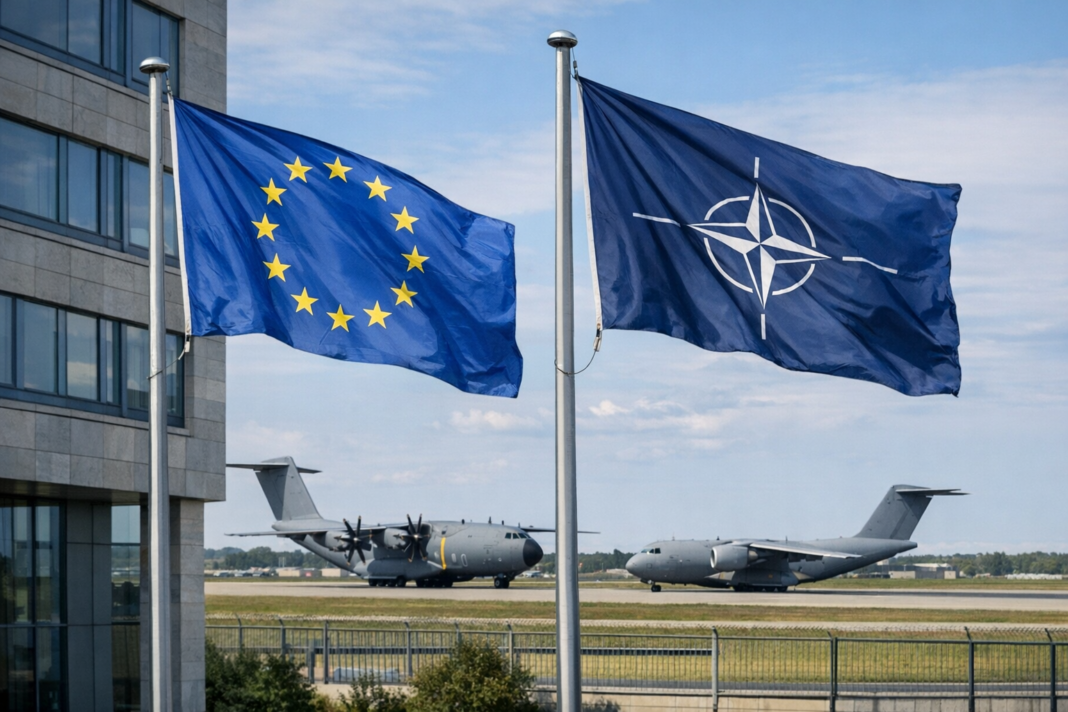
Europe must prepare to deter and, if necessary, defend against a range of threats emanating from Russia, even as the transatlantic security landscape evolves. Recent incidents — including cyber operations, political interference and a warship live-fire exercise reported 45 miles off the UK coast — have reinforced the view among officials that confrontation could escalate beyond current crises. Governments across the continent have responded by raising defence budgets and accelerating capability programmes, particularly in states closest to potential theatres of conflict.

The United States remains a central pillar of collective security through NATO, but debate over burden-sharing and political will in Washington has prompted discussion of a more Europe-centred approach to defence. Commentators and policymakers, including Nathalie Tocci, have argued that even a Europe-focused NATO construct would likely still involve substantial US influence, underscoring the need for an independent European contingency, or “insurance policy,” to manage scenarios where US engagement is limited.

Developing that insurance policy requires measurable, practical steps already reflected in European decision-making. The European Union‘s industrial tools — notably PESCO (Permanent Structured Cooperation) and the European Defence Fund — aim to harmonise procurement and sustain shared research and production. Planners emphasise the importance of autonomous command-and-control arrangements, strategic air and sealift, robust munitions stockpiles, integrated air and missile defence, hardened cyber defences and secure supply chains to keep equipment operational under sustained pressure.

Security planners and defence officials stress that capabilities must be accompanied by sustained political coordination and predictable funding to be effective. Interoperability with NATO forces remains a priority, even as Europe expands its independent options. The emerging approach is pragmatic: strengthen European operational autonomy while preserving transatlantic ties, ensuring that governments have both collective and independent means to deter aggression and protect citizens in an uncertain strategic environment.


Hot this week

Superheated Magma Dissolves Crystal Seeds, Explaining Towering Lava Fountains

Study of the 2021 Tajogaite eruption on La Palma finds superheated magma can dissolve crystal nuclei, keeping melt fluid longer and enabling tall lava fountains.

US launches ‘heavy’ strikes on Iran after attempted attack on American troops

The United States launched what it described as 'heavy' strikes on Iran after an attempted attack on American troops. A brief pause in hostilities ended as both sides resumed missile attacks.

When Play Is Policy: What Orangutan Playdates Teach Parents This Summer

A recent study finds orangutan mothers arrange play interactions; experts link play to social, cognitive and health benefits for children and adults alike.

Leeds Rally to Beat Liverpool 4-2 in Final Match of US Tour

Leeds overturned a 2-0 deficit to defeat Liverpool 4-2 in the closing fixture of both clubs' United States tour, completing a four-goal turnaround and concluding their US schedules.

Wynton Marsalis brings ‘All Rise’ to the Edinburgh International Festival

Wynton Marsalis prepares to present his 12-movement symphony 'All Rise'—a 200-musician work blending jazz and classical forms—at the Edinburgh International Festival.

Matt Short’s Unbeaten Fifty Sees Welsh Fire Down Southern Brave

Matt Short's unbeaten half-century powered Welsh Fire to a six-wicket victory over Southern Brave, leaving them level on points at the top of The Hundred table.

How Reef’s session at Abbey Road shaped ‘Place Your Hands’

Reef recount the Abbey Road sessions where producer George Drakoulias upgraded instruments and a 1960s Fender Jazz bass shaped the recording of 'Place Your Hands'.

Two deaths reported in Michigan amid Cyclospora outbreak linked to lettuce

Michigan health officials confirm two deaths amid a Cyclospora outbreak tied to iceberg lettuce from central Mexico; investigations and public health responses continue.

Low Danube levels force reduced output at Paks and emergency works for Cernavoda

Low water levels on the Danube have curtailed cooling water for nuclear plants: Hungary's Paks ran at about 10% capacity while Romanian authorities used explosives to improve flow to Cernavoda.

Study: NHS checks miss up to 95% of higher‑risk women under 50

A new study warns current NHS checks are failing to identify up to 95% of younger women at elevated breast cancer risk, prompting calls to review screening criteria.

Tierney underlines value as Celtic begin title defence with victory over Dundee

BBC Scotland highlighted Kieran Tierney's influence as Celtic opened their Scottish Premiership title defence with a win over Dundee, noting his defensive and attacking contributions.

Half-price rail travel access extended to those approaching 18

The 16-17 Saver railcard can now be purchased up to the day before a traveller turns 18, maintaining access to half-price fares for young people.

Mechanical shortcut rapidly transports organic particles to the deep ocean, study finds

Researchers identify a physical pathway that transports organic particles swiftly from the surface to the seabed, with implications for carbon storage and challenges for ocean observation strategies.
Advertisementspot_img

Related Articles

Advertisementspot_imgspot_img
