
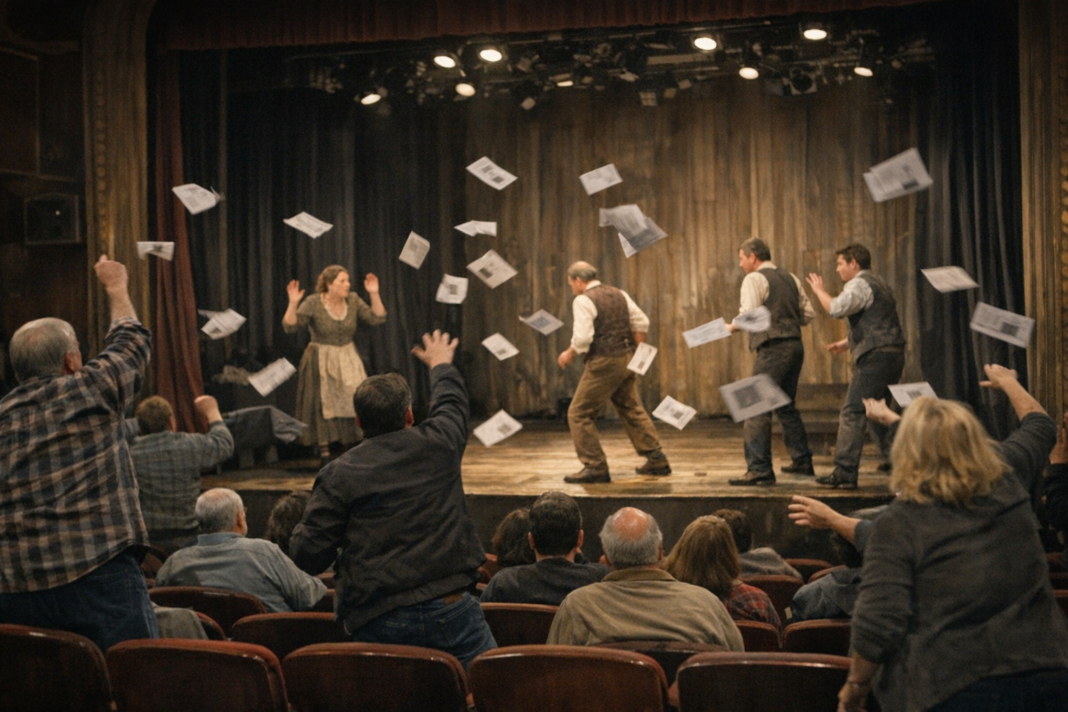

Controversy follows Catarina as performances of Catarina and the Beauty of Killing Fascists continue to provoke confrontations across Europe. In February, a showing at Schauspielhaus Bochum escalated when the audience jeered and whistled at an actor portraying a far-right politician; an orange was thrown from the stalls and two spectators climbed onstage in an attempt to remove the performer. The play’s author, Tiago Rodrigues, said he was not surprised by the intensity of the reaction and was more struck by how surprised others appeared to be.
The production’s most contested moment is a climactic speech by a far-right figure, a sequence that has repeatedly elicited walkouts, boos and direct intervention by some members of the audience. Instances of disruption have been reported from Norway to Rome, and the pattern of responses has prompted sustained debate within the theatre community about how provocative material is presented and received in public spaces.
The incidents have highlighted tensions between dramatic representation and public reaction: when theatre stages extreme or incendiary rhetoric, audiences sometimes respond as if confronted by political action rather than a staged performance. That dynamic has practical consequences for venues, casts and programming decisions as companies plan tours and international transfers. As the production reaches stages in Britain, organisers and artistic teams face the prospect of similarly charged responses and the operational choices those responses may demand.
For now, the debate centres on how democratic societies handle theatre that deliberately courts controversy. Rodrigues frames the episodes around his play as intense yet predictable responses to a work designed to unsettle. The coming weeks of performances in the UK will provide further evidence of how British audiences engage with material that blurs the line between depiction and provocation, and how institutions will balance artistic risk with the need to ensure safety and an environment where debate can take place.





