
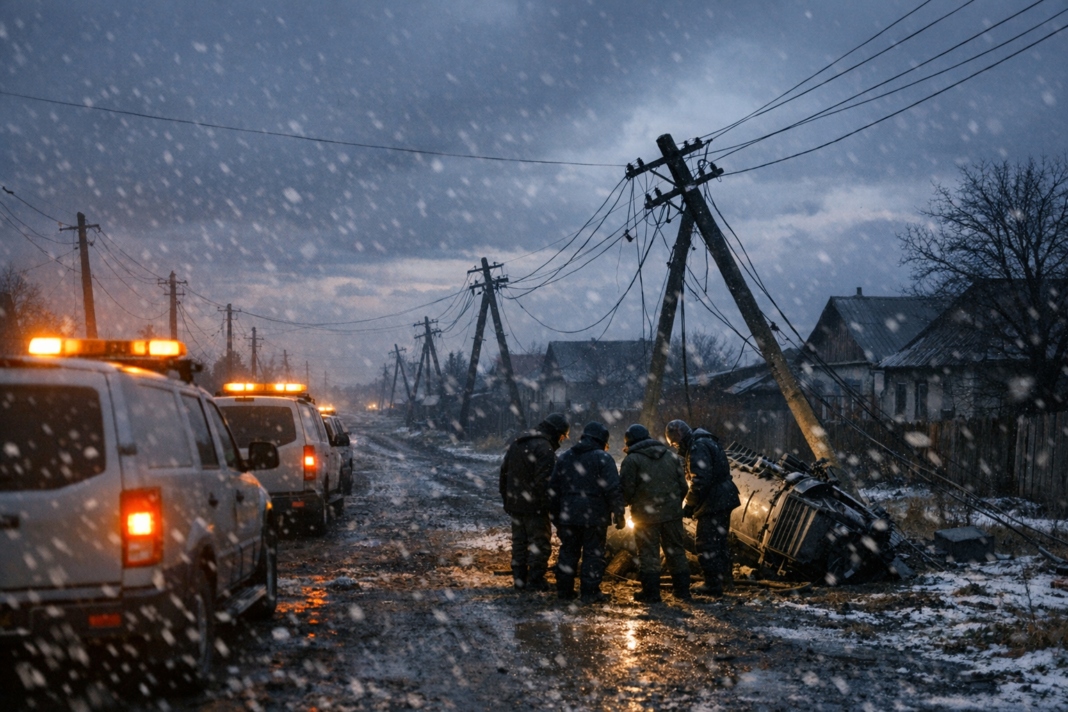

Russia intensifies attacks on population centres across Ukraine, targeting power plants, water systems and logistics hubs as the cold season approaches. The campaign of daytime ballistic missile and armed drone strikes has damaged distribution centres, medical facilities and warehouses, contributing to rising civilian casualties and growing shortages of food, medicine and heating fuel. Humanitarian organisations warn that repeated damage to electricity and water infrastructure will deepen civilian suffering during winter months.
Vladimir Putin has described the military operation as proceeding on course, while US engagement has included a direct phone call with Donald Trump and recent visits by US envoys Jared Kushner and Steve Witkoff to both Moscow and Kyiv. Those movements have coincided with continued Russian strikes on cities, as Kyiv and other urban areas face renewed pressure on essential services and supply chains.
Independent military assessments indicate the conflict has entered its fifth year, with significant casualties and operational strain on Russian forces. The sustained campaign against civilian infrastructure raises serious legal and humanitarian questions: attacks that disproportionately affect civilians and civilian objects are prohibited under international humanitarian law. The immediate effects are practical as well as legal, with distribution networks disrupted, pharmacies and hospitals operating under severe constraints, and long repair timelines for energy and water systems.
The unfolding situation poses difficult policy choices for NATO and Western capitals, where debates continue over military, economic and humanitarian measures. The scale of infrastructure damage and the approach of winter increase the urgency of coordination on relief deliveries, energy resilience and support for civilian repair efforts. How international actors respond will shape humanitarian outcomes for millions of people in Ukraine and influence diplomatic dynamics with Russia in the months ahead.





