
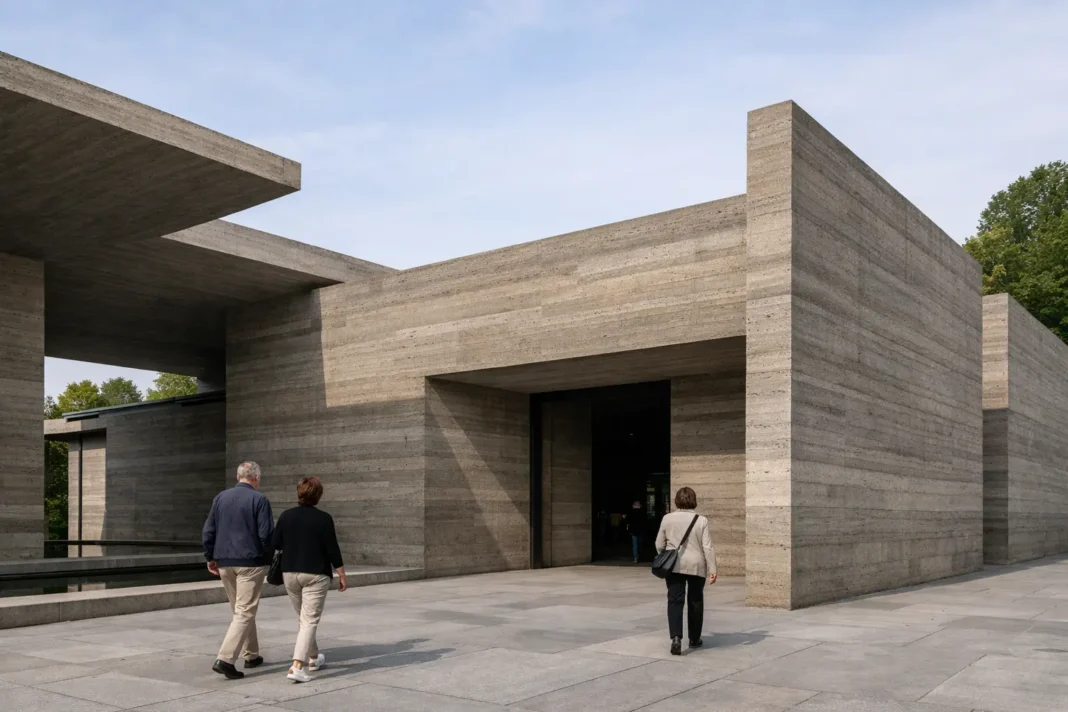

Peter Zumthor’s rammed extension for the Beyeler Foundation has been unveiled in Basel, adding a monolithic new wing to one of the city’s best-known museums. The project, reported at a construction cost of £110m, sits alongside the foundation’s permanent holdings that include works by Monet, Miró and Picasso. The new volume is primarily expressed in layered, compacted concrete and framed by substantial oak and bronze doors that mark a deliberate material shift from the lighter glass-and-steel structures common to many contemporary extensions.
Zumthor—the Swiss architect long associated with a tactile, craftsmanlike approach—returned to his native region for what is described as his first completed building in Basel. Trained originally as a cabinet-maker, he has repeatedly emphasised an attention to joinery, texture and the weight of materials; those concerns are evident in the new gallery’s rammed-concrete walls and the detailing of door hardware, where leather wrapping and bronze fittings lend a physical presence to thresholds. The architectural language is restrained, yet richly worked at close range.
Responses among curators, architects and visiting critics have been mixed. Several observers praised the project’s quiet solidity and the way mass and proportion create measured light within galleries, arguing it can amplify the display of modern and postwar paintings. Others contend that the building’s gleam of high-quality finishes and bespoke fittings risks framing the museum experience within a more polished, high-end presentation. That dialogue about tone and audience has accompanied other major museum commissions in recent years.
The new wing cements the Beyeler Foundation as a focal point for international visitors to Basel and adds a significant chapter to Zumthor’s body of work, which has long explored the relationship between materiality, memory and space. Whatever the critical verdict, the extension is likely to shape how collections are read and circulated here, and to prompt further discussion about the role of architecture in framing established holdings and public access to them.






