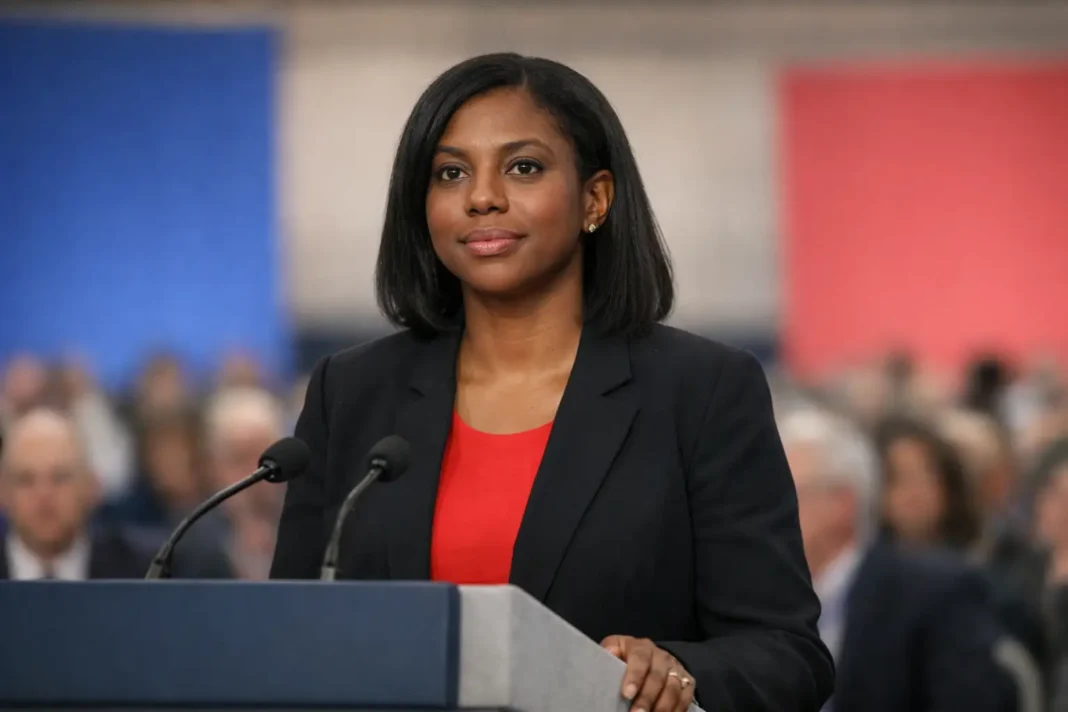

Kemi Badenoch’s rise has reshaped the headlines as she prepares to address the Conservative conference in Birmingham. The party leader has seen an uptick in public approval: a recent Survation poll reported that more than four in ten Britons regard her performance positively, compared with roughly a third who disagree. That swing in visibility has put Kemi Badenoch at the centre of renewed discussion about the future direction of the Conservative party.
Political movement across the right has also shifted amid controversy surrounding other figures. Nigel Farage has been embroiled in disputes linked to a reported £5m personal gift and donations tied to crypto investors, covered in national reporting including coverage in The Guardian. Those developments coincided with a fall in public support for Reform UK, opening a space on the right that observers say the Conservatives are seeking to occupy.
Analysts and commentators note that the change in public attention has had practical effects: as rivals encountered problems, fewer political opponents were available to press sustained scrutiny on Kemi Badenoch and her agenda. The resulting media and polling dynamics have prompted questions about how much focus will now turn to policy specifics, party strategy and the leader’s record as she campaigns to broaden her party’s appeal across the United Kingdom.
The conference in Birmingham will provide a formal stage for the party to set out priorities and for journalists and political rivals to test those proposals. For the Conservative leadership, the coming days will be an opportunity to convert improved ratings into a clear programmatic platform; for commentators and voters, it will be a moment to examine whether the rise in profile brings closer attention to policy detail and political accountability.