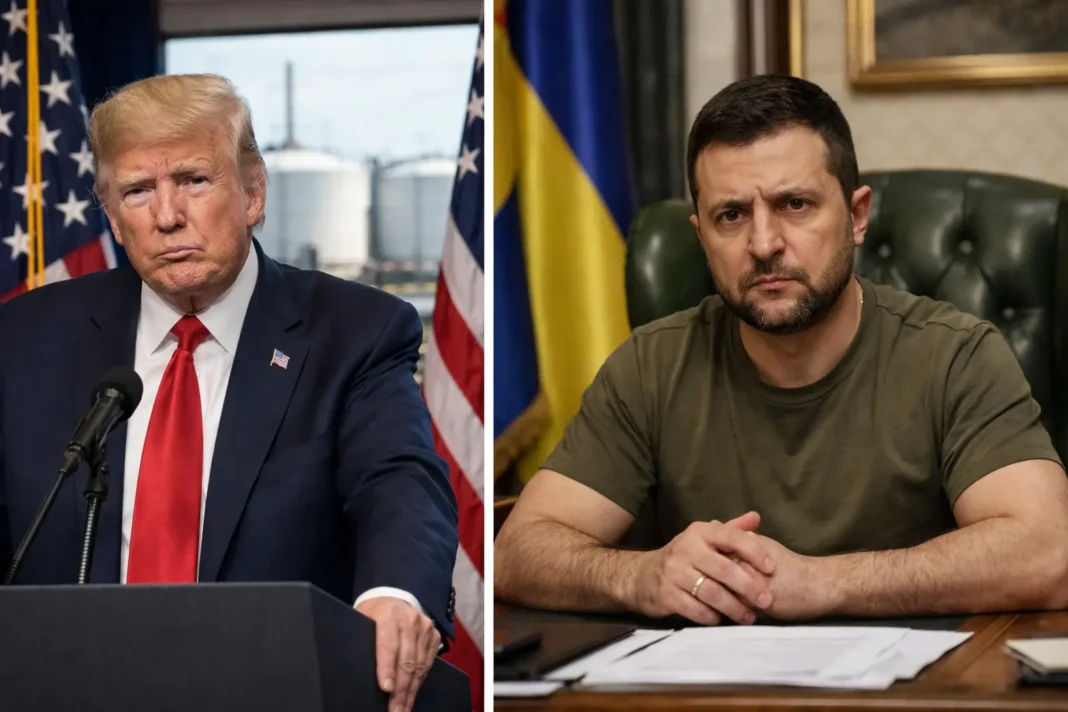

Donald Trump announced an agreement to secure supplies of diesel from Russia, a move that drew immediate criticism from Kyiv. Volodymyr Zelenskyy described the arrangement as “an investment in war that must be ended, not prolonged,” highlighting Kyiv’s view that fuel exports can indirectly sustain Moscow’s capacity to wage conflict. The announcement has intensified debate over how energy transactions intersect with ongoing hostilities and international efforts to limit support for the Russian state.
The question at the heart of the controversy is practical as well as political. Fuel shipments serve civilian needs but also underpin transport and logistics; observers note that revenues and refined products can bolster state coffers and military operations. Kyiv’s response reflects longstanding concerns from Ukraine and its partners about any economic activity that might ease Moscow’s resource constraints. Officials in several capitals are assessing how the purchase aligns with sanctions regimes and export controls designed since the outbreak of hostilities.
Beyond immediate logistics, the deal carries diplomatic consequences. Domestic debates in the United States over support for Ukraine and relations with European allies may intensify as lawmakers and foreign counterparts seek clarity about the transaction’s terms and oversight. For its part, the Russian leadership, including Vladimir Putin, stands to be scrutinized for how proceeds from energy exports are allocated. The announcement could complicate coordination among countries aiming to limit indirect assistance to Russia while managing global fuel markets.
Details about implementation, timing and safeguards remain limited, and analysts say transparency will be crucial to assess actual impact. Kyiv has framed the move as prolonging conflict, while others will watch for contractual provisions that might mitigate risks identified by critics. As governments and markets digest the development, officials in Washington, Kyiv and allied capitals are expected to seek further information to determine whether the arrangement alters the balance of support and constraints surrounding the conflict.