HomeOpinionHow Tax Rules and Institutional Incentives Starve Antibiotic Development

How Tax Rules and Institutional Incentives Starve Antibiotic Development

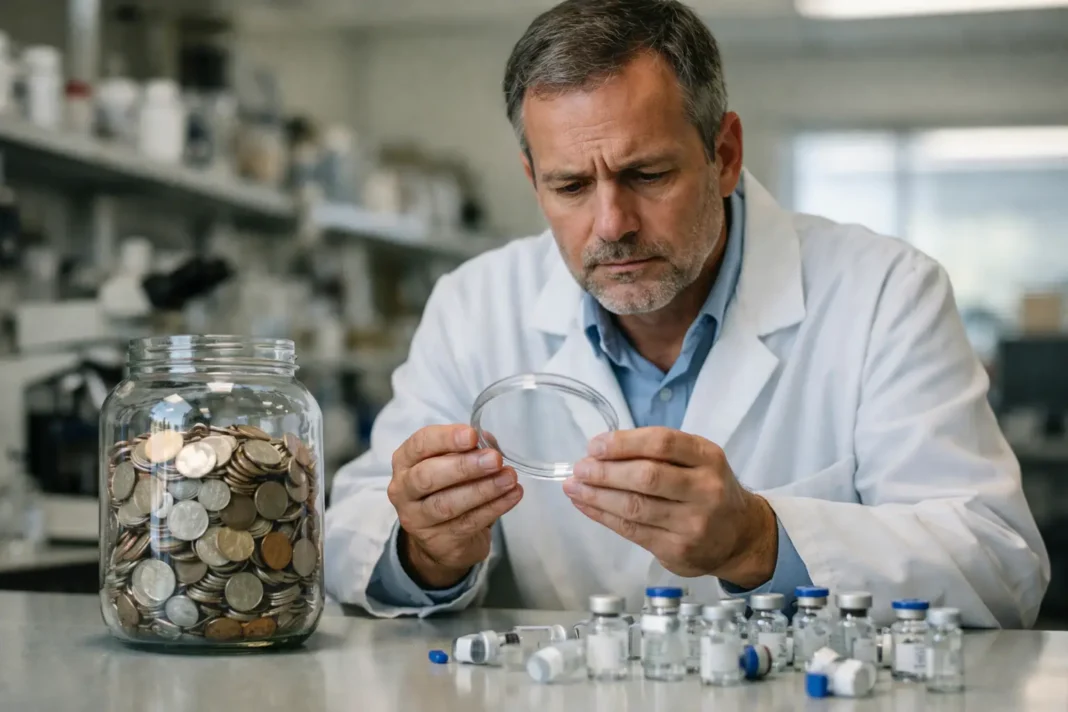
Institutional incentives today steer capital and policy in directions that can undermine long-term public health. As antimicrobial resistance rises as a global threat, the mix of tax rules, corporate return expectations and regulatory frameworks has a material effect on which areas of medical research attract investment. The World Health Organization and other bodies identify antibiotic scarcity as a systemic risk that interacts with economic resilience, making the allocation of public and private resources a matter of wide consequence.

At the heart of the problem are incentives that favor rapid financial engineering over patient-centered research. The structure of many tax systems, pension pressures and shareholder-return models can increase the appeal of short-term financial strategies, shrinking the pool of funds for projects whose returns are uncertain or long-delayed. The pharmaceutical industry faces a particular market friction with antibiotics: stewardship practices and limited treatment durations reduce expected revenues compared with chronic therapies, altering investment calculus without any change in public-health need.

Those same incentive dynamics also help explain patterns in public budgets. When fiscal rules and administrative practices reward certain types of spending or penalize long-term investment, policymakers can end up perpetuating cycles of reactive expenditure rather than strategic funding. The result is twofold: a lagging pipeline of new antimicrobials and pressures on public finances that complicate planning for health systems and broader economic stability. Observers note that misaligned incentives do not only affect health outcomes but can reshape the fiscal landscape over decades.

Addressing these institutional roots requires coordinated adjustments across tax policy, procurement and regulatory design. Options discussed in policy circles include aligning tax incentives with long-term R&D goals, adapting procurement models to create predictable markets for essential medicines, and strengthening international cooperation on stewardship and financing. Such measures aim to rebalance the incentives that guide both private investment and public spending, with the objective of preserving treatment options while maintaining fiscal sustainability.


Advertisementspot_imgspot_img

Hot this week

Why a Stronger Renminbi Won’t Fix Global Imbalances on Its Own

A firmer renminbi alone cannot correct global imbalances; underlying weak domestic demand in China must be addressed for durable adjustment.

Pope Undergoes Successful Operation to Remove Part of Right Lung After Cancer Diagnosis

The Vatican says the Pope was diagnosed with lung cancer and had a successful operation removing the lower lobe of his right lung.

Pope Francis Appears in First Photo Since Surgery and Lung Cancer Diagnosis

A photograph shows Pope Francis for the first time since surgery and a lung cancer diagnosis at Rome's Gemelli Hospital.

Elif Shafak Confronts Creativity and Crisis: a Writer’s Persistence

Elif Shafak reflects on nomadic roots, state pressure and depression as she sustains a two-decade literary trajectory and assumes a new institutional role.

How Deep Sleep and Growth Hormone Cooperate to Repair Body and Brain

New research shows a two-way link between deep sleep and growth hormone that supports muscle repair, fat burning and brain health.

Heat hampers redwood photosynthesis, threatening carbon storage in California forests

New field and lab measurements show California redwoods reduce photosynthesis in high heat, with consequences for carbon storage and forest resilience.

Pope discharged after lung cancer surgery, to lead Angelus in St Peter’s Square

Pope discharged days after lung cancer surgery; he will lead the Angelus and blessing in St Peter's Square on Sunday.

Mass Protests Over Living Costs Turn Violent Across France; More Than 1,000 Arrested

Violent clashes and looting erupted during mass cost-of-living protests in France; authorities made over 1,000 arrests amid reports of fires and damage.

Dubois retains WBO crown with second‑round stoppage of Wardley

Daniel Dubois retained his WBO heavyweight title with a second-round stoppage of Fabio Wardley, reinforcing his place atop British heavyweights.

Barrister Warns Letby Inquiry Risks Chilling Clinician Openness and Patient Safety

Lucy Letby’s barrister warns a public inquiry could foster blame, undermining clinicians’ willingness to speak up and endangering neonatal patient safety.

Van Gerwen stunned in narrow defeat as O’Connor advances at Dutch Championship

Michael van Gerwen crashed out 6-5 to William O'Connor in a second-round upset at the Dutch Darts Championship.

Elif Shafak Confronts Creativity and Crisis: a Writer’s Persistence

Elif Shafak reflects on nomadic roots, state pressure and depression as she sustains a two-decade literary trajectory and assumes a new institutional role.

How Deep Sleep and Growth Hormone Cooperate to Repair Body and Brain

New research shows a two-way link between deep sleep and growth hormone that supports muscle repair, fat burning and brain health.
Advertisementspot_img

Related Articles
