
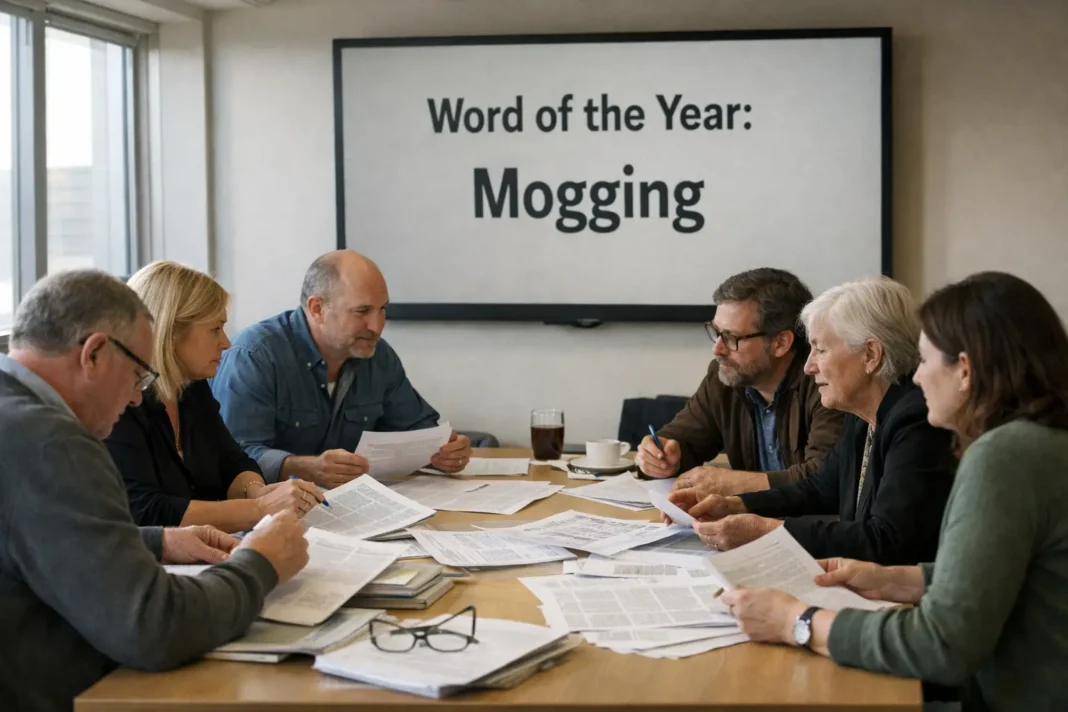

Collins has chosen “mogging” as its word of the year, giving formal recognition to a slang term built around the idea of outshining or upstaging someone. The selection by Collins Dictionary places a relatively informal expression at the centre of an annual language moment that often captures how everyday speech is shifting beyond traditional settings.
The word is used to describe a situation in which one person appears to eclipse another, whether through confidence, appearance, status or presence. Its rise reflects the way competitive social comparison has become embedded in contemporary vocabulary. In that sense, “mogging” is not only a linguistic curiosity; it is also a marker of how people describe power dynamics in ordinary interactions, from social spaces to digital conversations about culture and identity.
Collins included the term among ten words it highlighted this year, underlining the dictionary’s role in recording language as it is actually used rather than only as it appears in formal writing. Word-of-the-year choices often draw attention because they sit at the meeting point of popular speech, media circulation and wider social habits. The selection of “mogging” shows how quickly slang can move from niche usage into broader awareness once it becomes a convenient label for a recognisable behaviour.
For readers encountering the term for the first time, its meaning depends on contrast: someone is “mogged” when another person appears to surpass them in a way that makes the difference noticeable. The expression can carry a playful tone, but it can also point to sharper forms of comparison. That flexibility helps explain why slang terms of this kind spread: they compress a social judgment into a single word, making them easy to repeat and adapt across conversations about language, image and status.
The recognition of “mogging” does not turn it into formal prose overnight, but it does give the word a clearer public profile. Dictionary selections rarely settle how a term will evolve; instead, they document a moment when usage becomes visible enough to merit attention. In this case, Collins Dictionary has marked the arrival of a word that captures a familiar act of comparison in a notably contemporary form.





