
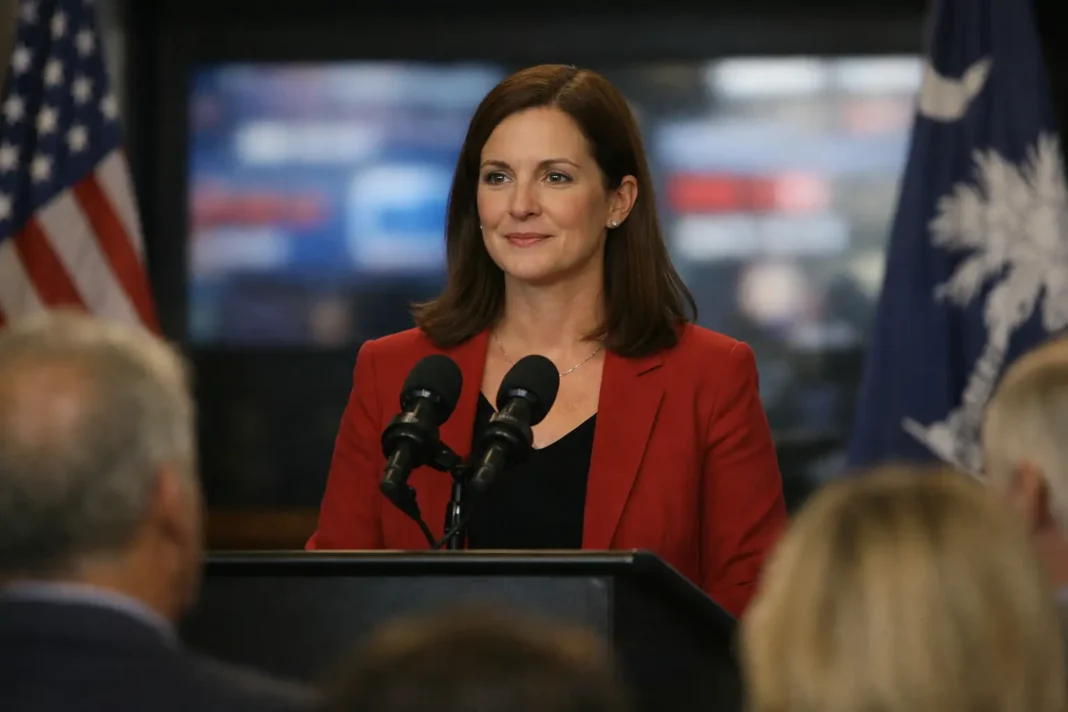

Annie Andrews’ projected victory in South Carolina marks a rare Democratic breakthrough in a Senate race that had eluded the party for almost three decades. The result places Annie Andrews ahead of Darline Graham, whose candidacy carried the explicit backing of President Donald Trump. The race drew national attention because Graham had been chosen to take the seat once held by her brother after his death, turning a local contest into a wider test of political succession and presidential influence.
The projected outcome is significant not only because of the seat itself, but because of the electoral pattern it interrupts. South Carolina has been difficult territory for Democratic candidates in Senate contests for nearly a generation. Andrews’ performance therefore stands out as an exception in a state where conservative candidates have generally maintained the advantage in such races. Final administrative steps remain part of the electoral process, including the formal handling of results by the South Carolina Election Commission.
For Graham, the loss represents a setback after entering the campaign with a powerful endorsement and a personal connection to the seat. Her selection by Trump placed the race within the former president’s broader role in shaping candidate choices across the Republican landscape. The projection suggests that endorsement alone was not enough to preserve the seat for the candidate he supported, even in a state often associated with Republican strength.
Andrews’ projected win will be read closely by both parties as they assess candidate selection, voter turnout and the durability of partisan assumptions in Southern contests. Without changing the need for official certification, the result already carries political weight: it gives Democrats a symbolic success in a state where comparable victories have been scarce and deprives Trump’s preferred candidate of a closely watched seat. In a polarized national environment, the South Carolina result adds another data point to the evolving map of U.S. politics.






