
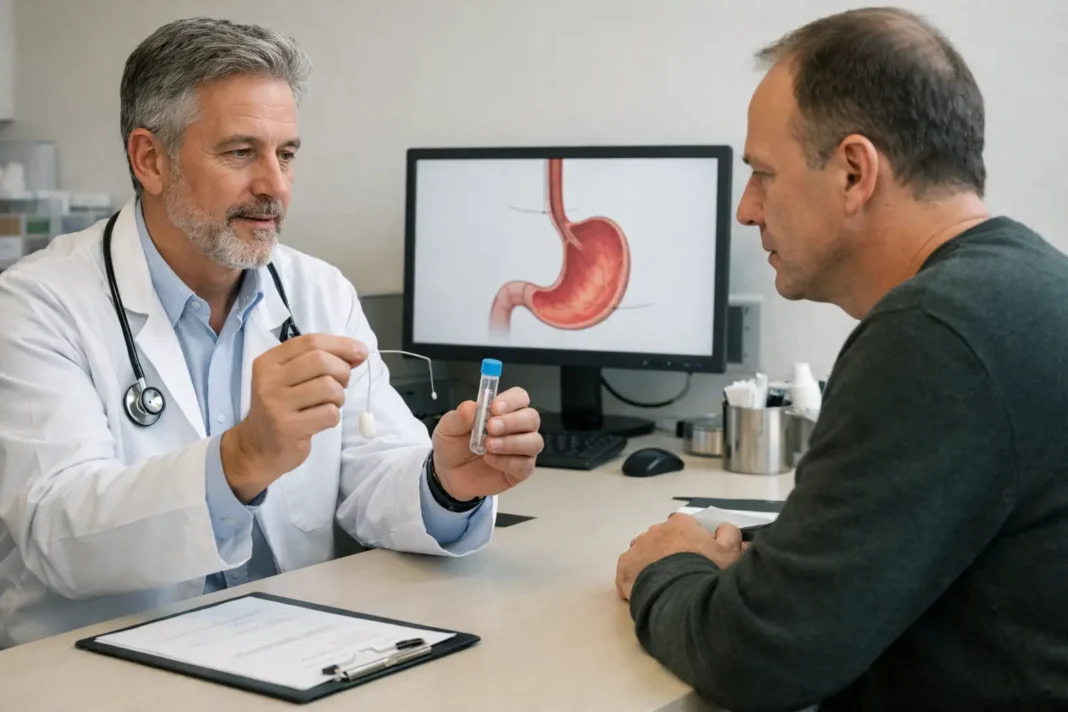

A capsule-based sponge test could be offered to more people with persistent or severe indigestion, potentially shifting part of the assessment process away from hospitals and into GP surgeries. The technique, often described as a sponge on a string, is designed to collect cells from the oesophagus and may help clinicians decide which patients need further investigation for possible cancer-related changes.
The approach differs from an endoscopy, the hospital-based procedure in which a small camera is passed into the body to examine the upper digestive tract. Endoscopy remains an important diagnostic tool, but it requires specialist equipment, trained teams and appointment capacity. A sponge test carried out in a primary care setting could reduce the need for some initial hospital visits while still identifying people who require more detailed checks.
Indigestion is common and is usually not caused by cancer, but ongoing symptoms can overlap with conditions that need medical assessment. Guidance from the NHS advises people to seek medical help when symptoms persist, worsen or appear with other warning signs. Expanding a lower-complexity test in GP surgeries would be relevant for health services trying to separate lower-risk digestive problems from cases needing rapid specialist review.
For patients, the main significance is practical. A test available through a GP surgery may be easier to access than a hospital endoscopy appointment and could make the first stage of assessment less invasive. For clinicians, it may offer another way to prioritise referrals, particularly when symptoms are troubling but the immediate need for endoscopy is unclear. Any broader rollout would still depend on clinical pathways that determine who is eligible and how abnormal results are followed up.
The development also reflects a wider trend in the United Kingdom and other health systems: moving suitable diagnostic procedures closer to patients while preserving specialist hospital capacity for those most likely to need it. The sponge test is not a replacement for all endoscopic examinations, but its possible wider use highlights how cancer checks are being redesigned to improve access, speed and triage without lowering the threshold for proper investigation.






