
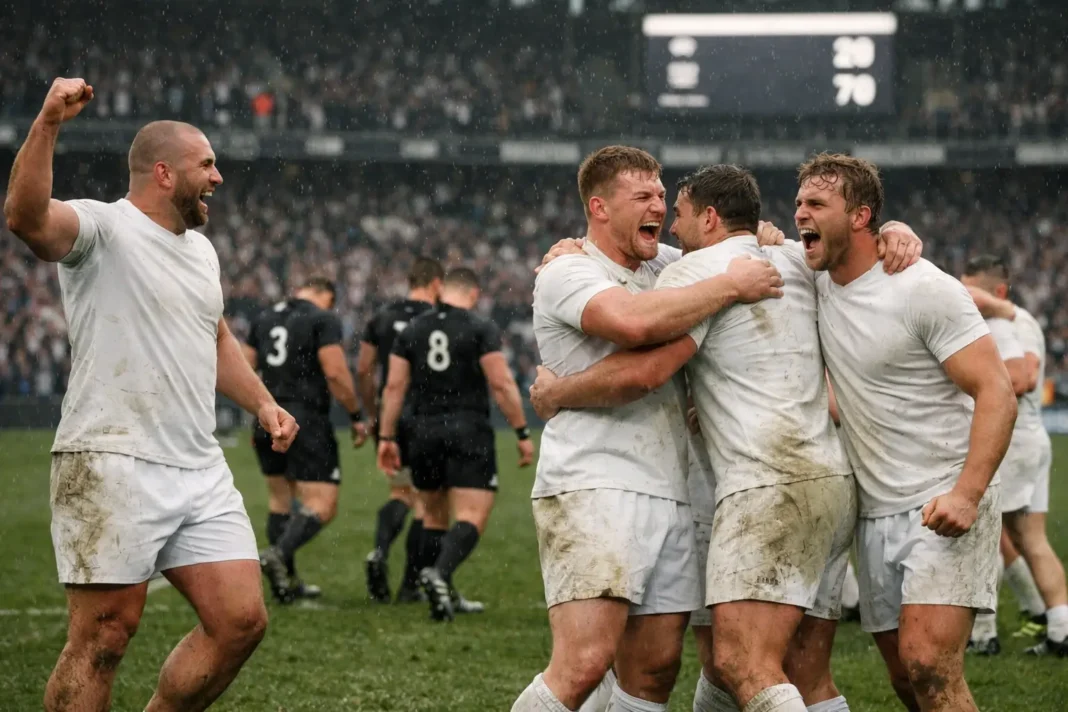

England’s 2026 victory over New Zealand has reopened a familiar debate around England rugby: whether a single landmark result can become the start of sustained momentum. Beating the All Blacks remains one of the clearest measures of a team’s credibility in the international game, but recent history gives England little room for complacency. Twelve months earlier, they had already beaten New Zealand, only to lose direction in the following Six Nations campaign.
That contradiction explains why the result carries significance beyond the scoreboard. A win over New Zealand Rugby’s flagship side, the All Blacks, can validate a team’s methods and reinforce belief inside a dressing room. It does not, on its own, prove that performance levels can be repeated through the different pressures of a championship. The Six Nations demands continuity across weeks, away fixtures, tactical adjustments and the physical toll of facing European rivals in rapid succession.
For England, the challenge is therefore structural as much as emotional. The national side has experienced sharp swings between encouraging peaks and disappointing follow-up campaigns, a pattern often described through the boom-and-bust lens. The 2026 win gives Steve Borthwick’s team another platform, but the value of that platform will be judged by what comes next: selection consistency, discipline under pressure and the ability to impose a clear identity against opponents who will study the New Zealand match in detail.
The context matters because England’s standards are shaped by the resources and expectations attached to the game in the country. The Rugby Football Union oversees one of the sport’s most prominent programmes, and victories over elite southern hemisphere opposition are expected to feed into broader international competitiveness. Supporters and opponents alike will now look for evidence that England can carry the same authority into the championship environment rather than treating the All Blacks result as a standalone achievement.
There is no certainty in how that transition plays out. The immediate consequence of the win is to raise the bar for England’s next fixtures and sharpen scrutiny before the next Six Nations. A year ago, a similar high was not converted. In 2026, the measure of progress will be whether England can turn another major result into repeatable performance, rather than another brief interruption in an unstable cycle.





